# About Haust

The idea behind and the slogan of Haust ecosystem - **Simplify Defi**.

The Haust ecosystem ensures a seamless experience (like Web2) in the complex Web3 world. It is designed for end users to have the ability to interact with all varieties of DeFi features without leaving the app.

<figure><img src="/files/rGNS8ol5yCBlLBOUmDjn" alt=""><figcaption></figcaption></figure>

Haust is an ecosystem of products designed to solve current Web3 сhallenges and bring the whole industry closer to the ideal future of simple DeFi.&#x20;

*You can compare Haust Network to a decentralized hedge fund, and Haust Wallet is a DeFi crypto portfolio management wallet.*

Haust ecosystem includes Wallet, Network, Haustoria, Lending protocol, DEX and DAO.

The Core of the Haust ecosystem - The Haust Network, an EVM-compatible Layer 2 blockchain powered by zk-rollups, integrating AggLayer, Data Availability and Account Abstraction from the outset; and offering a seamless DeFi experience with native yield generation through the Haust Wallet and the innovative Haustoria mechanism.

The combination of selected market solutions was chosen to enhance the security and throughput of the Haust Network.

<br>

<br>


# Haust Ecosystem

Haust Labs, the team behind Haust, introduces the whole ecosystem of products designed to solve current Web3 challenges and bring the whole industry closer to the ideal future of a DeFi ecosystem.

<figure><img src="/files/yMWtbYccy79RF9si1Sy2" alt=""><figcaption><p>Haust ecosystem</p></figcaption></figure>

Haust Labs is a development team that has built the [Haust Network](/haust-ecosystem/haust-network) and the ecosystem’s products, such as [Haust Lend(Protocol)](/haust-ecosystem/dex-and-lending), [Haust Wallet](/haust-ecosystem/haust-wallet), [Haust DEX](/haust-ecosystem/dex-and-lending) and [Haustoria](/haust-ecosystem/haustoria).


# Haust Network

The Haust Network is an EVM-compatible Layer 2 blockchain powered by zk-rollups and integrated AggLayer, Data Availability, Account Abstraction from the outset. The network offers a seamless DeFi experience with a native yield generation through the Haust Wallet and the innovative Haustoria mechanism.

The Core of the Haust Network is based on **Polygon** **zkEVM**, the most sustainable solution up to date.&#x20;

A zkEVM is a special type of Ethereum-compatible virtual machine that leverages **zero-knowledge proofs** (**zk-proofs**). zk-proofs are cryptographic techniques that allow one party to prove to another that a statement is true, without revealing any specific details. In the context of Ethereum, zkEVM ensures that computations or transactions can be proven valid with minimal information, enhancing scalability and security.

Polygon zkEVM is to Ethereum a Layer 2 network and a scalability solution utilizing zero-knowledge technology to provide validation and fast finality of off-chain transactions. It is beneficial for developers and also includes seamless deployment of smart contracts and developer tools.

Polygon zkEVM combines data availability and execution verification on L1, essentially the Ethereum network, in order to ensure security and reliability of each L2 state transition.

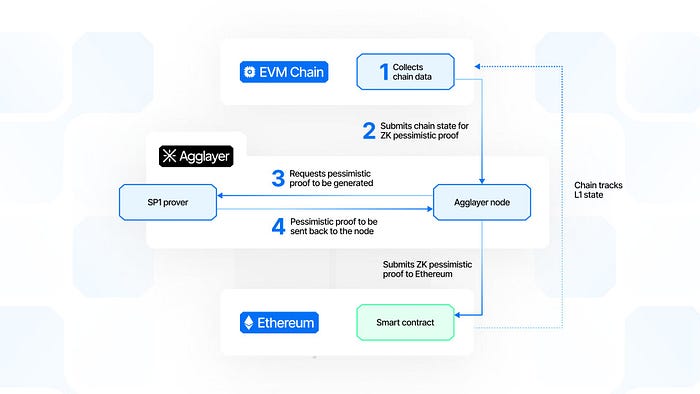
The **AggLayer** is a decentralized protocol with two components: a common bridge and the zk-powered mechanism that provides a cryptographic guarantee of safety for seamless, cross-chain interoperability. AggLayer addresses the problems of fragmented liquidity and state across rollups and the L1.

The **NEAR Data Availability Layer** designed to enhance scalability and efficiency. It separates the storage and availability of transaction data from the execution layer, allowing validators to focus on consensus and execution without being burdened by data storage. The NEAR Data Availability Layer ensures data reliability by distributing it across multiple nodes through sharding. This improves redundancy and resilience against data loss or corruption. The main features include improved throughput and reduced latency due to the offloading of data availability tasks and security. Reliability through cryptographic proofs and erasure coding techniques that ensure data can be reconstructed should the nodes go offline.

**Nuffle fast finality layer** enhances the transaction finality process by significantly reducing the time it takes to confirm transactions as irreversible. Operating as a layer on top of existing blockchain infrastructure, it leverages advanced consensus algorithms to achieve rapid and deterministic finality.

**Account Abstraction** (AA) is a blockchain technology that allows users to use smart contracts as their accounts. AA plays a critical role in the Haust Network to transform user experience within the Haust Wallet. Some of these offered features include: web2-style sign-in, keyless wallet management, social wallet recovery and gas fee management.

<br>


# Tokenomics

&#x20;Ticker: **HAUST**

Maximum supply: **10,000,000,000 HAUST**

Emission mechanism: An initial distribution event with token creation, followed by a gradual release process achieved through staking rewards and ecosystem contribution incentives.

**Token distribution**:

**- Liquidity: 15%** (1,500,000,000) for providing initial liquidity on DEXs and CEXs, with a portion immediately available and the rest gradually unlocked as needed

**- Ecosystem: 15%** (1,500,000,000) for incentivizing developers, users and partners, distributed through **grants and rewards over 5 years**

**- Community: 20%** (2,000,000,000) allocated to strengthen grassroots adoption and long-term engagement, distributed through community incentives, ambassador programs, events and participation rewards

**- Treasury: 25%** (2,500,000,000) reserve for strategic initiatives and ensuring the protocol's sustainability together with reserve for subsidize gas fees, unlocked as needed

**- Growth Loyalty Programs: 10%** (1,000,000,000) for Loyalty Program point holders with **a 1-year unlock period**

**- Team: 15%** (1,500,000,000) for the core team and advisors, with **a 3-year unlock period**

<figure><img src="/files/iEBPk5etCMRxfUmrJRYB" alt=""><figcaption></figcaption></figure>

HAUST token utility:

* Non-subsidized transaction fee&#x20;
* Deploying smart-contracts
* Listing of external projects
* veHAUST DAO
* Developing by Haust Labs
* Fee for Haust protocols and resources
* Haust Oracles connection fee (*Soon*)


# Tokens

**Native tokens**:

**HAUST** is a native token of Haust Network, allowing for compatibility with other ERC-20 tokens. It is operated by Haust Labs.

**hTokens**:

**hUSDT** is a USDT token minted in Haust Network after depositing USDT through Haustoria. The yield generated in different staking protocols will increase the USD value of hUSDT.

**hUSDC** is a USDC token minted in Haust Network after depositing USDC through Haustoria. The yield generated in different staking protocols will increase the USD value of hUSDC.

**hWETH** is a WETH token minted in Haust Network after depositing ETH or wETH through Haustoria. The yield generated in different staking protocols will increase the USD value of hWETH.

**hWBTC** is a WBTC token minted in Haust Network after depositing BTC or WBTC through Haustoria. The yield generated in different staking protocols will increase the USD value of hWBTC.

**Wrapped tokens**:

**USDT** (Tether) is a stablecoin pegged to the value of the United States Dollar. It is offered, issued and backed by the centralized entity Tether.

**USDC** (USD Coin) is a digital stablecoin pegged to the United States Dollar. USD Coin is managed by Circle.

**WETH** is a wrapped version of ETH, ERC-20 token on the Ethereum blockchain that is pegged to Ethereum(ETH). WETH is backed one-to-one with Ethereum.

**WBTC** is a wrapped version of BTC, ERC-20 token on the Ethereum blockchain that is pegged to Bitcoin (BTC). WBTC is backed one-to-one with Bitcoin.


# Haust Wallet

**Haust Wallet** powered by Account Abstraction and working on multiple platforms:

* iOS Application
* Android Application
* Telegram MiniApp
* Browser extention

**Account abstraction** (AA) is a concept in blockchain technology that aims to separate the user account functionality from the core protocol, allowing for more flexible and programmable account behaviors.

\
**Key Features of Account Abstraction**:

1\. Programmable Accounts: &#x20;

&#x20;  Account abstraction enables accounts to have programmable logic. This means that the accounts can execute arbitrary code, allowing for advanced functionalities such as multi-signature wallets, social recovery mechanisms, or any other custom authentication logic. This is achieved by allowing accounts to operate like smart contracts, where transactions are validated by executing contract code instead of just checking a signature.

2\. Customizable Authentication Mechanisms: &#x20;

&#x20;  With AA, the traditional reliance on elliptic curve digital signatures (ECDSA) for transaction validation is removed. This allows for the implementation of various authentication methods such as multi-factor authentication, biometric verification, or social recovery, where control of the account can be transferred if a user loses access to their keys.

3\. Gas Payment Flexibility: &#x20;

&#x20;  In the standard Ethereum model, gas fees must be paid in Ether (ETH) by the sender. Account abstraction allows for more flexible gas fee payment options. Accounts can implement custom logic to pay fees using different tokens, enable third-party fee sponsors, or even employ gasless transactions where the fees are covered by other mechanisms, enhancing the user experience.

4\. Bundled Transactions and Meta-Transactions: &#x20;

&#x20;  Account abstraction allows for more complex transaction structures, such as bundling multiple actions into a single transaction. This could be used to batch several operations (e.g., multiple token transfers or contract interactions) into one, reducing gas costs and improving efficiency. Meta-transactions, where a third party can submit a transaction on behalf of a user, are also enabled by AA, improving the accessibility and usability of dApps.

5\. Security and Recoverability: &#x20;

&#x20;  AA enhances security and account recoverability by allowing users to implement custom recovery mechanisms. For instance, users can set up rules where multiple keys are required to sign a transaction or where a trusted third party can help recover the account. This is particularly beneficial for preventing loss of funds due to lost private keys.

6\. Improved User Experience: &#x20;

&#x20;  By abstracting the complexities of account management and transaction validation, AA significantly improves the user experience. It enables a seamless interface where users are not required to understand gas management, private keys, or the underlying cryptographic details. This can lead to the development of more user-friendly wallets and applications that appeal to non-technical users.

7\. Reduced Dependence on Private Keys: &#x20;

&#x20;  Account abstraction reduces the dependence on private keys by allowing accounts to use alternative security models. For example, an account could be set up to use a time-lock feature, multi-signature requirements, or even require consent from multiple parties, thereby minimizing the risk of funds being compromised due to a single point of failure.

\
The benefits of AA and logic working on the backend in The Haust Wallet brings UX to a simple and easy understandable way out of the complex Web3 world.

<br>


# Haustoria

*Haustoria is a set of smart contracts that interact with different DeFi protocols across various networks, using user liquidity as collateral and distributing the averaged profit to the end user in native yield.*

<figure><img src="/files/ejl83CFNXkIqgcwY3x7K" alt=""><figcaption><p>Haustoria block-scheme</p></figcaption></figure>

Haust integrates native yield generation functionality directly into the protocol. All tokens sent to Haust Network through Haustoria automatically compound over time.

Such as, **hUSDT**, **hUSDC**, **hBTC** (**hWBTC**), **hETH**(**hWETH**)

The yield generation process leverages a permissionless, programmatic approach by interacting with various liquid staking protocols deployed across supported blockchain networks. These decentralized protocols employ smart contracts to facilitate the secure and transparent staking of various crypto assets. The returns accrued by these protocols are automatically distributed back to Haust users at predetermined intervals.

### The simplified Haustoria Process:

1\. **Deposit & Distribution**: Users initiate the process by depositing funds into a Haustoria contract on a chosen donor network(out of the currently available networks with Haustoria). Then the contract distributes these funds across pre-selected high-yield programs within that network.

2\. **Risk-Adjusted Allocation**: Haustoria intelligently allocates funds based on predefined parameters. This ensures a balance between maximizing potential yield and minimizing inherent risks associated with different DeFi protocols.

3\. **Tokenized Representation**: In exchange for their deposited funds, users receive hTokens in Haust Network. These tokens represent a user's proportional ownership within the Haustoria system.

4\. **Passive Income Distribution**: As yield is generated from the underlying programs, Haustoria automatically distributes these profits proportionally among all token holders.

### Advanced Haustoria Process with Examples:

To fully understand the mechanics lets bring in some terminology:

* hToken - token in the Haust network that has passed through Haustoria
* hToken/Token rate - the ratio of the value of one hToken to a regular Token
* Donor network - a blockchain from which hTokens can be added to the wallet. In the first release, tokens from the Ethereum, Polygon, and BSC networks can be added.
* Collection service - a backend service responsible for collecting user funds to Vault in the donor network
* Vault - a smart contract for receiving user funds in donor networks, which store 10% of it and the rest - 90% go to the staking Protocols through the Protocol plugins.
* Protocol - one of the lending/staking protocols (further everything will be described for one AAVE protocol)
* Protocol plugin - a contract through which the transfer from the protocol or to the protocol occurs.
* Proportion - the ratio of funds in Vault to funds in the protocol, set by the platform administrator. In order to reduce the number of requests to the protocol to maintain the proportion during the restaking process, the proportion is floating at +-2%. This means that the proportion can periodically be in the range of 8/92 - 12/88
* Restaking - backend service, responsible for submitting requests for the withdrawal of hTokens to the donor network, balancing of Vault/Protocol ratio to comply with the proportion set by the administrator, updating the hToken / Token rate
* HaustHub - a contract contributing aggregating information in the Haust network about the balance of tokens in donor networks
* hTokenTotalSupply - a variable in the contract of hTokens, denoting the amount of this token in the Vault + Protocol for all donor networks
* TokenTotalSupply - a variable in the contract of hTokens, denoting the total amount of this token in the Haust network
* Liquidity in Vault - the number of tokens which users contributed to the donor network. (In the first release, 12 Vault’s - 4 tokens in 3 networks. For example, USDT vault in Polygon, BSC and Ethereum)
* Liquidity in Protocol - the amount of user funds currently allocated in the AAVE protocol in donor networks, broken down by tokens. There are 12 liquidities in AAVE (for example, the amount of USDT in AAVE in Polygon, BSC, and Ethereum)
* Total liquidity in the donor network - the amount of liquidity in Vault and Protocol, broken down by tokens and networks. For example, total liquidity of USDT in Polygon = liquidity of USDT Vault in Polygon and USDT in AAVE in Polygon.
* Yield in Protocol—When liquidity is contributed to the AAVE Protocol, its value is fixed and grows over time. Therefore, further in the text, these terms mean how much the initially contributed liquidity has increased.

### Receive hTokens at the exchange rate of hToken/Token = 1

To receive some amount of hUSDT in a Haust Wallet through Haustoria, the user needs to deposit USDT tokens to the generated address in the selected network.

The number of hUSDT received by the user may be less than the number of USDT deposited, depending on the current hUSDT/USDT exchange rate.

The minimum deposit volume restrictions is implemented depending on the network: $100 - Polygon, BSC and $200 - Ethereum.

### *Example 1*&#x20;

**Conditions**:&#x20;

hUSDT - received token&#x20;

Polygon - donor network&#x20;

Liquidity of USDT in Vault in Polygon = 0&#x20;

Liquidity of USDT in AAVE in Polygon = 0&#x20;

Total liquidity of USDT in Polygon = 0

\
Based on the three parameters above:&#x20;

<mark style="color:green;">hUSDTTotalSupply</mark> = 0&#x20;

<mark style="color:green;">TotalSupply</mark> = 0, on the hUSDT contract&#x20;

Based on the two parameters above:&#x20;

1 hUSDT = 1 USDT - current rate

\
**The example is considered only on one donor network, so by default it does not change further in the process**:

* Liquidity of USDT in Vault in Ethereum and BSC = 0&#x20;
* Liquidity of USDT in AAVE in Ethereum and BSC = 0&#x20;
* Total liquidity of USDT in other networks = 0

The user deposits 100 USDT to the generated address and pays for the transfer transaction in Polygon.

The Collection service backend sees the deposit on the address and transfers 100 USDT to the Vault in Polygon.

At the same time, a Haustoria transaction occurs to the Haust Hub, transmitting information that 100 USDT appeared in the Polygon network, which means that the variable hUSDTTotalSupply should be increased by 100.

New states:

* Liquidity of USDT in Vault in Polygon = 100&#x20;
* Liquidity of USDT in AAVE in Polygon = 0&#x20;
* Total liquidity of USDT in Polygon = 100

Based on the three parameters above:&#x20;

* <mark style="color:green;">hUSDTTotalSupply</mark> = 100&#x20;
* <mark style="color:green;">TotalSupply</mark> = 100, on the hUSDT contract&#x20;

Based on the two parameters above:

Exchange rate **hUSDT/USDT = 1** or 1 hUSDT = 1 USDT

### Restaking - Maintaining Proportion

Every n hours (n is a variable set by the platform administrator), as the yield in Protocols are generated, the restaking is initiated—a backend procedure that performs the following tasks:

* Changes the variable <mark style="color:green;">hTokenTotalSupply</mark> in the hToken contract on the Haust Network to update the hToken/Token rate.
* Executes withdrawal requests in the donor networks.
* Balances liquidity in the Vault and the AAVE protocol to achieve the proportion set by the administrator.

Let's enhance the example above with restaking.

### *Example 2*

Conditions before the start of restaking:

* Liquidity of USDT in Vault in Polygon = 100
* Liquidity of USDT in AAVE in Polygon = 0
* Total liquidity of USDT in Polygon = 100

Based on the three parameters above:

* <mark style="color:green;">hUSDTTotalSupply</mark> = 100
* <mark style="color:green;">TotalSupply</mark> = 100, on the hUSDT contract&#x20;

Based on the two parameters above:

The rate of **hUSDT/USDT = 1** or 1 hUSDT = 1 USDT

**Restaking**

The proportion set by the platform administrator = **10/90**, which means that 10% of the total liquidity of USDT in Polygon should be in the Vault for instant withdrawal and 90% should be in AAVE for yield generation.

The backend assesses the current liquidity of USDT in Vault in Polygon, the liquidity of USDT in AAVE, and the total liquidity of USDT in Polygon, and observes that the current total liquidity is distributed as follows:

100% is in the Vault,

0% is in AAVE.

Based on this, the backend directs 90% of the liquidity from the Vault (90 USDT) to the AAVE protocol to maintain the proportion set by the platform administrator.

**New states as a result of restaking**:

* Liquidity of USDT in Vault in Polygon = 10
* Liquidity of USDT in AAVE in Polygon = 90
* Total liquidity of USDT in Polygon = 100

Based on the three parameters above:

* <mark style="color:green;">hUSDTTotalSupply</mark> = 100
* <mark style="color:green;">TotalSupply</mark> = 100, on the hUSDT contract&#x20;

Based on the two parameters above:

The rate of **hUSDT/USDT = 1** or 1 hUSDT = 1 USDT

### Updating the hToken/Token Exchange Rate

The hToken/Token rate increases when the total liquidity across networks grows due to an increase in liquidity in the AAVE protocol as yield was generated.

When users deposit or withdraw hTokens, the exchange rate does not change.

Let's expand the example above with restaking, during which yield was generated in AAVE.

### ***Example 3***

**States before the start of restaking**:

* Liquidity of USDT in Vault in Polygon = 10 - 10% of total liquidity
* Liquidity of USDT in AAVE in Polygon = 90 + n yield - 90% of total liquidity (amount of the yield is unknown at this point)
* Total liquidity of USDT in Polygon = 100 + n yield

Based on the three parameters above:

* <mark style="color:green;">hUSDTTotalSupply</mark> = 100
* <mark style="color:green;">TotalSupply</mark> = 100, on the hUSDT contract&#x20;

Based on the two parameters above:

Exchange rate of **hUSDT/USDT = 1** or 1 hUSDT = 1 USDT

**Restaking**\
The backend evaluates the current states above and makes a request to the AAVE contract to find out what USDT liquidity is currently in AAVE. It receives a response that:

USDT in AAVE = 95 (90 deposited and 5 as yield)

Based on this information, the backend evaluates the current liquidity state:

* Liquidity of USDT in Vault in Polygon = 10 USDT - 9.524% out of total liquidity
* Liquidity of USDT in AAVE in Polygon = 95 USDT - 90.476% out of total liquidity
* Total liquidity of USDT in Polygon = 105 USDT

Since the current proportion is within the limits set by the platform administrator (8/92 - 12/88), no withdrawal from AAVE is made.

However, since the total USDT liquidity in Polygon has changed (from 100 to 105), the restaking backend sends a transaction to the hUSDT contract and increases the <mark style="color:green;">hUSDTTotalSupply</mark> by 5.

Thus, the new state:

* <mark style="color:green;">hUSDTTotalSupply</mark> = 105
* <mark style="color:green;">TotalSupply</mark> = 100, on the hUSDT contract&#x20;

Based on the two parameters above:

Exchange rate of **hUSDT/USDT = 1.05** or 1 hUSDT = 1.05 USDT

Thus, the balance of the user who initially deposited 100 USDT:

100 hUSDT = 105 USDT

### Withdrawal of hTokens within available liquidity for instant withdrawal

Thу restrictions on the minimum withdrawal amount depending on the donor network:

* $100 - Polygon, BSC
* $200 - Ethereum

Additionally, when withdrawing hTokens, a fee is applied:

**Fee = gas cost for the transfer transaction in the donor network \* platform coefficient set by the administrator**

Since the total liquidity during restaking is distributed in a proportion set by the administrator, the user is limited when withdrawing hTokens by:

* the available liquidity in the selected network,
* the available liquidity in the Vault in the selected network.

Based on this, if the withdrawn liquidity in hTokens does not exceed the total liquidity in the selected network, there are two possible scenarios:

1. **Instant withdrawal of hTokens to the selected network** - regular tokens are transferred to the user in the selected network.
2. **Delayed withdrawal** - the user wants to withdraw more than what is available in the Vault, so they will have to wait for the next restaking for the liquidity to be withdrawn from the AAVE protocol first.

Let’s check the first scenario with the example below (excluding fees and minimum withdrawal restrictions for now). The second scenario will be covered later, with an example of restaking with queues.

### *Example 4*

**Current states after the last restaking**:

* Liquidity of USDT in Vault in Polygon = 10 USDT - 9.524% out of the total liquidity
* Liquidity of USDT in AAVE in Polygon = 95 USDT - 90.476% out of the total liquidity
* Total liquidity of USDT in Polygon = 105 USDT

<mark style="color:green;">hUSDTTotalSupply</mark> = 105\ <mark style="color:green;">TotalSupply</mark> = 100, on the hUSDT contract

Based on the two parameters above:

Exchange rate of **hUSDT/USDT = 1.05** or 1 hUSDT = 1.05 USDT

The user wants to send and chose hUSDT, selects Polygon, enters 5 hUSDT, sees the information that will receive 5 \* 1.05 = 5.25 USDT, and confirms the transaction in the Haust network.

At this moment, the following changes occur on the hUSDT contract:

* <mark style="color:green;">TotalSupply</mark> = 100 => <mark style="color:green;">TotalSupply</mark> = 95, as there are 5 hUSDT from Haust network was withdrawn.
* <mark style="color:green;">hUSDTTotalSupply</mark> = 105 => 99.75, as the number of USDT in the donor network decreased by this value(5.25).

At the same time, the hUSDT/USDT rate remains the same:\
99.75/95 = 1.05

\
In Polygon, a transfer from the Vault to the address specified by the user occurs.

**New states after the user’s withdrawal**:

* Liquidity of USDT in Vault in Polygon = 4.75 USDT - 4.762% out of the total liquidity
* Liquidity of USDT in AAVE in Polygon = 95 USDT + n yield - 95.238% out of the total liquidity
* Total liquidity of USDT in Polygon = 99.75 + n yield in USDT

<mark style="color:green;">hUSDTTotalSupply</mark> = 99.75\ <mark style="color:green;">TotalSupply</mark> = 95, on the hUSDT contract

Based on the two parameters above:

Exchange rate of **hUSDT/USDT = 1.05** or 1 hUSDT = 1.05 USDT

**Restaking**\
The backend assesses the states above and queries the AAVE protocol to find out the current state of liquidity in AAVE. It sees the following values:

* Liquidity of USDT in Vault in Polygon = 4.75 USDT - 4.535% out of the total liquidity
* Liquidity of USDT in AAVE in Polygon = 100 USDT - 95.465% out of the total liquidity
* Total liquidity of USDT in Polygon = 104.75 USDT

Since the proportion of Vault/AAVE in Polygon has shifted from the values set by the administrator, backend made a decision to withdraw some funds from the AAVE protocol, and a withdrawal from AAVE is executed:

104.75 \* 0.1 - 4.75 = 9.975 - 4.750 = 5.725 USDT, where:

* 104.75 - Total liquidity of USDT in Polygon,
* 0.1 - 10% should be in the Vault,
* 4.75 - current amount USDT in the Vault in Polygon.

**New states after withdrawal from AAVE**:

* Liquidity of USDT in Vault in Polygon = 10.475 USDT - 10% out of the total liquidity
* Liquidity of USDT in AAVE in Polygon = 94.275 USDT - 90% out of the total liquidity
* Total liquidity of USDT in Polygon = 104.75 USDT

Additionally, the restaking backend sees that the total liquidity in USDT in Polygon does not match the <mark style="color:green;">hUSDTTotalSupply</mark> on the hUSDT contract in Haust Network and updates this value.

<mark style="color:green;">hUSDTTotalSupply</mark> = 99.75 => <mark style="color:green;">hUSDTTotalSupply</mark> = 104.75\ <mark style="color:green;">TotalSupply</mark> = 95,  on the hUSDT contract remains the same

Thus, the rate is updated considering new yield generated in AAVE:\
**hUSDT/USDT = 104.75/95 = 1.1** or 1 hUSDT = 1.1 USDT

### Restaking with Queues

If a user wants to withdraw liquidity exceeding the amount available for immediate withdrawal (the amount in the Vault on the chosen network), the user will be placed in a queue awaiting the next restaking when withdrawing funds.

### *Example 5*

**Let’s consider the following states after the previous restaking and some elapsed time**:

* Liquidity of USDT in Vault in Polygon = 10,000 USDT - 10% out of total liquidity
* Liquidity of USDT in AAVE in Polygon = 90,000 + n yield USDT - 90% out of total liquidity
* Total liquidity of USDT in Polygon = 100,000 + n yield USDT

<mark style="color:green;">hUSDTTotalSupply</mark> = 100,000 USDT\ <mark style="color:green;">TotalSupply</mark> = 80,000 hUSDT (considering a scenario where many users deposited into Haust Network without withdrawing, resulting in an increase in USDT in Polygon but no increase in hUSDT)

**hUSDT/USDT = 100,000 / 80,000 = 1.25** or 1 hUSDT = 1.25 USDT

User's balance = 50,000 hUSDT = 62,500 USDT, and wants to withdraw all of it.

The user makes a transaction on the Haust Network and the variables on the hUSDT contract are changing:

<mark style="color:green;">hUSDTTotalSupply</mark> = 100,000 => hUSDTTotalSupply = 37,500\ <mark style="color:green;">TotalSupply</mark> = 80,000 => 30,000

The rate remains the same:\
37,500 / 30,000 = 1.25

**Restaking**\
The backend evaluates the liquidity states and requests AAVE to check the liquidity of USDT in AAVE in Polygon. It observes the following state:

* Liquidity of USDT in Vault in Polygon = 10,000 USDT - 9.524% of total liquidity
* Liquidity of USDT in AAVE in Polygon = 95,000 USDT - 90.476% of total liquidity
* Total liquidity of USDT in Polygon = 105,000 USDT

Meanwhile, the backend sees a withdrawal request for 62,500 USDT.

Based on this information, the restaking backend forms a withdraw request from the AAVE protocol for the amount:

62,500 - 10,000 + (105,000 - 62,500) \* 0.1 = 56,750 USDT, where:

62,500 - withdrawal request\
10,000 - current amount USDT in the Vault in Polygon\
(105,000 - 62,500) \* 0.1 - should be in the Vault after fulfilling the withdrawal request.

Thus, the liquidity states after fulfilling the withdrawal request and balancing liquidity:

* Liquidity of USDT in Vault in Polygon = 4,250 USDT - 10% out of total liquidity
* Liquidity of USDT in AAVE in Polygon = 38,250 USDT - 90% out of total liquidity
* Total liquidity of USDT in Polygon = 42,500 USDT

Since yield in AAVE was generating, affecting the USDT balance in Polygon, these need to be accounted for in the hUSDT contract, so a transaction is made:

<mark style="color:green;">hUSDTTotalSupply</mark> = 37,500 => <mark style="color:green;">hUSDTTotalSupply</mark> = 42,500\ <mark style="color:green;">TotalSupply</mark> = 30,000,  remains unchanged&#x20;

Thus, the rate of **hUSDT/USDT = 42,500 / 30,000 = 1.417** or 1 hUSDT = 1.417 USDT

### The Impact of Donor Networks on Haustoria Mechanics

The only parameter that is considered cumulatively across all donor networks is <mark style="color:green;">hTokenTotalSupply</mark> — a variable that affects the hToken/Token exchange rate.

Based on this, let's break down a large example that will include all the aforementioned mechanics, using three networks as an example.

### *Example 6*

**Initial data based on the results of the last restaking**:

***Liquidity***

* Liquidity of USDT in Vault in Polygon = 10,000 USDT - 10% out of total liquidity

* Liquidity of USDT in AAVE in Polygon = 90,000 USDT - 90% out of total liquidity

* Total liquidity of USDT in Polygon = 100,000 USDT

* Liquidity of USDT in Vault in BSC = 40,000 USDT - 10% out of total liquidity

* Liquidity of USDT in AAVE in BSC = 360,000 USDT - 90% out of total liquidity

* Total liquidity of USDT in BSC = 400,000 USDT

* Liquidity of USDT in Vault in Ethereum = 100 USDT - 10% out of total liquidity

* Liquidity of USDT in AAVE in Ethereum = 900 USDT - 90% out of total liquidity

* Total liquidity of USDT in Ethereum = 1,000 USDT

***Total Supply and Exchange Rate***\ <mark style="color:green;">hUSDTTotalSupply</mark> = 501,000 USDT\ <mark style="color:green;">TotalSupply</mark> = 350,000 hUSDT

Exchange rate of **hUSDT/USDT = 1.431** or 1 hUSDT = 1.431 USDT

**Operations Before the Next Restaking**\
Between the last restaking and the next, yield was generated in AAVE in each Network, increasing the liquidity in AAVE, which is not accounted for until the next restaking.

Additionally, the following operations occurred:

***In Polygon***:\
Several users collectively withdrew 5,000 USDT, resulting in the following changes:

* Liquidity of USDT in Vault in Polygon = 10,000 => 5,000 USDT
* <mark style="color:green;">hUSDTTotalSupply</mark> = 501,000 USDT => 496,000 USDT
* <mark style="color:green;">TotalSupply</mark> = 350,000 hUSDT => 346,506 hUSDT (refer to Example 4 to understand these values)

One user requested to withdraw 20,000 USDT, resulting in the following changes:

<mark style="color:green;">hUSDTTotalSupply</mark> = 496,000 USDT => 476,000 USDT

<mark style="color:green;">TotalSupply</mark> = 346,506 hUSDT => 332,529.76 hUSDT (refer to Example 4 to understand these values)

***In BSC***:\
There were no withdrawals, but many users collectively deposited 150,000 USDT, leading to the following changes:

* Liquidity of USDT in Vault in BSC = 40,000 USDT => 190,000 USDT
* <mark style="color:green;">hUSDTTotalSupply</mark> = 476,000 USDT => 626,000 USDT
* <mark style="color:green;">TotalSupply</mark> = 332,529.76 hUSDT => 437,351.563 hUSDT

***In Ethereum***:\
No deposits or withdrawals were made.

**Restaking**\
The restaking backend evaluates the USDT liquidity in Vaults across all networks, requests the current USDT liquidity from the AAVE protocol across all networks, analyzes withdrawal requests, and observes the following state:

***Liquidity***

* Liquidity of USDT in Vault in Polygon = 5,000 USDT - 4.762% out of total liquidity

* Liquidity of USDT in AAVE in Polygon = 95,000 USDT - 95.238% out of total liquidity

* Total liquidity of USDT in Polygon = 100,000 USDT

* &#x20;Liquidity of USDT in Vault in BSC = 190,000 USDT - 33% out of total liquidity

* Liquidity of USDT in AAVE in BSC = 380,000 USDT - 67% out of total liquidity

* Total liquidity of USDT in BSC = 570,000 USDT

* Liquidity of USDT in Vault in Ethereum = 100 USDT - 9.852% out of total liquidity

* Liquidity of USDT in AAVE in Ethereum = 915 USDT - 90.148% out of total liquidity

* Total liquidity of USDT in Ethereum = 1,015 USDT

Total liquidity across the three networks = 671,015 USDT

Total Supply and Exchange Rate:

<mark style="color:green;">hUSDTTotalSupply</mark> = 626,000 USDT

<mark style="color:green;">TotalSupply</mark> = 437,351.563 hUSDT

\
Exchange rate of **hUSDT/USDT = 1.431** or 1 hUSDT = 1.431 USDT

**Withdrawal Requests**\
Polygon = 20,000 USDT

***Operations in Polygon***\
Since the backend sees withdrawal requests, it must determine how much to withdraw from AAVE to:

* Ensure all withdrawal requests are fulfilled
* Ensure that 10% out of the total USDT liquidity in the network is maintained in the Vault

Therefore, in Polygon, the following liquidity is withdrawn from AAVE:

20,000 - 5,000 + (100,000 - 20,000) \* 0.1 = 23,000 USDT, where:

* 20,000 USDT is needed to withdraw to the user,
* 5,000 is already in the Vault,
* (100,000 - 20,000) \* 0.1 should be in the Vault after the user's withdraw

Liquidity in Polygon after payments and rebalancing proportions:

* Liquidity of USDT in Vault in Polygon = 8,000 USDT - 10% out of total liquidity
* Liquidity of USDT in AAVE in Polygon = 72,000 USDT - 90% out of total liquidity
* Total liquidity of USDT in Polygon = 80,000 USDT

***Operations in BSC***\
There are no withdrawal requests, so the restaking backend only checks if the proportion is within the established limits.

Since the current proportion in BSC is 33/67, which falls outside the established limits (8/92 - 12/88), the backend creates a supply transaction to the AAVE protocol for the amount:

190,000 - 570,000 \* 0.1 = 133,000 USDT, where:

* 190,000 is the current amount in the Vault,
* 570,000 \* 0.1 is the required amount in the Vault considering the total USDT liquidity in BSC

After the transaction in BSC to the AAVE protocol, the liquidity state is as follows:

* Liquidity of USDT in Vault in BSC = 57,000 USDT - 10% out of total liquidity
* Liquidity of USDT in AAVE in BSC = 513,000 USDT - 90% out of total liquidity
* Total liquidity of USDT in BSC = 570,000 USDT

***Operations in Ethereum***\
There are no withdrawal requests, so the restaking backend only checks if the proportion is within the established limits.

Since the current proportion in Ethereum is within the established limits, no transaction to AAVE is performed to rebalance due to minor deviations from the target proportion.

* Liquidity of USDT in Vault in Ethereum = 100 USDT - 9.852% out of total liquidity
* Liquidity of USDT in AAVE in Ethereum = 915 USDT - 90.148% out of total liquidity
* Total liquidity of USDT in Ethereum = 1,015 USDT

***Operations in Haust***\
The final task of restaking is to determine the current amount of USDT in all three networks, compare the obtained value with the <mark style="color:green;">hUSDTTotalSupply</mark> variable on the hUSDT token contract, and adjust the variable value if necessary.

As a result of the last operation before restaking, the variable states on the hUSDT token contract are:

<mark style="color:green;">hUSDTTotalSupply</mark> = 626,000 USDT

<mark style="color:green;">TotalSupply</mark> = 437,351.563 hUSDT

Exchange rate of **hUSDT/USDT = 1.431** or 1 hUSDT = 1.431 USDT

**Current total liquidity across all three networks**:\
570,000 + 80,000 + 1,015 = 651,015 USDT

The restaking backend makes a transaction in the Haust network and changes the value of the <mark style="color:green;">hUSDTTotalSupply</mark> variable on the hUSDT token contract:

<mark style="color:green;">hUSDTTotalSupply</mark> = 626,000 USDT => 651,015

<mark style="color:green;">TotalSupply</mark> = 437,351.563 hUSDT - remains unchanged

Based on this, the exchange rate is updated:

Exchange rate of **hUSDT/USDT = 1.489** or 1 hUSDT = 1.489 USDT

A verification can also be performed:

Since the difference in <mark style="color:green;">hUSDTTotalSupply</mark> before and after restaking consists of the yield generated in AAVE, we can check that the final difference in <mark style="color:green;">hUSDTTotalSupply</mark> before and after restaking should be equal to 5,000 (yield in Polygon) + 20,000 (yield in BSC) + 15 (yield in Ethereum) = 25,015 USDT.

<br>


# Bridges

Simultaneously with Haustoria, users can transfer tokens directly to Haust Wallet via bridging.

For the end users, this solution will simply look like a Web2 deposit to an address in the selected network, without the need to connect their current wallet to the Haust bridge to confirm transactions and send them. All of this will be done on the backend by Haust Network. The simplicity is achieved through the use of Account Abstraction technology.

The Tokens USDT, USDC, BTC (WBTC), ETH(WETH) can be transferred to Haust Wallet via Bridge, native yield will not be distributed on these tokens as they are not staking in any Protocol. Can use these tokens within the Haust Ecosystem as collateral in Haust Lend.<br>


# DEX & Lending

Haust Network offers a **Decentralized Exchange (DEX)** - Haust DEX, that features a user-friendly interface, enabling token swaps and limit order exchanges through non-custodial wallets and an integrated explorer. It also includes a **Lending Protocol -** Haust Lend, which facilitates the provision of liquidity and the borrowing of assets based on collateral. It displays the total amount of funds within the protocol, providing a clear overview of available liquidity.

An explorer provides valuable insights for traders and investors. It displays key metrics like:

**Capitalization**: Total market value of all tokens traded on the DEX.

**TVL** (Total Value Locked): Combined value of all crypto assets deposited in liquidity pools on the DEX, indicating the platform's overall liquidity health.


# DAO

Haust’s DAO employs an advanced governance framework designed to empower its community and guide the evolution of the ecosystem. This governance structure is built on two foundational components: vote-escrowed tokens (ve-tokens) and quadratic voting.

**veHAUST**: Lock-Based Influence Mechanism

Holders of HAUST tokens can lock their tokens in exchange for ve-tokens for a specified duration, after which one can get tokens back. The allocation of ve-tokens is proportional to both the quantity of HAUST tokens locked and the length of the lock period. This mechanism ensures that participants with a higher commitment (a larger amount of tokens)—both in terms of capital (more locked tokens) and time (longer lock periods)—accrue greater governance influence via increased ve-tokens.

**Quadratic Voting**: Equitable Power Distribution

Holders of veHAUST tokens are granted the right to engage in pivotal governance votes that steer the protocol's development path. These votes cover key decisions, including but not limited to:

* The selection of new donor networks for integration with the Haust Network.
* The definition of risk and return parameters for Haustoria contracts across various networks.
* The allocation of grants from the Haust ecosystem fund.
* Adjustments to tokenomics parameters and incentive structures.

Haust Network employs a quadratic voting mechanism for these decisions. In this model, the influence of each vote scales with the square root of the ve-tokens committed, rather than linearly. This design promotes a fairer distribution of voting power, ensuring that stakeholders with smaller holdings still possess meaningful influence, while preventing those with larger stakes from exerting disproportionate control. Quadratic voting mitigates the risk of centralization of power, fostering a governance process that is more balanced, inclusive, and representative of the broader community's interests.

<br>

<br>

<br>


# Security

The security of Haust can be viewed from 2 different angles:&#x20;

1\) technologies implemented within the blockchain

&#x20;2\)smart contracts security.

**Technologies**:

Account Abstraction (ERC-4337) enhances security and simplifies the processes by replacing traditional private key management with smarter and safer methods like multi-signature wallets and automated recovery processes. For example, instead of using private keys for every transaction, we can use more familiar methods like a password or a biometric scan.

This also simplifies the process of recovery should you lose your private keys.

Another mechanism that enhances the security framework is the Data Availability Layer, it adds additional layers of security checks which are crucial for minimizing vulnerabilities and enhancing user trust. These additional layers maintain the transparency needed for audits and verifications while protecting user data from unwanted disclosure. This is very important in managing data more securely and ensures that user privacy is maintained even as transaction speed and volume increases.

One of the standout features to ensure the security and privacy of our users - is Zero Knowledge Rollups, which play a crucial role in maintaining user privacy while boosting transaction efficiency. This technology processes transactions in bundles off-chain and then records a single proof on-chain without exposing any individual or personal transaction details. This means that while transactions are verified as valid, the specific data within the transactions remains confidential.

**Smart contract security** we are ensuring with few different ways:

* consultations with security experts during the development of smart contracts
* several independent audits from various audit companies.
* bug bounty program

<br>


# Scalability

Key features to enhance scalability are:

**Transaction Merging**: ZK Rollups aggregate hundreds of off-mainnet (Ethereum) transactions and send only one proof to the blockchain (ZK-SNARK). This significantly relieves the network load and increases throughput due to layered optimizations. Lower cumulative costs as the number of Layer 1 submissions is minimized and optimized.

**Parallel Processing**: Transactions can be processed in parallel to one another, increasing speed and efficiency. That alone is a scalable infrastructure that can handle a significantly larger volume of transactions than Layer 1 only.

**Near DA** along with **Nuffle Fast Finality Layer** provide unmatched scalability, security, and speed for Haust Network. This solution aims to solve the challenges of state and liquidity fragmentation while offering fast finality across chains. These technologies bring additional advantages by supporting more users and transactions without overloading the blockchain and running smoothly as we grow.

<br>


# Introduction

### What is Haust Lend? &#x20;

Haust Lend is a decentralized, non-custodial liquidity market protocol where users can either supply or borrow assets. Supply adds liquidity to the pool to earn passive income, while borrow can take out loans using an overcollateralized (perpetual) or undercollateralized (one-block liquidity) method.

### Why Haust Lend? &#x20;

Haust Lend has been thoroughly audited and secured. It's fully open-source, which means anyone can engage with its user interface, API or interact directly with the smart contracts on Haust Network. This openness also means developers can create third-party apps or services that seamlessly integrate with Haust Lend.

### How do I interact with Haust Lend? &#x20;

To get started, simply supply your chosen assets. From there, you’ll earn passive income based on the market borrowing demand. Your supplied assets can also serve as collateral, allowing you to borrow. The interest earned on your supplied funds can offset borrowing costs.

### What are the costs of using Haust Lend? &#x20;

Like any Haust-based transaction, interacting with Haust Lend involves gas fees, which vary depending on network congestion and transaction complexity.

### Where are my supplied funds stored? &#x20;

Your assets are allocated in a smart contract. The code of the smart contract is public, open-source and audited by independent security experts. You can withdraw your assets at any time or use a tokenized version of your position, which can be moved and traded like any other Haust Network asset.

### Address Screening &#x20;

Why is my wallet blocked from Haust Lend? &#x20;

We utilize blockchain intelligence from Haust Labs to prevent access to wallets involved in prohibited activities. Haust Labs analyzes on-chain data to detect financial crimes.

What does Haust Labs track? &#x20;

Only your wallet address is shared with Haust Labs — no other data like your IP address is tracked or stored.

### Is Haust Lend Risk-Free? &#x20;

No platform is completely without risk. Haust Lend’s primary risks come from potential smart contract bugs and liquidation processes. However, every effort has been made to minimize risks, including audits, open-source code and an active bug bounty program.

For more details, explore our risk framework and [security audit](https://github.com/aave-dao/aave-v3-origin) reports.

### Further Resources &#x20;

For a deep dive into Haust Network, check out the [White Paper](https://haust.network/HAUST-WP-ENG.pdf) or the technical [Documentation](https://docs.haust.network/) for developers. If you’re concerned about risks, our risk framework provides a thorough analysis.

\
If you still have any questions or issues, feel free to reach the Haust team over the live chat within the app or in the [discord ](https://discord.com/invite/QWGxjTXD8N)or [telegram channel](https://t.me/haustnetwork_chat)


# FAQ


# Supplying & Earning

### How do I supply? &#x20;

Head over to the "Supply" section in the Haust Lend, Click "Supply" on the asset you want to supply, choose your amount and confirm the transaction. After it’s approved on-chain, your supply is live and you’ll start earning interest.

\*Note: For your first deposit of any asset, there will be an additional approval transaction.\*

### How much will I earn? &#x20;

When you supply assets on Haust Lend, you earn in two ways:

1\. Interest from Loans: Your earnings come from the interest paid by borrowers, which is calculated based on the average borrow rate and the utilization rate. The higher the utilization of a particular reserve, the better the yield for suppliers.&#x20;

2\. Flash Loan Fees: You'll also score a share of the Flash Loan fees, which is 0.09% of the Flash Loan volume.

Each asset has its own supply-demand dynamics, so the APY (Annual Percentage Yield) will fluctuate. You can track the average annual rate over the past 30 days to get a sense of how things are evolving. For more detailed insights, visit the reserve overview for each asset in the home section of protocol.

### Is there a minimum or maximum amount to supply? &#x20;

There’s no minimum amount required to supply. But keep in mind, for very small amounts, transaction fees might be higher than the earnings. So, factor that in when deciding to deposit smaller sums.

Haust Lend also supports a supply cap, controlled by governance. If a reserve hits the supply cap, no more of that asset can be deposited.

### Can I borrow using both stable and variable rates on the same asset? &#x20;

Nope. For any given asset, you can only choose either a stable or variable rate. If you switch rates, it’ll change the rate for your entire balance of that asset. However, you can have different rates across different assets.

### How do I withdraw? &#x20;

To withdraw your funds, head to the "Dashboard" section and click “Withdraw.” Pick the amount to withdraw, confirm the transaction and you’re all set. If you don’t want to fully withdraw, you can also use your tokens as liquidity.

Just make sure there’s enough liquidity in the pool to withdraw. If there’s a shortage, you may need to wait until borrowers repay or more liquidity is supplied.

### Can I opt-out of using my assets as collateral? &#x20;

Yes, after supplying your assets, you can choose not to use them as collateral. Go to the "Supply" section on your dashboard and toggle off the "use as collateral" option for the asset you want to exclude.

\*Note: You can still withdraw assets even if they’re used as collateral, as long as the withdrawal doesn’t trigger a liquidation of your loans.

<br>


# Borrowing

### Why would I borrow instead of selling my assets?

Selling your assets means you're closing your position and missing out on potential gains if the price rises. Borrowing through Haust Lend lets you unlock liquidity (working capital) without selling your assets. This is great for handling unexpected expenses, leveraging your holdings or jumping into new investment opportunities without liquidating your portfolio.

### How do I borrow?

First, you need to supply any asset to be used as collateral (check the Supplying & Earning FAQ for more details). Then, head to the Borrow section, select the asset you want and click "Borrow." Set the amount based on your available collateral value, choose between a stable or variable interest rate and confirm the transaction. You can always switch rates later if needed.

### How much can I borrow?

The amount you can borrow depends on how much you've supplied and the available liquidity in the protocol. For example, you can’t borrow if there isn’t enough liquidity or if your health factor is too low. Check the risk parameters section for details on each type of collateral and its specific parameters for borrowing.

### What asset do I need to repay?

You repay your loan in the same asset you borrowed. So, if you borrow 1 WETH, you'll need to repay 1 WETH plus any interest accrued. If you prefer to pay back based on USD value, you can borrow stablecoins like USDC or USDT.

### What’s the difference between stable and variable rates?

Stable rates act like fixed rates in the short term but may adjust in the long run based on market shifts. Variable rates, however, fluctuate with supply and demand. Stable rates provide consistency, making it easier to predict how much interest you'll have to pay. Variable rates might be lower depending on market conditions, but they change over time. You can switch between the two anytime on your dashboard.

### When could my stable rate be rebalanced?

Haust Lend can rebalance stable rates under certain conditions to prevent a large percentage of liquidity from being borrowed at rates below the market variable rate. The exact rebalancing rules depend on the protocol version you're using.

### How do I switch my interest rate type?

To change between stable and variable rates, go to your dashboard, find the asset you want to adjust and hit the "APR Type" switch button.

### How much will I pay in interest?

Your borrowing interest rate depends on the supply-demand ratio of the asset. Variable rates fluctuate constantly, while stable rates provide more predictability. You can always check your current borrowing rate in the Borrowings section of your dashboard.

### What is the health factor?

The health factor is a number that shows how safe your deposits are against the borrowed assets and its underlying value. The higher the health factor, the safer your position. If your health factor drops to 1, your collateral may be liquidated. If it falls below 1, liquidation can happen. For example, a health factor of 2 means your collateral can drop by 50% before liquidation is triggered. You can find more details on this in the risk parameters section.

### What happens if my health factor decreases?

Your health factor changes based on the value of your collateral. If your collateral value rises, your health factor improves, lowering the risk of liquidation. If the value drops, your health factor decreases, increasing the chance of liquidation.

### When do I need to repay the loan?

There’s no fixed repayment period. As long as your position is safe, you can keep the loan open for as long as you want. However, as interest accumulates over time, it can lower your health factor, potentially putting you at risk of liquidation.

### How do I repay the loan?

Go to the Borrowings section of your dashboard, find the asset you want to repay, and click "Repay." Choose the amount you want to repay and confirm the transaction.

### How do I avoid liquidation?

To avoid liquidation, you can either repay part of your loan or deposit more collateral to improve your health factor. Repaying the loan will have a stronger effect on boosting your health factor.

<br>


# Health Factor & Liquidations

**Health Factor in Haust Lend Protocol**

The health factor is a key metric in the **Haust Lend Protocol**, designed to measure the safety of your borrow position. It is calculated using the following formula:

**Health Factor = (Total Collateral Value \* Weighted Average Liquidation Threshold) / Total Borrow Value**

This metric reflects the stability of your borrow position, with a health factor below 1 signaling a high risk of liquidation. Each collateral asset has a liquidation threshold, determined by **Haust Governance**, which sets the maximum percentage of value that can be borrowed against it. For instance, if you supply $10,000 in ETH with an 80% liquidation threshold and borrow $6,000 in Haust USD (hUSD), your health factor would be **1.333**.

#### Managing Health Factor

Maintaining a health factor above 1 is crucial to avoid liquidation. Regular monitoring is essential since the health factor can change based on fluctuations in collateral and borrowed asset values. To improve your health factor, you can:

* Supply more collateral.
* Repay part of your borrow position.

Your health factor will rise if your collateral value increases or fall if it decreases, increasing liquidation risk.

There’s no universally "safe" health factor—it depends on asset volatility and correlations. Lower health factors may be more acceptable for correlated assets, such as stablecoins or assets tied to ETH.

**Tools to Manage Your Health Factor (DYOR):**

* **DeFi Simulators**: Test changes to your health factor.
* **Auto-management Services**: Automate borrowing and repayment strategies (e.g., DeFi Saver).

#### Liquidation Process

Liquidations in **Haust Lend Protocol** occur when the health factor drops below 1, indicating insufficient collateral to cover the borrow position. This situation may arise from a decline in collateral value or an increase in borrowed asset value, pushing the position past the liquidation threshold.

During liquidation:

* Up to 50% of the borrower’s debt is repaid by a liquidator.
* The equivalent value, plus a liquidation fee, is taken from the borrower’s collateral.

Liquidations are **permissionless**, allowing any participant to initiate the process for eligible positions. The process is highly competitive, requiring precision and speed. Liquidators must monitor oracle price changes, collateral balances, and protocol parameters in real time.

Successful liquidators often rely on custom-coded bots or scripts to automate monitoring and execution. Developers aiming to build liquidation tools or better understand the process can explore resources in the **Haust Developer Documentation**.


# Wallet Apps


# Registration

1. Download Haust Wallet using a referral link or directly from the App Store, Google Play or Magic Store.
2. Tap \[Create Account] to begin.

<figure><img src="/files/07QAILSVZm5A7drXJSMB" alt="" width="188"><figcaption></figcaption></figure>

3. Enter your email address. A 6-digit verification code will be sent to secure your account.

<figure><img src="/files/Otq9BULvKAFuxgmZ7Kkb" alt="" width="188"><figcaption></figcaption></figure>

4. Enter the verification code correctly to proceed.

<figure><img src="/files/m6TQmGcOi4YDQSqScUZb" alt="" width="188"><figcaption></figcaption></figure>

5. Your account creation process will start.

<figure><img src="/files/EjVQ5l2MZ10CMRlskFoD" alt="" width="188"><figcaption></figcaption></figure>

6. Create a secure PIN and confirm it.

<figure><img src="/files/99E5FlaPklfBL35UxBD3" alt="" width="188"><figcaption></figcaption></figure>

7. Store your private key securely or back it up in Google Drive/iCloud. Tap \[Continue] after completing this step.

<figure><img src="/files/B5GakHZqGKuzh5U0qvTv" alt="" width="188"><figcaption></figcaption></figure>

8. Your account will be prepared. This may take a moment.


# Receive

1. Tap \[Receive] on the Haust Wallet home screen and select a token.&#x20;

<div align="center" data-full-width="true"><figure><img src="/files/UxZp1sjB5UGEZvOKE8NB" alt="" width="188"><figcaption></figcaption></figure></div>

Alternatively, select a token from your asset list and tap \[Receive] in the token details tab.

<div align="center"><figure><img src="/files/cqapuntmjvTWpLuIjjRk" alt="" width="188"><figcaption></figcaption></figure></div>

2. On the \[Receive] screen, the chosen token will be pre-selected if using the alternative method. Otherwise, manually select the token you want to receive.

<figure><img src="/files/32OlxspPjztFYFgcqB5x" alt="" width="188"><figcaption></figcaption></figure>

3. Choose the network for the token transaction.

<figure><img src="/files/uK4qTX6mQlwWx7Qt3MGF" alt="" width="188"><figcaption></figcaption></figure>

4. A QR code and the token address will appear. Use the copy icon or tap \[Share address details] to send the address details to the sender. Ensure the selected network is correct to avoid losing funds.

<figure><img src="/files/rofBhOtdOonLlitN7vzO" alt="" width="188"><figcaption></figcaption></figure>


# Swap

The Haust Wallet's Swap feature provides a simple interface for exchanging tokens within the Haust blockchain.

1\. Tap \[Swap] on the Haust Wallet home screen.&#x20;

<figure><img src="/files/PxQwMR5awluM9ToOUNav" alt="" width="188"><figcaption></figcaption></figure>

Alternatively, select a token from your asset list and tap \[Swap] in the token details tab.

<figure><img src="/files/V4ptgJTYkBhctwBNaqS6" alt="" width="188"><figcaption></figcaption></figure>

2\. On the \[Swap] screen, choose the tokens for the swap. The first token will be pre-selected if using the alternative method.

<figure><img src="/files/ynh2wA1mf0tqGATlCuHt" alt="" width="188"><figcaption></figcaption></figure>

3\. Enter the amount to swap, and the swap rate will be displayed. Tap the rate to view full swap details.

<figure><img src="/files/WsvYdNJM3OO9VI708T2j" alt="" width="188"><figcaption></figcaption></figure>

4\. Review the swap details, including: Rate, Price impact, Maximum slippage, Minimum amount to receive, Fees and Route

<figure><img src="/files/DOANbtcX8q2kGoIXQaXH" alt="" width="188"><figcaption></figcaption></figure>

5\. Adjust the slippage tolerance if needed by tapping the settings icon, entering a value, and tapping \[Close].

<figure><img src="/files/MLe6H2Ffj4NmSLLBooSu" alt="" width="188"><figcaption></figcaption></figure>

7\. In case of errors (error with the conversion mechanism or low liquidity), wait for the system to refresh and tap \[Review order].&#x20;

<figure><img src="/files/nMQAYPkebBaVDIUIpOSX" alt="" width="188"><figcaption></figcaption></figure>

8\. Confirm the details and tap \[Confirm & Exchange].

<figure><img src="/files/w15bNGtl4hHzIeDwyhE6" alt="" width="188"><figcaption></figcaption></figure>

9\. Once the transaction is processed, If successful, you’ll see a "Exchange Completed" status. Tap \[Done].

<figure><img src="/files/0tNFuMFDVrUTTeaIJfjn" alt="" width="188"><figcaption></figcaption></figure>


# Send


# History


# Supply

1\. Tap \[Supply] on the Haust Wallet home screen.

<figure><img src="/files/bjV9zpkCsHBplvoz9Yc6" alt="" width="188"><figcaption></figcaption></figure>

2\. Select a token to supply from the list of available tokens with active balances and tap \[Supply].

<figure><img src="/files/6jSiObSuziWPk1NwLPl9" alt="" width="188"><figcaption></figcaption></figure>

3\. Enter the amount to supply and review the transaction overview, including: Supply APY, Fee.

<figure><img src="/files/RzznIUKsOjNhlpycz49j" alt="" width="188"><figcaption></figcaption></figure>

Health factor will be shown as well if have some borrowed tokens.

<figure><img src="/files/4Fb0kcwg2CVE0Iv8wTjK" alt="" width="188"><figcaption></figcaption></figure>

4\. Ensure the health factor stays above 1 to maintain a safe borrowing position. Supply more tokens or repay borrowed amounts if necessary.

5\. Confirm the supply details and tap \[Supply Token].

<figure><img src="/files/RzznIUKsOjNhlpycz49j" alt="" width="188"><figcaption></figcaption></figure>

6\. Once the transaction is processed: If successful, you’ll see a "Supply Completed" status. Tap \[Done].

<figure><img src="/files/nPAyPWjlACW521WjL7FH" alt="" width="188"><figcaption></figcaption></figure>


# Borrow

1\. Tap \[Borrow] on the Haust Wallet home screen.

<figure><img src="/files/rici8lrz04GvNdiyB0di" alt="" width="188"><figcaption></figcaption></figure>

2\. To borrow tokens, you must have collateral (supplied tokens). If no collateral exists, a notification will be displayed.

<figure><img src="/files/x9AWiWm6Q24jjdR6whB7" alt="" width="188"><figcaption></figcaption></figure>

3\. Select a token with an active borrow option and tap \[Borrow].

<figure><img src="/files/RZTzyRj0UGUAclmRPkjQ" alt="" width="188"><figcaption></figcaption></figure>

4\. Enter the borrow amount and review the transaction overview, including: Fee and Health factor.

<figure><img src="/files/DAetGgLzjjqK1ttBa4b8" alt="" width="188"><figcaption></figcaption></figure>

5\. If the health factor decreases to 1, a warning will appear. To proceed, borrow a smaller amount or supply more collateral. Tap \[I Acknowledge the Risks Involved] to continue.

<figure><img src="/files/3ADWn7Inup9emFQSaxcM" alt="" width="188"><figcaption></figcaption></figure>

6\. Confirm the borrow details and tap \[Borrow Token].

<figure><img src="/files/WaZrOIdSmH3aYX2Qs7J3" alt="" width="188"><figcaption></figcaption></figure>

7\. Once the transaction is processed: If successful, you’ll see a Borrow Completed status. Tap \[Done].

<figure><img src="/files/3PBFZW66Bnpr0IDIZYpT" alt="" width="188"><figcaption></figcaption></figure>


# Withdraw

1\. Tap \[Supply] on the Haust Wallet home screen.

<figure><img src="/files/YnHp8aGmrl2Jd8RUoq3d" alt="" width="188"><figcaption></figcaption></figure>

2\. Select a token with an active withdrawal option and tap \[Withdraw].

<figure><img src="/files/l2do05jvFVM5Cwq2R7o8" alt="" width="188"><figcaption></figcaption></figure>

3\. Enter the amount to withdraw and review the transaction overview, including: Remaining supply, Fee, Health factor (if have borrowed tokens).

<figure><img src="/files/KSJCloHBpQhtDVUKFTKM" alt="" width="188"><figcaption></figcaption></figure>

4\. If the health factor drops to 1, a warning will appear. To proceed, reduce the withdrawal amount or repay borrowed amounts. Tap \[I Acknowledge the Risks Involved] to continue.

<figure><img src="/files/Bjikg55KPGaMNcYFXz2u" alt="" width="188"><figcaption></figcaption></figure>

5\. Confirm the withdrawal details and tap \[Withdraw Token].

<figure><img src="/files/KSJCloHBpQhtDVUKFTKM" alt="" width="188"><figcaption></figcaption></figure>

6\. Once the transaction is processed, you’ll see a "Withdraw Completed" status, If successful. Tap \[Done].

<figure><img src="/files/XWF53CDwJZvX1KauqVCC" alt="" width="188"><figcaption></figcaption></figure>


# Repay


# Notification

1\. Tap the \[Notification] icon in the top right corner of a Wallet (on the right side of the wallet address) to view all wallet notifications.

2\. If no notifications exist, this will be displayed.

<figure><img src="/files/n6qFm9XOUiGjaBoAKKea" alt="" width="188"><figcaption></figcaption></figure>

3\. Review all notifications and tap \[Mark All as Read] to dismiss unimportant ones.

<figure><img src="/files/G1vSMq1wOX4YksacyFjM" alt="" width="188"><figcaption></figcaption></figure>


# Add More Tokens

1\. Haust Wallet displays five tokens by default, even with zero balances. Haust Token is always visible.

<figure><img src="/files/iv7oiC6AS6NQOcya7M8E" alt="" width="188"><figcaption></figcaption></figure>

2\. Tap \[Add More Tokens] on the Haust Wallet home screen.

<figure><img src="/files/gkV1s6x5oyj4WVIsINwZ" alt="" width="188"><figcaption></figcaption></figure>

3\. To hide a token, tap the minus (–) icon next to it.

<figure><img src="/files/Wc55bullWgIzv4lDcqac" alt="" width="188"><figcaption></figcaption></figure>

4\. To display a hidden token, tap the plus (+) icon.

<figure><img src="/files/ppw5uPKN6yYhJr2CRjTq" alt="" width="188"><figcaption></figcaption></figure>


# Token Details

1\. Select a token on the Haust Wallet home screen.

<figure><img src="/files/jO1SOO75uCodCwV62rt5" alt="" width="188"><figcaption></figcaption></figure>

2\. The token details screen displays: &#x20;

Token balance and equivalent value in USD,&#x20;

Send, receive, swap and transaction history buttons.

&#x20;A price chart in USD.

&#x20;Detailed transaction history for the token.

<figure><img src="/files/pa9TSVDfxxbhY5dhDyxQ" alt="" width="188"><figcaption></figcaption></figure>

3\. Tap the information icon next to the ticker to view:

Token description.

Token contract address.

Explorer link.

<figure><img src="/files/G6aO7iTZtHNLc2bdKzmF" alt="" width="188"><figcaption></figcaption></figure>


# Settings

Haust Wallet settings are organized into categories:

1\. **Security**:

Export private keys.

Set a new PIN.

Choose a lock method.

Enable/disable transaction confirmation.

2\. **System**:

Change the network type.

Enable/disable notifications.

3\. **Help**:

Contact support,&#x20;

Wallet FAQs

Ecosystem news.

4\. **Information**:

View terms of service

View privacy policy

Rate the app.

5\. To log out of the Haust Wallet, tap \[Log Out].

<div><figure><img src="/files/fDLzcXMV309vJOkDf3yi" alt="" width="188"><figcaption></figcaption></figure> <figure><img src="/files/s3gZBkWH5s1Ob4BZfObX" alt="" width="188"><figcaption></figcaption></figure></div>


# Telegram miniapp


# Registration

1. Download Haust Wallet using a referral link or directly from the App Store, Google Play or Magic Store.
2. Tap \[Create Account] to begin.

<figure><img src="/files/07QAILSVZm5A7drXJSMB" alt="" width="188"><figcaption></figcaption></figure>

3. Enter your email address. A 6-digit verification code will be sent to secure your account.

<figure><img src="/files/Otq9BULvKAFuxgmZ7Kkb" alt="" width="188"><figcaption></figcaption></figure>

4. Enter the verification code correctly to proceed.

<figure><img src="/files/m6TQmGcOi4YDQSqScUZb" alt="" width="188"><figcaption></figcaption></figure>

5. Your account creation process will start.

<figure><img src="/files/EjVQ5l2MZ10CMRlskFoD" alt="" width="188"><figcaption></figcaption></figure>

6. Create a secure PIN and confirm it.

<figure><img src="/files/99E5FlaPklfBL35UxBD3" alt="" width="188"><figcaption></figcaption></figure>

7. Store your private key securely or back it up in Google Drive/iCloud. Tap \[Continue] after completing this step.

<figure><img src="/files/B5GakHZqGKuzh5U0qvTv" alt="" width="188"><figcaption></figcaption></figure>

8. Your account will be prepared. This may take a moment.

<figure><img src="/files/za9L6RMZloK5MMuQlDAb" alt="" width="188"><figcaption></figcaption></figure>


# Receive

1. Tap \[Receive] on the Haust Wallet home screen and select a token.&#x20;

<div align="center" data-full-width="true"><figure><img src="/files/KFC1awe6XFYYKVLwhpsm" alt="" width="188"><figcaption></figcaption></figure></div>

Alternatively, select a token from your asset list and tap \[Receive] in the token details tab.

<div align="center"><figure><img src="/files/GbLlGOJspyyBdY2w70vz" alt="" width="188"><figcaption></figcaption></figure></div>

2. On the \[Receive] screen, the chosen token will be pre-selected if using the alternative method. Otherwise, manually select the token you want to receive.

<figure><img src="/files/32OlxspPjztFYFgcqB5x" alt="" width="188"><figcaption></figcaption></figure>

3. Choose the network for the token transaction.

<figure><img src="/files/uK4qTX6mQlwWx7Qt3MGF" alt="" width="188"><figcaption></figcaption></figure>

4. A QR code and the token address will appear. Use the copy icon or tap \[Share address details] to send the address details to the sender. Ensure the selected network is correct to avoid losing funds.

<figure><img src="/files/rofBhOtdOonLlitN7vzO" alt="" width="188"><figcaption></figcaption></figure>


# Swap

The Haust Wallet's Swap feature provides a simple interface for exchanging tokens within the Haust blockchain.

1\. Tap \[Swap] on the Haust Wallet home screen.&#x20;

<figure><img src="/files/VddNmx4mkgH1sXf22s2N" alt="" width="188"><figcaption></figcaption></figure>

Alternatively, select a token from your asset list and tap \[Swap] in the token details tab.

<figure><img src="/files/w71m4r1nl4O1P1m1jP9f" alt="" width="188"><figcaption></figcaption></figure>

2\. On the \[Swap] screen, choose the tokens for the swap. The first token will be pre-selected if using the alternative method.

<figure><img src="/files/ynh2wA1mf0tqGATlCuHt" alt="" width="188"><figcaption></figcaption></figure>

3\. Enter the amount to swap, and the swap rate will be displayed. Tap the rate to view full swap details.

<figure><img src="/files/WsvYdNJM3OO9VI708T2j" alt="" width="188"><figcaption></figcaption></figure>

4\. Review the swap details, including: Rate, Price impact, Maximum slippage, Minimum amount to receive, Fees and Route

<figure><img src="/files/DOANbtcX8q2kGoIXQaXH" alt="" width="188"><figcaption></figcaption></figure>

5\. Adjust the slippage tolerance if needed by tapping the settings icon, entering a value, and tapping \[Close].

<figure><img src="/files/MLe6H2Ffj4NmSLLBooSu" alt="" width="188"><figcaption></figcaption></figure>

7\. In case of errors (error with the conversion mechanism or low liquidity), wait for the system to refresh and tap \[Review order].&#x20;

<figure><img src="/files/nMQAYPkebBaVDIUIpOSX" alt="" width="188"><figcaption></figcaption></figure>

8\. Confirm the details and tap \[Confirm & Exchange].

<figure><img src="/files/w15bNGtl4hHzIeDwyhE6" alt="" width="188"><figcaption></figcaption></figure>

9\. Once the transaction is processed, If successful, you’ll see a "Exchange Completed" status. Tap \[Done].

<figure><img src="/files/0tNFuMFDVrUTTeaIJfjn" alt="" width="188"><figcaption></figcaption></figure>


# Send

1\. Tap \[Send] on the Haust Wallet home screen and select a token.&#x20;

<figure><img src="/files/5FqEQVr0lSyNE98YRgZP" alt="" width="188"><figcaption></figcaption></figure>

Alternatively, select a token from your asset list and tap \[Send] in the token details tab.

<figure><img src="/files/oqIIE27OLr2wOQF5cQ1I" alt="" width="188"><figcaption></figcaption></figure>

2\. A warning about selecting the correct network will appear. You can disable this if desired.

<figure><img src="/files/ioNk51x19p6TThfgb6PH" alt="" width="188"><figcaption></figcaption></figure>

3\. On the \[Send] screen, select the token and the network for the transaction.

<figure><img src="/files/X0hHeD0zzgvV5fBM7Gb3" alt="" width="188"><figcaption></figcaption></figure>

4\. Paste the recipient's address and input the amount to send.

<figure><img src="/files/ys4mqTmF2ykMI50ZWT1s" alt="" width="188"><figcaption></figcaption></figure>

5\. If there is an error, wait for the system to refresh or update the tab.

<figure><img src="/files/JkkqSYLiCaRaq1goXr5S" alt="" width="188"><figcaption></figcaption></figure>

6\. Review the transaction details and tap \[Confirm Sending].

<figure><img src="/files/O0dFZ3aRgxidZhmihfx4" alt="" width="188"><figcaption></figcaption></figure>

7\. Once the transaction is processed, If successful, you’ll see a "Send Completed" status. Tap \[Done].

<figure><img src="/files/esG1j0brjZsCGenRXfo2" alt="" width="188"><figcaption></figcaption></figure>


# History

1\. Tap \[History] on the Haust Wallet home screen to view all transactions.&#x20;

<figure><img src="/files/G0jaapBIIjYPuSxPS1ub" alt="" width="188"><figcaption></figcaption></figure>

Alternatively, select a token from your asset list and tap \[History] to filter by that token.

<figure><img src="/files/O8MfHq3P61LI10zNyqO5" alt="" width="188"><figcaption></figcaption></figure>

2\. If no transactions exist, this will be indicated.

<figure><img src="/files/3LNdo8S1GLpLFh7EGZ4F" alt="" width="188"><figcaption></figcaption></figure>

3\. Pending transactions appear at the top of the screen.

<figure><img src="/files/jN2m1dBtq2ALLXwfrxc8" alt="" width="188"><figcaption></figcaption></figure>

4\. Transactions are grouped by date and sorted from recent to older.

<figure><img src="/files/iB1Z1EhrD1GS9d42sn3t" alt="" width="188"><figcaption></figcaption></figure>

5\. Use the filter icon to adjust the history view by token, transaction type, status or date range.

<figure><img src="/files/AEjdNhwMWaTQbtaOuM7v" alt="" width="188"><figcaption></figcaption></figure>


# Supply

1\. Tap \[Supply] on the Haust Wallet home screen.

<figure><img src="/files/G0jaapBIIjYPuSxPS1ub" alt="" width="188"><figcaption></figcaption></figure>

2\. Select a token to supply from the list of available tokens with active balances and tap \[Supply].

<figure><img src="/files/2YdlFGGSvbVsEM4H8fY3" alt="" width="188"><figcaption></figcaption></figure>

3\. Enter the amount to supply and review the transaction overview, including: Supply APY, Fee.

<figure><img src="/files/RzznIUKsOjNhlpycz49j" alt="" width="188"><figcaption></figcaption></figure>

Health factor will be shown as well if have some borrowed tokens.

<figure><img src="/files/4Fb0kcwg2CVE0Iv8wTjK" alt="" width="188"><figcaption></figcaption></figure>

4\. Ensure the health factor stays above 1 to maintain a safe borrowing position. Supply more tokens or repay borrowed amounts if necessary.

5\. Confirm the supply details and tap \[Supply Token].

<figure><img src="/files/RzznIUKsOjNhlpycz49j" alt="" width="188"><figcaption></figcaption></figure>

6\. Once the transaction is processed: If successful, you’ll see a "Supply Completed" status. Tap \[Done].

<figure><img src="/files/nPAyPWjlACW521WjL7FH" alt="" width="188"><figcaption></figcaption></figure>


# Borrow

1\. Tap \[Borrow] on the Haust Wallet home screen.

<figure><img src="/files/EGdj2cyXYsx8FhVdZLBw" alt="" width="188"><figcaption></figcaption></figure>

2\. To borrow tokens, you must have collateral (supplied tokens). If no collateral exists, a notification will be displayed.

<figure><img src="/files/PGmnWNHa3qhfK0oOhv2e" alt="" width="188"><figcaption></figcaption></figure>

3\. Select a token with an active borrow option and tap \[Borrow].

<figure><img src="/files/3Vyefm0rOEzVXmCbummv" alt="" width="188"><figcaption></figcaption></figure>

4\. Enter the borrow amount and review the transaction overview, including: Fee and Health factor.

<figure><img src="/files/DAetGgLzjjqK1ttBa4b8" alt="" width="188"><figcaption></figcaption></figure>

5\. If the health factor decreases to 1, a warning will appear. To proceed, borrow a smaller amount or supply more collateral. Tap \[I Acknowledge the Risks Involved] to continue.

<figure><img src="/files/3ADWn7Inup9emFQSaxcM" alt="" width="188"><figcaption></figcaption></figure>

6\. Confirm the borrow details and tap \[Borrow Token].

<figure><img src="/files/WaZrOIdSmH3aYX2Qs7J3" alt="" width="188"><figcaption></figcaption></figure>

7\. Once the transaction is processed: If successful, you’ll see a Borrow Completed status. Tap \[Done].

<figure><img src="/files/3PBFZW66Bnpr0IDIZYpT" alt="" width="188"><figcaption></figcaption></figure>


# Withdraw

1\. Tap \[Supply] on the Haust Wallet home screen.

<figure><img src="/files/sSWwXSZCuxbnazm4Pwk0" alt="" width="188"><figcaption></figcaption></figure>

2\. Select a token with an active withdrawal option and tap \[Withdraw].

<figure><img src="/files/yCZKMBr0puJyOQcY0qXY" alt="" width="188"><figcaption></figcaption></figure>

3\. Enter the amount to withdraw and review the transaction overview, including: Remaining supply, Fee, Health factor (if have borrowed tokens).

<figure><img src="/files/KSJCloHBpQhtDVUKFTKM" alt="" width="188"><figcaption></figcaption></figure>

4\. If the health factor drops to 1, a warning will appear. To proceed, reduce the withdrawal amount or repay borrowed amounts. Tap \[I Acknowledge the Risks Involved] to continue.

<figure><img src="/files/Bjikg55KPGaMNcYFXz2u" alt="" width="188"><figcaption></figcaption></figure>

5\. Confirm the withdrawal details and tap \[Withdraw Token].

<figure><img src="/files/KSJCloHBpQhtDVUKFTKM" alt="" width="188"><figcaption></figcaption></figure>

6\. Once the transaction is processed, you’ll see a "Withdraw Completed" status, If successful. Tap \[Done].

<figure><img src="/files/XWF53CDwJZvX1KauqVCC" alt="" width="188"><figcaption></figcaption></figure>


# Repay

1\. Tap \[Borrow] on the Haust Wallet home screen.

<figure><img src="/files/dgmIkNF38yESooRbHjXE" alt="" width="188"><figcaption></figcaption></figure>

2\. Select a token with an active repayment option and tap \[Repay].

<figure><img src="/files/M5VnuLHGIhmxL4vxwjpo" alt="" width="188"><figcaption></figcaption></figure>

3\. Enter the repayment amount and review the transaction overview, including: Remaining debt, Fee, Health factor (if applicable).

<figure><img src="/files/YEWBpAXWKtiXuCGKd4yM" alt="" width="188"><figcaption></figcaption></figure>

4\. Repaying increases your health factor, ensuring your borrowing position is safe.

<figure><img src="/files/P2ap9dVOtLv5WNuCMAqb" alt="" width="188"><figcaption></figcaption></figure>

5\. Confirm the repayment details and tap \[Repay Token].

<figure><img src="/files/xsaxhUVGZ5yXqAa3ZsKU" alt="" width="188"><figcaption></figcaption></figure>

6\. Once the transaction is processed, If successful, you’ll see a "Repay Completed" status. Tap \[Done].

<figure><img src="/files/H2SwfbOj58qU1rdMMMHn" alt="" width="188"><figcaption></figcaption></figure>


# Notification

1\. Tap the \[Notification] icon on the right side of the wallet address to view all wallet notifications.

2\. If no notifications exist, this will be displayed.

<figure><img src="/files/n6qFm9XOUiGjaBoAKKea" alt="" width="188"><figcaption></figcaption></figure>

3\. Review all notifications and tap \[Mark All as Read] to dismiss unimportant ones.

<figure><img src="/files/G1vSMq1wOX4YksacyFjM" alt="" width="188"><figcaption></figcaption></figure>


# Add More Tokens

1\. Haust Wallet displays five tokens by default, even with zero balances. Haust Token is always visible.

<figure><img src="/files/VHBwkQOgPsn9I99iwCch" alt="" width="188"><figcaption></figcaption></figure>

2\. Tap \[Add More Tokens] on the Haust Wallet home screen.

<figure><img src="/files/ET8G1bVDUjD4hopLVNXH" alt="" width="188"><figcaption></figcaption></figure>

3\. To hide a token, tap the minus (–) icon next to it.

<figure><img src="/files/Wc55bullWgIzv4lDcqac" alt="" width="188"><figcaption></figcaption></figure>

4\. To display a hidden token, tap the plus (+) icon.

<figure><img src="/files/ppw5uPKN6yYhJr2CRjTq" alt="" width="188"><figcaption></figcaption></figure>


# Token Details

1\. Select a token on the Haust Wallet home screen.

<figure><img src="/files/DB80DauwxI6OwdocxKHh" alt="" width="188"><figcaption></figcaption></figure>

2\. The token details screen displays: &#x20;

Token balance and equivalent value in USD,&#x20;

Send, receive, swap and transaction history buttons.

&#x20;A price chart in USD.

&#x20;Detailed transaction history for the token.

<figure><img src="/files/ZyeX0MXDAfgz2YgIGTLd" alt="" width="188"><figcaption></figcaption></figure>

3\. Tap the information icon next to the ticker to view:

Token description.

Token contract address.

Explorer link.

<figure><img src="/files/G6aO7iTZtHNLc2bdKzmF" alt="" width="188"><figcaption></figcaption></figure>


# Settings

Haust Wallet settings are organized into categories:

1\. **Security**:

Export private keys.

Set a new PIN.

Choose a lock method.

Enable/disable transaction confirmation.

2\. **System**:

Change the network type.

Enable/disable notifications.

3\. **Help**:

Contact support,&#x20;

Wallet FAQs

Ecosystem news.

4\. **Information**:

View terms of service

View privacy policy

Rate the app.

5\. To log out of the Haust Wallet, tap \[Log Out].

<div><figure><img src="/files/fiePwf1XQiVxAdDEH97S" alt="" width="188"><figcaption></figcaption></figure> <figure><img src="/files/ZcjXnbWu4w3UE0tfEhrs" alt="" width="188"><figcaption></figcaption></figure></div>


# Terms of Service

Last Updated: Sep 1, 2024

## Introduction and Acceptance of Terms

The Haust Ecosystem is provided by Haust Labs Limited, a company incorporated under the laws of Hong Kong. These Terms and Conditions ("Terms" or "T\&Cs") govern your use of all products within the Haust Ecosystem, including the Haust Wallet. By accessing or using any part of the Haust Ecosystem, you acknowledge that you have read, understood and agree to these Terms, which constitute a legally binding agreement between you and Haust Labs.

Certain services available through the Haust Wallet may have additional terms and conditions. By using those services, you agree to be bound by the respective terms applicable to each service.

## Agreement to Terms

By accessing or using any part of the Haust services, you acknowledge that you have read and understood these Terms, agree to be bound by them and confirm that you are legally competent to enter into this agreement. If you do not agree to be bound by these Terms or any subsequent updates or modifications, you may not access or use the services. It is important to note that Haust Labs does not provide investment or financial advice or consulting services. We only provide Haust products and do not offer recommendations or advice regarding digital asset transactions or operations. Any decision to engage in such transactions or operations is made solely at your own discretion.

Before using Haust Ecosystem products, you must carefully read these Terms. By accessing or using any Haust products, functionality or content in any manner, or by clicking a button or checkbox that indicates acceptance, you agree to these Terms and consent to the collection, use and disclosure of information as outlined in our Privacy Policy, which is available at [https://docs.haust.network/privacy](https://docs.haust.network/privacy-policy). The Privacy Policy is incorporated by reference and forms part of these Terms, so any mention of the "Terms of Use" or "Agreement" includes a reference to the Privacy Policy.

These Terms, along with all attached exhibits, annexes and schedules, constitute the entire agreement between the parties regarding its subject matter and supersede all prior representations, agreements and understandings, whether oral or written. Each party confirms that in agreeing to these Terms, they rely solely on the statements and provisions explicitly set forth herein.

This agreement is drafted in English, and all related communications, including notices or transmitted information, shall be conducted in English. Should these Terms or any part of them be translated into another language for any reason, the English version will prevail in case of any dispute. Although you may choose to view Haust products in your local language, these translations are provided for convenience only and Haust Labs does not guarantee their accuracy. In the event of a disagreement, the English version of these Terms, as well as any disclaimers or communications, shall take precedence.

## Eligibility

To be eligible to use the Haust Ecosystem products, you must meet the following conditions: First, you must be at least eighteen (18) years of age or of the age of majority in your jurisdiction if higher and legally competent to enter into binding agreements. You must also reside in a jurisdiction where the use of the Haust Ecosystem products is permitted under local laws, rules and regulations. Additionally, you may not be a resident, citizen or otherwise located in any jurisdiction subject to trade embargoes, sanctions or restrictions imposed by international authorities, including, but not limited to the United Nations Security Council Resolutions (UNSCR), HM Treasury’s financial sanctions regime or other similar sanctions authorities.

Furthermore, you must not be subject to or owned or controlled by a person or entity subject to, sanctions or designations on any restricted party list, such as the United Nations Security Council Sanctions List, the U.S. Department of Treasury's Specially Designated Nationals List, the Foreign Sanctions Evaders List, or any equivalent list maintained by the U.S. Department of Commerce, the United Kingdom, the European Union, or any other applicable governmental authority. If you are acting on behalf of a legal entity, you represent that the entity is duly organized and validly existing under the laws of its jurisdiction and you have the legal authority to bind the entity to these Terms.

You are further required to ensure that your use of the Haust Ecosystem products is compliant with all applicable laws and regulations in your jurisdiction. By accessing and using these products, you affirm that you are utilizing legally obtained funds that rightfully belong to you. You agree that Haust reserves the right to modify its eligibility criteria at any time and may refuse access or usage of its products to any individual or entity at its sole discretion.&#x20;

In cases where an account is required to use Haust Ecosystem products, you are responsible for the security of your account credentials and must promptly notify Haust of any unauthorized use. Any loss of access to your account or failure to comply with these terms, including misrepresentation or provision of inaccurate information, may result in the suspension or termination of your account. Moreover, Haust is not responsible for the security of any private key associated with your cryptocurrency wallet and you bear sole responsibility for any loss resulting from a failure to retain or secure your private key.

## Services Provided

Haust Wallet is a non-custodial software designed to facilitate the management of digital assets, including cryptocurrencies, by providing users with control over their private keys and wallet addresses. As a user, you acknowledge that you are solely responsible for the management and security of your Digital Assets and the private keys associated with your wallet. By utilizing Haust Wallet, you authorize all transactions from your wallet address at your own risk and liability.

The wallet offers the following functionalities: the generation of wallet addresses and associated private keys, which you may use for sending and receiving digital assets; the ability to swap or trade digital assets through decentralized application (DApp) functionality made available via the Haust DEX; the option to stake digital assets in third-party proof-of-stake networks through Haust Lend's staking services; and the ability to view digital asset price information, which is provided by third-party service providers.

Regarding wallet security, Haust Wallet enables users to store encrypted backups of specific wallet-related information on eligible devices. The private key is associated with the wallet address and together they authorize the transfer of Digital Assets. You are solely responsible for ensuring the security and retention of your private key. It is crucial to securely back up your private keys or passwords, as failure to do so may result in the permanent loss of access to the Digital Assets linked to your wallet.&#x20;

Haust Wallet does not store or have access to your wallet password, encrypted private key or unencrypted private key. If you fail to properly store a backup of your wallet address and associated private key, you acknowledge that you will lose access to any Digital Assets in that wallet and Haust Wallet will bear no responsibility for such loss. You accept that Haust Wallet is not liable for any inability to access your wallet, including due to negligence in securing your wallet credentials.

Haust Wallet does not provide services beyond those described above. Specifically, the wallet does not offer investment advice, nor does it make any guarantees regarding the functionality, performance or security of the blockchain networks you may interact with. Users are responsible for their own decisions and the potential risks involved in interacting with blockchain technologies.

## User Responsibilities

You are solely responsible for safeguarding your private key, acknowledging that the method you choose to store it, such as on a personal device or via cloud storage, may increase the risk of compromise to your account or secret recovery phrase. You further agree not to disclose any password or private key associated with your use of the Haust Ecosystem product and/or Application to us or any third party. We disclaim any liability arising from your sharing of such information, whether intentional or accidental. For clarity, we accept no responsibility for any theft or loss of a private key, including instances where a breach occurs involving a cloud storage provider.

As the Application does not store your private keys or passwords on its servers, it is critical that you ensure the security of these credentials. We strongly recommend storing your private key offline in a secure location accessible only to you. In the event that your private key or password is lost, we will not be able to recover it, and you will lose access to your digital assets.&#x20;

Given that the Application is installed locally on your device, you are responsible for maintaining the security of that device. This includes updating or upgrading the Application as necessary, maintaining up-to-date antivirus software, and ensuring the device is protected from malware. We disclaim any liability for losses or damages resulting from your failure to properly secure your device.

You are required to comply with all applicable local, national and international laws when using the Haust Ecosystem products. Any failure to do so is at your own risk and we disclaim any responsibility for your non-compliance with such legal obligations.

## Risk Acknowledgement

By accessing and using the functionality, you acknowledge that cryptocurrency transactions involve significant risk. The inherent volatility of digital asset markets, influenced by factors such as adoption, speculation, technological developments, security issues and regulatory changes, can lead to substantial fluctuations in value. You recognize that transactions within cryptographic and blockchain-based systems may experience delays or increased costs at any time. Moreover, you accept that digital assets, whether obtained directly or through third-party exchanges, may lose part or all of their value. You further acknowledge that token markets may involve fraudulent activity, including the creation of counterfeit tokens and that you bear full responsibility for any losses arising from such activities. We assume no liability for any of these risks or any potential losses resulting from your use of the Haust Ecosystem products.

You acknowledge and accept that, due to the immutability of blockchain technology, all transactions are final and irreversible. Any loss of private keys or unauthorized access to your digital assets may result in a permanent loss of those assets, with no means of recovery. You further recognize that advances in cryptography, including the potential development of quantum computing, may present additional risks to the security of digital assets. Although we intend to update our smart contracts to mitigate these risks, such efforts are not guaranteed and do not ensure complete security of the system.

Furthermore, you acknowledge that the Haust blockchain and other related networks are still under development, which introduces both technological and security risks. These risks may impact the cost, speed and overall reliability of transactions within the system and any increase in costs or delays in transaction processing may affect your use of the functionality. You understand that we provide no ongoing obligation to alert you to these risks and you are solely responsible for evaluating any software or functionality provided by Haust Labs.

Finally, all digital asset transactions carry financial risk, including the potential for substantial loss, especially in cases of leveraged trading. You accept full responsibility for assessing the suitability of such transactions based on your financial situation and acknowledge that all transaction decisions are yours alone. We assume no responsibility for any losses incurred through your use of the Haust Ecosystem or its functionality.

## Prohibited Activities

By using the wallet, you agree to comply with all applicable laws, whether local, provincial, state, federal, national or international. You further agree that the Haust Ecosystem products will not be used for any illegal purpose, including but not limited to money laundering, financing terrorism, fraud or participation in any prohibited activities such as illegal trade or gambling. Should we determine that you have engaged in activities that violate these Terms or any applicable legal or regulatory standards, including the Bank Secrecy Act, we reserve the right to take appropriate legal action and to exercise all remedies available to us.&#x20;

Additionally, you are prohibited from engaging in activities that could harm the wallet or the blockchain networks associated with it, including hacking, phishing or exploiting vulnerabilities in the system. You must not encourage or induce others to engage in such harmful activities. Furthermore, you agree not to impersonate other users, access their wallets without authorization or interfere with the functionality of the Services in a way that disrupts other users’ experience. Introducing malicious software, such as viruses or attempting to bypass security measures designed to protect the wallet’s infrastructure is strictly prohibited. Similarly, any actions that impose an unreasonable or disproportionately large load on our systems or those of third-party providers, are not permitted.

We retain the discretion to monitor user activities and content, and we reserve the right to take necessary measures, including terminating access to the Services, if these Terms are breached. The use of the wallet or any associated services without explicit authorization or in any manner that infringes on the intellectual property or privacy rights of others, is strictly prohibited. Any such violations will result in the immediate termination of your access to the wallet, without notice.

## Third-Party Services and Integrations

When interacting with third-party decentralized applications (dApps) or services through the Haust Ecosystem products, users acknowledge that such interactions are governed by separate terms and conditions, as well as inherent risks associated with those third parties. The Haust Ecosystem products neither control nor assume responsibility for the content, functionality or security of any third-party services, dApps or blockchain protocols integrated with the platform. Any description, reference or link to third-party products or services is provided solely for convenience and should not be construed as an endorsement or promotion of those third parties.&#x20;

Users engaging with third-party content, including but not limited to dApps or other external services, do so at their own risk and are solely responsible for any transactions or actions taken through such services. The Service disclaims all liability for any loss, damage or harm resulting from interactions with third-party services, including issues arising from malware, inaccurate information or the performance of third-party products. Furthermore, the wallet does not provide warranties or representations regarding the legitimacy, reliability or security of these third-party services.

By linking the Service to any third-party platform or service, users accept full responsibility for complying with the applicable terms, privacy policies and conditions of the third party. Any permissions granted to third parties to interact with the user’s wallet are given at the user’s own discretion, and the user remains fully accountable for all actions taken by those third parties. The wallet retains the right to modify or remove access to any third-party service without notice.

## Fees and Payment Terms

Users may be subject to various fees when accessing certain functionalities or services, including but not limited to transaction or network fees (e.g., gas fees) associated with blockchain networks. These fees are not charged or controlled by Haust but may be imposed by third parties, such as decentralized applications (DApps) or exchanges that users interact with via the Haust Wallet or other Haust Ecosystem products. Users are responsible for ensuring that they have sufficient balances in their wallets to complete transactions. Haust shall not be held liable for any failed transactions or losses incurred due to improperly set transaction fees or insufficient funds.&#x20;

Fee amounts will be disclosed at the time of service access or made available through the Haust Ecosystem products, with an effort to provide accurate estimates. However, users acknowledge that such estimates may differ from the actual fees charged by the relevant network or third-party providers. Haust reserves the right to modify its fee structures at any time and will notify users accordingly. Such modifications may take effect immediately and will be reflected in the fees displayed during service use. Under no circumstances will Haust be responsible for any third-party fees incurred during the use of external protocols, networks or services accessed through the Haust platform.<br>

## Taxes

You are solely responsible for determining the tax implications arising from your use of the Services, including but not limited to income tax and capital gains tax related to the purchase, sale or other transactions involving Tokens or Digital Assets. By using the Services, you acknowledge that it is your responsibility to assess, report and remit any taxes that may apply to your activities to the appropriate tax authorities. We bear no obligation to calculate, collect, report or remit any taxes on your behalf, nor to determine whether your transactions are subject to taxation. You agree that we are not liable for any tax-related consequences or obligations stemming from your use of the Services and you should consult with a qualified tax professional to ensure compliance with all applicable tax laws, which may vary depending on jurisdiction and be subject to differing interpretations by various authorities.

## Intellectual Property

All intellectual property rights in the Haust Ecosystem products, including but not limited to the source code, branding and any associated content, are owned exclusively by the company or are licensed to the company by third parties. No provision within these Terms of Service confers any ownership rights to the user in relation to any intellectual property belonging to the company or its licensors. The user acknowledges that the act of downloading or accessing the Haust Ecosystem products or its contents does not result in any transfer of ownership.

The company grants the user a non-exclusive, non-transferable, and limited license to use the wallet solely in accordance with these Terms of Service. This license is granted for the user’s personal, non-commercial use only, and does not constitute a sale or transfer of the services or any underlying rights.

## Disclaimer of Warranties

The services provided by Haust are offered strictly on an "as-is" and "as available" basis, without any warranties of any kind. To the fullest extent permitted by law, we disclaim any and all representations and warranties, whether express or implied, regarding the services, the underlying software and any information, content or features associated with or accessible through the services. This includes, but is not limited to, warranties related to merchantability, fitness for a particular purpose, title, non-infringement and the absence of viruses or harmful components. Any implied warranties that may arise from the course of dealing, course of performance or trade usage are expressly disclaimed. We do not guarantee that the services or the content available through them will be accurate, complete, current or free from viruses or other harmful elements. Moreover, we make no representations or warranties that the services will meet your requirements or that access to Haust Ecosystem products will be continuous, uninterrupted, timely or free from errors.&#x20;

Additionally, we expressly state that Haust does not control or influence blockchain networks. As such, we cannot and do not guarantee the performance, functionality or availability of any blockchain networks that may be involved in or affect the services. Any reliance on the operation or performance of such networks is solely at your own risk.

## Limitation of Liability

You acknowledge and agree that Haust Ecosystem products shall not be liable for any losses, damages or claims arising from failures, disruptions, errors or delays in the processing of digital assets, including but not limited to risks related to hardware, software, Internet connections, unauthorized access, malicious software or vulnerabilities within blockchain networks. We assume no responsibility for user errors, such as forgotten passwords, mistyped asset addresses or unauthorized access to your wallet. You release us from liability for damages resulting from any unauthorized third-party activities, including but not limited to viruses, phishing, and other cyberattacks.

In no event shall we or any of our shareholders, officers, directors, agents, employees or representatives be held liable under any legal theory, whether contract, tort, strict liability or negligence, for any direct, indirect, incidental, special, punitive, compensatory or consequential damages. This includes but is not limited to lost profits, data loss or procurement costs for substitute goods or services, even if we were advised of the possibility of such damages. Furthermore, any liability for unauthorized use of your wallet or private key due to your failure to maintain confidentiality is expressly excluded.

To the fullest extent permitted by law, the total aggregate liability of Haust Ecosystem Products to you, regardless of the legal basis, shall be limited to the amount paid by you for the services, or in any case, shall not exceed one hundred U.S. dollars ($100.00) or its equivalent in local currency. This limitation applies unless prohibited by law, particularly in cases involving personal injury or jurisdictions that do not permit such exclusions of liability. Under no circumstances shall we be required to deliver digital assets as damages or provide specific performance remedies.<br>

## Indemnification

The user agrees to indemnify and hold harmless the wallet provider, its affiliates, licensors, shareholders, directors, officers, employees, agents, representatives, contractors, and third-party service providers from and against any and all claims, liabilities, losses, damages, costs and expenses (including, without limitation, reasonable legal and accounting fees and any regulatory fines or penalties) arising out of or in connection with the user’s access to or use of the wallet services, violation of these Terms of Service, any breach of applicable laws or regulations, infringement of third-party rights or any wrongful or improper conduct in connection with the service. This indemnification obligation includes, but is not limited to, any claims related to the user's inability to use the service, feedback or submissions provided by the user or any third-party content or functionality accessed through the service.

## Termination

Haust Labs reserves the right to terminate or suspend your access to and use of the Haust Ecosystem products and associated services at any time and without prior notice, at its sole discretion. This right may be exercised under various circumstances, including but not limited to: (i) any breach by you of these Terms or any other applicable terms and conditions; (ii) compliance with Applicable Laws or to prevent criminal activities; (iii) suspicion of fraudulent or unlawful activities, such as money laundering or terrorism financing; (iv) provision of false, inaccurate, incomplete or misleading information; or (v) addressing any defect or compromise in the information systems supporting the Haust Ecosystem products.

Upon termination or suspension of your access, all rights and licenses granted to you under these Terms shall immediately cease. You must promptly discontinue all use of the Haust Ecosystem products, related services and any content provided. Termination of your access does not affect any rights or obligations that accrued prior to the termination.&#x20;

You may terminate your use of the Haust Wallet at any time by uninstalling the Haust Wallet App from your device and ceasing all use of the associated services. After termination, access to your funds will depend on your ability to access your backup wallet address and private key. Despite termination, certain provisions of these Terms, including Content and Content Rights, Content Ownership, Responsibility and Removal, Termination, Warranty Disclaimers, Indemnity, Limitation of Liability, Dispute Resolution and General Terms, will remain in effect.<br>

## Amendments

The wallet provider reserves the right to amend these Terms of Service (ToS) at its sole discretion. Any modifications or updates to the ToS will be communicated through postings on the Site, updates within the App, or other methods deemed reasonable by the provider. Such modifications will become effective immediately unless a different effective date is specified. It is the user's responsibility to review the ToS periodically to remain informed of any changes. Continued use of the service following the posting of amended ToS constitutes acceptance of the updated terms. If a user does not agree with the changes, they must cease using the service and notify the provider via email at <support@haust.network>.

## Governing Law and Dispute Resolution

These Terms of Service, including any issues or disputes arising from or related to this document—whether such disputes are contractual or non-contractual in nature, such as claims in tort, breach of statute or regulation or otherwise—shall be governed by and construed in accordance with the laws of Hong Kong.&#x20;

Any dispute, controversy, difference or claim arising out of or relating to these Terms, including but not limited to questions regarding their existence, validity, interpretation, performance, breach or termination, shall be referred to and resolved through arbitration administered by the Hong Kong International Arbitration Centre (HKIAC) under its administered arbitration rules in force at the time the Notice of Arbitration is submitted. The seat of arbitration shall be Hong Kong, the proceedings shall be conducted in English, and the number of arbitrators shall be one.&#x20;

The parties expressly waive any objection based on lack of personal jurisdiction, improper venue or forum non conveniens, and agree to submit to the jurisdiction of the courts of Hong Kong for the purposes of enforcing any arbitration award.

## Miscellaneous

If any provision of these Terms is found to be unenforceable under applicable law, the remaining provisions will continue to be valid and enforceable. Should a court of competent jurisdiction determine any provision to be unenforceable, such provision may be reformed by the court to render it enforceable, while the remaining provisions will remain unaffected. All provisions will be interpreted to the extent possible to uphold their legality and enforceability.

These Terms represent the complete and exclusive agreement between the user and the Service provider regarding the service, superseding and nullifying all previous agreements, drafts and understandings, whether written or oral, relating to the service.

## Contact Information

For any inquiries related to these Terms of Service, your rights and obligations under these Terms or your use of Haust Wallet and the Haust Ecosystem products, please contact us at <support@haust.network>.&#x20;

We welcome your feedback and are interested in hearing about ways to enhance our products. By submitting feedback, you agree to relinquish any rights to that feedback, permitting us and others to use it without restriction or compensation. Should you choose to contact us, rest assured that any personal data provided will be handled in accordance with our Privacy Policy.


# Privacy Policy

Last Updated: Sep 1, 2024

#### Introduction

This Privacy Policy outlines the principles and practices of Haust Lab Limited (“we,” “our,” or “us”) regarding the collection, use and disclosure of information through our services, including the Haust Wallet, Haust Ecosystem products and our website at [haust.network](https://haust.network) (collectively, the “Services”). Our primary objective is to safeguard user privacy and protect personal data. We aim to process only the information necessary for delivering our Services while complying with legal obligations and ensuring transparency about how user data is handled.

Haust Ecosystem products utilize blockchain technology to provide users with secure and privacy-focused solutions. Given the decentralized nature of blockchain, we do not require personally identifiable information such as your name or IP address for general use of our Services. Our commitment to privacy is a core principle and we do not share user data with third parties except where necessary to deliver our Services, comply with legal requirements, improve the functionality of our products or facilitate business transactions.

By accessing or using our Services, you agree to the terms outlined in this Privacy Policy. Your continued use constitutes acceptance of these terms and any future updates to the Policy.

#### Information We Collect

In connection with the use of the Haust Ecosystem products, minimal personal information is collected. Users may provide contact information such as email addresses or phone numbers when interacting with customer support, reporting bugs or communicating via social media. The platform itself operates as a non-custodial wallet, no private keys are ever collected and users should be cautious of any third party requesting such sensitive information.

The wallet address, which serves as a public key, is considered publicly available data on the blockchain and is not treated as personal information. This address is logged when connecting to the platform for the purpose of tracking usage and screening for illicit activities, using intelligence from third-party blockchain analytics providers. Blockchain transactions themselves are visible on the distributed ledger and are relayed through nodes and servers.

In addition to public wallet addresses, some technical information may be automatically collected during interactions with Haust Ecosystem products. This includes device-related data such as IP addresses, browser type, operating system and the date and time of access. The platform, however, does not automatically store or collect personally identifiable information like IP addresses, focusing instead on anonymized technical data.

Analytics data may be gathered to enhance user experience, including information on browser types, referring and exit pages, operating systems and device information. This is done through tools such as cookies, mobile device IDs, web beacons and localStorage. These technologies may also be used to personalize the services across sessions or remember user preferences. Aggregated data is analyzed to improve the overall functionality of the products.

Where users provide additional information—such as for participating in surveys, usability studies or job applications—this biographical data, including names and email addresses, will be recorded for the specific purposes outlined during collection. Correspondence via customer support channels is similarly logged, but no effort is made to link this information to the wallet address, IP address or any other personal data.

#### How We Use the Information

The information we collect is utilized primarily to provide, maintain and enhance the functionality and quality of our services. This includes the analysis of user interactions to improve existing features, develop new services and ensure seamless user experiences. Collected data also assists in fulfilling user requests, completing transactions and sending updates, including technical notices, security alerts and administrative messages. Additionally, we leverage information for marketing purposes, such as sharing promotional materials or news about our products and services.

For security and fraud prevention, we use the data to detect, prevent and address fraudulent activities, hacking attempts and unauthorized access. This includes analyzing security risks, enforcing our terms of service and addressing technical issues to safeguard both our services and users.

We may also use the information to communicate directly with users for customer support, updates and any inquiries regarding the use of our services. Communication may involve responses to inquiries, notifications related to transactions or marketing content.

Compliance with legal obligations is a critical aspect of our data usage. We process and disclose information as necessary to fulfill regulatory requirements, respond to legal processes and cooperate with law enforcement or government entities. This may include the transfer of data to comply with applicable laws and protect our legal rights, as well as those of our users and business partners.

#### Data Sharing and Disclosure

User information may be shared with third parties under specific circumstances related to the operation of our business, compliance with legal requirements or in connection with corporate transactions. In certain instances, we disclose personal data to third-party service providers when necessary to facilitate the functionality of our products and services. These third-party service providers are granted access to limited personal information, such as public wallet addresses and are bound by our contractual agreements, as well as applicable data protection laws, to use this data only for the specified purposes. They are prohibited from using the information for any other reason.&#x20;

In the event of a business transaction, such as the sale or transfer of assets, user information may be among the transferred assets, provided it remains subject to the privacy commitments outlined in this or previous policies, unless users consent to alternate terms. Additionally, in circumstances involving corporate restructuring, mergers or acquisitions, personal data may be disclosed as part of the transaction, again subject to the privacy protections in place.

Blockchain-related information, such as transaction data, is inherently public and immutable due to the decentralized nature of blockchain technology. While this information does not directly reveal personal details, it is permanently accessible and can be analyzed by third parties. We do not have control over the visibility of information stored on the blockchain.

For legal compliance, we may disclose personal information if we determine, in good faith, that such action is required to comply with applicable laws, regulations or legal requests. This includes responding to law enforcement inquiries, court orders, subpoenas or other legal processes. We may also share data when necessary to protect the safety, rights or property of our company, employees, users or others, including enforcing our Terms of Use and investigating potential fraud or security risks.

In summary, user information is only shared with third parties when required for operational purposes, legal obligations or corporate transactions, ensuring compliance with relevant data protection laws and maintaining user privacy whenever possible.

#### Security of Your Information

We are committed to safeguarding your personal information through the implementation of robust encryption protocols, access control mechanisms and comprehensive security measures. To protect sensitive wallet information and private keys, we employ industry-standard encryption methods, including Transport Layer Security (TLS) for data in transit and advanced encryption techniques for data at rest. Despite these measures, we acknowledge that no transmission over the internet or electronic storage method is entirely secure. Therefore, we cannot fully guarantee the absolute protection of your data against unauthorized access, disclosure, alteration or loss due to potential hardware or software failures or unauthorized activities.

Access to your personal data is strictly controlled internally. We limit access to only those employees, contractors and third-party vendors who have a legitimate business need to know and process the data solely under our direction. These individuals are bound by confidentiality obligations and are required to adhere to our data protection protocols. Furthermore, while we select trusted third-party vendors to assist in securing your data, we do not have direct control over these external parties and thus cannot guarantee the security of your information once it is in their hands.

To mitigate potential risks, we have established a range of technical, physical and organizational security measures. These include secure servers, password-protected environments and regular monitoring for vulnerabilities. In the event of a suspected data breach, we have formal procedures in place to investigate and respond promptly. Where legally required, we will notify you and relevant regulatory bodies of any breach that may compromise your personal data. While we take extensive precautions, it is important to understand that you are ultimately responsible for maintaining the security of your blockchain addresses, cryptocurrency wallets and private keys. Any information you provide to us is done so at your own risk.<br>

#### Your Rights and Choices

Users have the right to access, correct and request the deletion of their personal information, subject to applicable laws and certain exceptions. You may request access to the personal information we hold about you by contacting us at [support@haust.network](mailto:support@haust.network.). Upon verification of your identity, we will provide you with a copy of the data processed about you. Any additional requests for access may be subject to an administrative fee. If any of the information we hold is inaccurate or incomplete, you may request its rectification to ensure your data remains accurate.

In cases where personal data is no longer necessary for the purposes for which it was collected, you may request its deletion. However, please note that wallet addresses created via the Haust application are stored on the Haust blockchain and cannot be erased. Other personal data no longer required will be deleted within ninety (90) days of your request. To initiate this process, you may contact us at [support@haust.network](mailto:support@haust.network.).&#x20;

Users may also opt out of certain data processing activities, such as the collection of cookies or analytics tracking. To withdraw your consent for data processing, you can reach out to us at any time. However, opting out may impact your use of certain features of our application. For marketing communications, you may unsubscribe via the link provided in promotional emails, though you will continue to receive administrative communications from us.

We may restrict or limit the processing of your personal data upon request. Users also have the right to object to the processing of their personal information when based on our legitimate interests. If any requests are declined due to legal obligations or other limitations, we will provide a justification, subject to applicable legal restrictions. Should you wish to file a complaint regarding our handling of your personal data, you may contact us directly or submit a complaint to the relevant data protection authority in your jurisdiction.

#### Data Retention

Please be aware that, despite any requests to delete your Wallet addresses or to uninstall the Haust Wallet mobile application, certain personal and transactional data may still be retained by Haust. This is necessary to ensure the continued operation of Haust Wallet and to comply with applicable legal and regulatory obligations. The retention of such data will be limited to the period reasonably required to provide customer support and address inquiries or as mandated by relevant laws.&#x20;

It is important to note that data associated with blockchain transactions cannot be deleted or modified. Blockchain technology is inherently immutable, meaning that any transactions recorded on the blockchain are permanent and cannot be altered or removed under any circumstances.

For any concerns or questions regarding the collection, processing or retention of your personal data, please contact [support@haust.network](mailto:support@haust.network.).

#### Children's Privacy

The use of the Haust Wallet and other related services within the Haust Ecosystem is restricted to individuals who are at least eighteen (18) years of age. The services are intended for a general audience and are not directed toward children. We do not knowingly collect personal information from individuals under the age of 18. In compliance with relevant children’s privacy laws, such as the Children’s Online Privacy Protection Act (COPPA), we do not knowingly solicit or accept personal information from children under the age of 13. If it is discovered that a child under 13 has provided personal information, we will take immediate steps to delete such information from our systems.

If you are a parent or legal guardian and believe that your child under the age of 13 has provided personal information or has otherwise accessed the Haust Wallet or related services, please contact us at [support@haust.network](mailto:support@haust.network.). Upon verification, we will ensure the removal of the child’s personal information in compliance with applicable law. Additionally, any personal information provided by a parent or legal guardian on behalf of a minor child while using the Haust Ecosystem will be treated as Personal Information, as outlined in our Privacy Policy.

#### International Data Transfers

By using the Haust Ecosystem products, you acknowledge and consent that your personal data may be transferred to, processed and stored in jurisdictions outside of Hong Kong. This includes, but is not limited to, transfers to third-party service providers or suppliers engaged in fulfilling your requests, processing payments and providing various support services. Some of these entities may operate in countries that do not offer the same level of data protection as Hong Kong.

We ensure that any transfer of your personal information outside of Hong Kong is conducted under data transfer mechanisms that comply with recognized standards of data protection, such as those established under the General Data Protection Regulation (GDPR). These mechanisms are designed to safeguard your personal data and uphold your rights as a data subject.&#x20;

If you require further details on the specific safeguards or data transfer mechanisms used or if you have concerns regarding the international transfer of your data, please contact us at [support@haust.network](mailto:support@haust.network.) for additional information.

#### Changes to the Privacy Policy

The Haust Ecosystem Privacy Policy is subject to revisions and updates to ensure compliance with applicable laws and to reflect changes in our business practices. We reserve the right to modify this Privacy Policy at any time. In the event of such revisions, the "Last updated date" at the top of the Privacy Policy will be updated to indicate when the latest changes have been made.&#x20;

While we will make reasonable efforts to notify users of significant changes through our website and related services, it is your responsibility to regularly review the Privacy Policy to stay informed of any modifications. Your continued use of Haust Ecosystem products after changes have been posted constitutes your acceptance of the updated terms. If you do not agree to the revised policy, you should cease using our products and services.

This Privacy Policy becomes effective as of the date indicated at the top of this document.

#### Contact Information

For any inquiries regarding our privacy practices or concerns related to the Haust Ecosystem products and this Privacy Policy or if you wish to exercise your rights as described herein or believe there has been a non-compliance with this Privacy Policy, please direct your communication to [support@haust.network](mailto:support@haust.network.). This email address is designated for addressing any questions, complaints or issues you may have about our approach to privacy, the collection, use or sharing of your information.

<br>


# Haust Network: Testnet Quests & Reward System

#### **Haust Network Quest System Overview**

Join the Haust Network testnet, complete quests, earn roles, and unlock access to exclusive rewards and an airdrop. The reward system is structured around sequential quest completion and role acquisition in Discord.

#### **Quest Stages:**

Each stage represents a different part of the Haust Network testnet. Completing each quest grants you a unique role and unique badge.

1. **"Testnet Network" Quest**

   Role: `Testnet Network Explorer`
2. **"Testnet DEX" Quest**

   Role: `Testnet DEX Trader`
3. **"Testnet Lending" Quest**

   Role: `Testnet Lending Pioneer`
4. **"Testnet Wallet" Quest**

   Role: `Testnet Wallet Guardian`

***

#### **How to Participate:**

1. Visit our Haust Network space on [Intract](https://quest.intract.io/project/haust-network)
2. Complete the available quests for each testnet product (note that quests will be released as new products become available).
3. For each completed quest, you will earn a unique role in Discord and unique Badge.

***

#### **How to Become Haust Testnet OG:**

1. Collect all four roles: `Testnet Network Explorer`, `Testnet DEX Trader`, `Testnet Lending Pioneer`, `Testnet Wallet Guardian`.
2. After acquiring all four roles, complete the **final quest on Intract (to be released in the next phase)**, which will verify your four roles and consolidate them into a single role – **`Haust Testnet OG`**.

<figure><img src="/files/cCrt0cojhsRRM120ON7t" alt=""><figcaption></figcaption></figure>

***

#### **Badge & Airdrop Eligibility:**

* Users with the **Haust Testnet OG** role will be eligible to claim the **Haust Testnet OG badge**.
* After claiming the badge, you will automatically be enrolled in the **Haust Network rewards distribution**.

<figure><img src="/files/LM0BX2mubnljHaX3xjlW" alt="" width="375"><figcaption></figcaption></figure>

***

#### **Participation Benefits:**

* Access to exclusive rewards.
* Recognition of your role in the Haust Network community.
* Contribution to the growth of the Haust Network ecosystem.

Good luck with the quests! 🚀


# Testnet Instructions

## 1. METAMASK INSTALLATION

1. Download and install MetaMask from [here](https://metamask.io/download/).\
   *For a smoother experience, it’s recommended to use the Chrome extension.*

## 2. JOIN HAUST NETWORK TESTNET

1\. Complete the Google form by entering copied Metamask Account Address in the "Wallet Address" field. [Form Link](https://docs.google.com/forms/d/e/1FAIpQLSffZzbc23fqcyK3P2wg4i1EXaFHAYc-I_2k_hmrImDE9oGDBA/viewform)

## 3. ADD HAUST NETWORK TO METAMASK

1\. To add the Haust Network (testnet), visit [Explorer ](https://explorer-testnet.haust.app/)and click **Add Haust Network Testnet** button.

<figure><img src="/files/q0cJFxOg2Ej2RKJ2sdgj" alt=""><figcaption></figcaption></figure>

2\. Next, login to Metamask if you aren't yet and click **Approve**.

<figure><img src="/files/WCg2OhHBsP776zkin4Qk" alt=""><figcaption></figcaption></figure>

3. You can also add Haust Network (testnet) to Metamask manually, by pressing in Metamask "Networks", then "Add a custom network".

**Network name** - Haust Network Testnet

**RPC** - <https://rpc-testnet.haust.app>

**Chain ID** - 1523903251

**Currency symbol** - HAUST

**Block explorer URL** - <https://explorer-testnet.haust.app/>

## 4. RECEIVE HAUST TOKEN

1\. To receive HAUST tokens on the Haust Network testnet, visit web  [Faucet](https://faucet.haust.app) - enter your wallet address, and submit your request. You will receive 1 HAUST token per request.

<figure><img src="/files/lQbPa40fTys2iYMRw36K" alt="" width="375"><figcaption></figcaption></figure>

2. Second option is to use [Faucet Telegram MiniApp](https://t.me/haust_testnet_faucet_bot).

## 10. COMPLETE HAUST NETWORK TESTNET BUG REPORT

1\. Please complete the [Google form](https://docs.google.com/forms/d/e/1FAIpQLSeiNMouPzj5qS0F53xRn02l5M_Xf8npi3w21wmpTg9iyCeN-A/viewform) and list all the issues you encountered.


# Preview

**Cool! You found the hidden word!**


# Testnet DEX Instructions

## 1. CONNECT WALLET

1. Open the [**Haust DEX**](https://dex.testnet.haust.app/) site and click the **Connect** button to link the wallet you previously used during the [**Testnet Erigon**](/testnet/testnet-instructions) phase.

<figure><img src="/files/R62ls31GBvJSd8GXXWR5" alt=""><figcaption></figcaption></figure>

2. The wallet balance and all tokens will be displayed by clicking on the connected wallet in the top right corner(*currently 5sec update time*).

<figure><img src="/files/LYmrpvt1slBJ8BxXKsE8" alt=""><figcaption></figcaption></figure>

3. You will also be able to view created pools and transaction history in the Activity tab (*coming soon*).

<figure><img src="/files/vPh7WZQRdutXBfbJKV81" alt=""><figcaption></figcaption></figure>

## 2. SWAP TOKENS

1. Click the **Select Token** button, choose a token and enter the amount you wish to swap.

<figure><img src="/files/pe468xpT2QTvIkOuu9nL" alt=""><figcaption></figcaption></figure>

2. After reviewing the transaction details and current rates, click **Approve** if necessary and confirm the transaction in Metamask.

<figure><img src="/files/06otgL7cUS1mdVjhcGjt" alt=""><figcaption></figcaption></figure>

3. Next, click the **Swap** button.

<figure><img src="/files/xWy0VOXabVCktZfVS5kr" alt=""><figcaption></figcaption></figure>

4. Review all the details carefully, then click **Confirm Swap** and approve the transaction in MetaMask.

<figure><img src="/files/6c2RZVfYJpDHRwvZcI7y" alt=""><figcaption></figcaption></figure>

5. You can display the token in Metamask by clicking the **Add** button.

<figure><img src="/files/J0gSPnE6BxCBXQ1C65Mv" alt=""><figcaption></figcaption></figure>

6. After the transaction is complete, a notification will appear in the top right corner.

<figure><img src="/files/bF71oVaRlKGQP4FwSkyD" alt=""><figcaption></figcaption></figure>

7. You can verify your balance in Metamask to confirm that the funds have been received and are displayed correctly.

## 3. SEND TOKENS

1. To transfer tokens using **Haust DEX**, click the **Send** button.

<figure><img src="/files/78lmMoRX5Yrj8s60WLLo" alt=""><figcaption></figcaption></figure>

2. Choose the token you want to send.

<figure><img src="/files/RSxntdIJAsCAQXxkXJEz" alt=""><figcaption></figcaption></figure>

3. Enter the wallet address, specify the amount and click the **Send** button.

<figure><img src="/files/BDzrtmtVeNqX0R9P12Nc" alt=""><figcaption></figcaption></figure>

4. Review the transaction details, click the **Confirm** button and approve it in Metamask.

<figure><img src="/files/IPuH7hL5EphDHVVE2hfc" alt=""><figcaption></figcaption></figure>

## 4. CREATE TOKEN POOLS

1. Click the **Pool** button located in the top left corner of the site.

<figure><img src="/files/xH0FXW9t6Y5wZQBlvZR6" alt=""><figcaption></figcaption></figure>

2. If no pools have been created, the area will be empty. Click the **New Position** button to create a pool.

<figure><img src="/files/5mkb3a71qjg23dmwpAiC" alt=""><figcaption></figcaption></figure>

3. Select both tokens of the pool.

<figure><img src="/files/y4CuzHwNNJpZmXHxbyY8" alt=""><figcaption></figcaption></figure>

4. Choose the fee tier that best suits your pool.

<figure><img src="/files/IsOr8i2C03Wlwu1umlrG" alt=""><figcaption></figcaption></figure>

5. Next, you can define the range using the minimum and maximum price or select the **Full Range** option.

<figure><img src="/files/ld4EM1O4FxQx2gNx4vNf" alt=""><figcaption></figcaption></figure>

6. Enter any of the amounts below and the other will be calculated automatically. Then, click [**Preview**](/testnet/preview).

<figure><img src="/files/wrkDGBfKx8w4KXWlKDTG" alt=""><figcaption></figcaption></figure>

7. Review all the details of the created pool, then click **Add** and confirm the action in Metamask.

<figure><img src="/files/fXBx2zSKU6X9SyIYtySi" alt=""><figcaption></figcaption></figure>

8. The transaction will be submitted.

<figure><img src="/files/IjsrYCglt0PMQi1b9Qfa" alt=""><figcaption></figcaption></figure>

9. The pool will be created and added to the list of previously created pools, if any exist.

<figure><img src="/files/8M4r1TOZobZBCmhZSD8z" alt=""><figcaption></figcaption></figure>

## 5. COMPLETE HAUST DEX TESTNET BUG REPORT

1\. Please complete the [Google form](https://docs.google.com/forms/d/e/1FAIpQLSeiNMouPzj5qS0F53xRn02l5M_Xf8npi3w21wmpTg9iyCeN-A/viewform) and list all the issues you encountered.


# Testnet Lend Instructions

## 1. CONNECT WALLET

1. Open the [**Haust Lend**](https://lend.testnet.haust.app/) site and click the **Connect** button to link the wallet you previously used during the [**Testnet Erigon**](/testnet/testnet-instructions) phase and [Testnet DEX](https://docs.haust.network/testnet/testnet-dex-instructions) phase.

<figure><img src="/files/uS6vlXVPm6ONMFBQQc7z" alt=""><figcaption></figcaption></figure>

2. The disconnect, copy address and view on explorer options will be available by clicking on the connected wallet in the top right corner.

<figure><img src="/files/opFioK3AQuwTpcAehxnX" alt=""><figcaption></figcaption></figure>

3. Your Supplies and Borrows will not be displayed if there were no transactions in the Lending protocol with the current wallet.&#x20;

<figure><img src="/files/85M6O8S4R5cqc3pw55cW" alt=""><figcaption></figcaption></figure>

## 2. SUPPLY TOKENS

1. Click the **Supply** button of WBTC.

<figure><img src="/files/6Z1khb9KF6QjahteC1h7" alt=""><figcaption></figcaption></figure>

2. Supply any amount preferably more than 60% of your token balance.&#x20;

<figure><img src="/files/glEmAeHLwXHGmcW1HoFd" alt=""><figcaption></figcaption></figure>

3. Click **Approve** and confirm the transaction in Metamask.

<figure><img src="/files/dWnBLBWYDbOMHEQExHPp" alt=""><figcaption></figcaption></figure>

3. Next, click the **Supply** button and confirm the transaction in Metamask..

<figure><img src="/files/g270pw4d1sM7gKZKCMd1" alt=""><figcaption></figcaption></figure>

4. The token will be supplied, by default collateral toggle will be enabled.

<figure><img src="/files/NmFhXT7tdB0dxm4pXRxt" alt=""><figcaption></figcaption></figure>

5. Now supply any amount of WETH by following similar steps [1 - 4](/testnet/master).
6. After that you will have 2 assets in your Supplies.

<figure><img src="/files/BLzT2F8illpr4EhlTibT" alt=""><figcaption></figcaption></figure>

## 3. BORROW TOKENS

1. To borrow tokens click **Borrow** button. Let's borrow USDT.

<figure><img src="/files/1fSoxKONxGRGfkWsloMm" alt=""><figcaption></figcaption></figure>

2. Choose any amount below maximal. Click **Enter amount** and confirm transaction in Metamask.

<figure><img src="/files/DzF4131xPMk0muAcelwL" alt=""><figcaption></figcaption></figure>

3. Now on a main screen added a new parameter - **Health Factor** is a crucial metric that measures the safety of a Borrow position.

<figure><img src="/files/DntnJtjcUWuVrYImATC1" alt=""><figcaption></figcaption></figure>

4. To understand its mechanism lets Borrow more tokens (or Withdraw some Supply) to make the Health Factor lower and as much close to 1.5 as possible.
5. I had to Withdraw all WBTC and Borrow more USDC to achieve Health Factor at 1.50.

<figure><img src="/files/LwkQiZMG6EOpEwFnBOpC" alt=""><figcaption></figcaption></figure>

6. A **Health Factor of 1.5** means that your collateral is 1.5 times greater than the required minimum collateralization level. Health Factor 1.5 and lower is close to critical, when user needs to interact with Protocol to adjust it.
7. A health factor below 1 risks liquidation. To increase it Repay some of your loan (Borrow positions) or deposit more collateral (add more Supply).

## 4. TRANSACTIONS HISTORY

1. Click the **View Transactions** button located in the top right corner of the site to check the history.

<figure><img src="/files/bNfFZRa6gBamoRI8GJqI" alt=""><figcaption></figcaption></figure>

2. Will be displayed all history of your interaction with Protocol.

<figure><img src="/files/sJM1C1Ou80CQ8PBmPlhd" alt=""><figcaption></figcaption></figure>

## 5. COMPLETE HAUST LEND TESTNET BUG REPORT

1\. Please complete the [Google form](https://docs.google.com/forms/d/e/1FAIpQLSeiNMouPzj5qS0F53xRn02l5M_Xf8npi3w21wmpTg9iyCeN-A/viewform) and list all the issues you encountered.


# Master

**Cool! You found the hidden word!**


# Testnet Wallet Instructions

## 1. CREATE ACCOUNT

1. Open the [**Haust Wallet**](https://t.me/testnet_wallet_bot) mini App in Telegram and click the **Create or Log in** button.

<figure><img src="/files/rl8UH7vU9o5PLdiuTBGQ" alt="" width="442"><figcaption></figcaption></figure>

2. Enter your Email, previously used in our Quest campaigns, you will receive the confirmation code, please type it into a special field.  If you didn't receive any code, please press **Resend**.

<figure><img src="/files/9KGAtVvFXzc0oCbLPUaN" alt="" width="442"><figcaption></figcaption></figure>

3. Your account will be created, to protect it please create and re-enter a strong PIN, you can enable Biometrics or can do it later in the Settings.&#x20;

<figure><img src="/files/tPZM7ukADHkotEk68406" alt="" width="442"><figcaption></figcaption></figure>

4. Congratulations, your Account created, to set up Account Abstraction need to complete **Send** or **Swap** transaction.

<figure><img src="/files/RJEkXwC7AbVKOJYw11bi" alt="" width="442"><figcaption></figcaption></figure>

5. Please, export private key, to do so go to **Settings** -> **Export private key**&#x20;

<figure><img src="/files/EpWummcnt4WjVz64EIrs" alt="" width="442"><figcaption></figcaption></figure>

## &#x20;2. RECEIVE TOKENS

1. Click on your wallet address in the Upper menu to copy it. Send some tokens in Haust Network from your another wallet, used previously in DEX and Lending.

<figure><img src="/files/16tt94PPOhP81kQOTbTv" alt="" width="442"><figcaption></figcaption></figure>

2. The other way to get your Address - press **Receive** button on the **Home** screen, select Token and Network. Can share address details or copy it.

<figure><img src="/files/9wplNI2jDDSaAD9suodF" alt="" width="442"><figcaption></figcaption></figure>

## 3. HOME SCREEN

1. After receiving tokens, the token balances and Total balance will be updated.&#x20;

<figure><img src="/files/IFgzLNTB71VLi1DiT2if" alt="" width="442"><figcaption></figcaption></figure>

## 4. SWAP TOKENS

1. Press **Swap** button on the **Home** screen, select tokens and the amount, click **Swap.**

<figure><img src="/files/Nc3E5kUAXVXchiYbbWEZ" alt="" width="442"><figcaption></figcaption></figure>

2. After reviewing the exchange details and current rates, click **Confirm Swap**&#x20;

<figure><img src="/files/E5H6VjAd55LK7tD7BPTP" alt="" width="442"><figcaption></figcaption></figure>

3. If the rates was renewed, you will be asked to confirm the Swap again.&#x20;

<figure><img src="/files/EslaAnoHP5V9Xd4d1wSq" alt="" width="442"><figcaption></figcaption></figure>

4. You will need to confirm the transaction with the PIN or Biometrics(if enabled).&#x20;

<figure><img src="/files/6ZxTpWSOk8GTeJgXgg26" alt="" width="442"><figcaption></figcaption></figure>

5. The status will be Pending while transaction is being processed.&#x20;

*\*The first transaction may take awhile as the Account Abstraction is being created, please be patient.*

<figure><img src="/files/Yx5bQRJNR40fb6tYhwz4" alt="" width="442"><figcaption></figcaption></figure>

6. After the transaction is complete, status will be updated.

<figure><img src="/files/80kK2m7JTB7pfPXkWawZ" alt="" width="442"><figcaption></figcaption></figure>

7. After transaction completed, the token balances and Total balance will be updated.&#x20;

<figure><img src="/files/dGEMMzkJwUbRmOydpKUA" alt="" width="442"><figcaption></figcaption></figure>

8. When you press on any token in the **Home Screen**, **Token Details** will be shown, such as current balance, chart, token transaction history. Send, Receive, Swap and History buttons will be pre-selected with current token. By clicking on (i) icon in the right top corner can view **Token Info**.&#x20;

<figure><img src="/files/fgEZ4WxH7DM49tIVL1j8" alt="" width="442"><figcaption></figcaption></figure>

9. **Token Info** included details about token, the address and link to open in Explorer.

<figure><img src="/files/bte6gSZg4nO2t3SdKd9h" alt="" width="442"><figcaption></figcaption></figure>

## 5. SUPPLY TOKENS

1. To Supply some tokens click the **Supply** button on the top of **Home Screen**. All available to supply tokens will be shown. *Can only supply tokens you have on your wallet.*

   <figure><img src="/files/4K2JDLBVUGRvQqFnUci9" alt="" width="442"><figcaption></figcaption></figure>
2. Press **Supply** button and enter amount of tokens you wish to supply, then again press [**Supply**](/testnet/supply).

<figure><img src="/files/ia6NEqwDCSPJqdLN8kD9" alt="" width="442"><figcaption></figcaption></figure>

3. After please enter PIN or use biometrics to approve the use of the token.

<figure><img src="/files/QzaRfyPdCy5WgkTRUABy" alt="" width="442"><figcaption></figcaption></figure>

4. Confirm the transaction by entering PIN or use biometrics.&#x20;

<figure><img src="/files/PTKHXc3S7Vn5Wr8RYAux" alt="" width="442"><figcaption></figcaption></figure>

5. The status will be Pending while transaction is being processed.&#x20;

<figure><img src="/files/raYOgnOsKCmOHF3YaUN9" alt="" width="442"><figcaption></figcaption></figure>

6. After the transaction is complete, status will be updated.

<figure><img src="/files/UM2LNcfRZMXAUnsmq4eP" alt="" width="442"><figcaption></figcaption></figure>

7. &#x20;The supplied token balances and Total Supply will be updated.&#x20;

<figure><img src="/files/wA7AeIDpnlDE52TAhSIZ" alt="" width="442"><figcaption></figcaption></figure>

## 6. BORROW TOKENS

1. To Borrow some tokens click the Borrow button on the top of Home Screen. All available to borrow tokens will be shown.

<figure><img src="/files/ZRWUgKpBVlAFmBb3mzWk" alt="" width="442"><figcaption></figcaption></figure>

2. Press **Borrow** button and enter amount of tokens you wish to borrow, then again press **Borrow**

<figure><img src="/files/IoIhyoo88Hi3Y9vbJCVX" alt="" width="442"><figcaption></figcaption></figure>

3. Confirm the transaction by entering PIN or use biometrics.&#x20;

<figure><img src="/files/REWe8boVoTFUzsXdnKFC" alt="" width="442"><figcaption></figcaption></figure>

4. The status will be Pending while transaction is being processed.&#x20;

<figure><img src="/files/iowrHZBOUQOKnZpzateg" alt="" width="442"><figcaption></figcaption></figure>

5. After the transaction is complete, status will be updated.

<figure><img src="/files/ReJ4cNYnYpIYwG4Sh5KY" alt="" width="442"><figcaption></figcaption></figure>

6. The borrowed token balances and Total Borrow will be updated.&#x20;

<figure><img src="/files/OSJnxlokLHFhiMkUue9y" alt="" width="442"><figcaption></figcaption></figure>

7. The wallet balances will be updated.

<figure><img src="/files/OcXZlT9aSPFjviVrkGIj" alt="" width="442"><figcaption></figcaption></figure>

## 7. SEND TOKENS

1. Press the token you want send on the **Home** screen, then press **Send** button.

<figure><img src="/files/GZrYJSYi9NxkZmwtYovF" alt="" width="442"><figcaption></figcaption></figure>

2. Ensure to select the correct network.

<figure><img src="/files/OEc2yC7v0wmzK3zPEjAH" alt="" width="442"><figcaption></figcaption></figure>

3. Select network, enter the wallet address, specify the amount and click the **Confirm sending** button.

<figure><img src="/files/hxPivm6V6zPDiezfYz5A" alt="" width="442"><figcaption></figcaption></figure>

4. Confirm the transaction by entering PIN or use biometrics.&#x20;

<figure><img src="/files/2rBwG5ESfBXfxuziRfMc" alt="" width="442"><figcaption></figcaption></figure>

5. The status will be Pending while transaction is being processed.&#x20;

<figure><img src="/files/160TZC1EXmFG7GAX1jph" alt="" width="442"><figcaption></figcaption></figure>

6. After the transaction is complete, status will be updated.

<figure><img src="/files/aJFlesVqhmELixzkcnXs" alt="" width="442"><figcaption></figcaption></figure>

## 8. TRANSACTIONS HISTORY

1. Press **History** button on the **Home** screen to open transactions history.  On the right top corner there is Filters icon.

<figure><img src="/files/9W6n0si8wZGMvjnaiDGy" alt="" width="442"><figcaption></figcaption></figure>

2. By pressing Filters icon, can filter the transactions history by selected tokens, transaction type, status, dates.

<figure><img src="/files/2OjI7SDIxZrL2EHDytOa" alt="" width="442"><figcaption></figcaption></figure>

## 9. NOTIFICATIONS & SCANNER QR&#x20;

1\. On the top right corner of the **Home** screen is located icon of Notifications, where will be stored all toast notifications for their review.  The functionality will come soon with updates.

<figure><img src="/files/t7aqxifHOiOiraAg8HeS" alt="" width="442"><figcaption></figcaption></figure>

2. On the top left corner of the **Home screen** is located icon of QR Scanner, which can be used to connect the wallet via Wallet Connect to different dApps. The functionality will come soon with updates.

<figure><img src="/files/oqYcOWbNcAHLbVeKjR9U" alt="" width="442"><figcaption></figcaption></figure>

## 10. SETTINGS

1\. In the Settings can be found: current email address of a user, export private key, set new PIN, lock method, transaction confirmation, network type and notifications, which can be changed. Also contact support, wallet FAQ, news, terms of service, privacy policy and Log out.

<figure><img src="/files/YkHAPo7pgJepQx9janft" alt="" width="442"><figcaption></figcaption></figure>

## 11. COMPLETE HAUST DEX TESTNET BUG REPORT

1\. Please complete the [Google form](https://docs.google.com/forms/d/e/1FAIpQLSeiNMouPzj5qS0F53xRn02l5M_Xf8npi3w21wmpTg9iyCeN-A/viewform) and list all the issues you encountered.


# Supply

**Cool! You found the hidden word!**


# Haust Network: Stake & Earn

The staking process within [Haust DEX](https://dex.testnet.haust.app/) is designed to offer a seamless and intuitive experience for interacting with liquidity pools, LP-tokens, and staking rewards. This instruction outlines the complete flow, including LP-token issuance, staking and unstaking and reward handling.

## 1. LP-Token Creation Upon Providing Liquidity

Upon adding liquidity to a selected pool, the user is issued a unique LP-token representing their position.

Currency possible create following pools with a full range to get staking rewards:

WETH/USDT, fee tier 0.01%

WBTC/USDT, fee tier  0.3%

USDC/HAUST , fee tier 1,5%&#x20;

HAUST/USDT, fee tier 1,5%&#x20;

USDC/USDT, fee tier 0,3%

<figure><img src="https://lh7-rt.googleusercontent.com/docsz/AD_4nXcIq1vGRZQvQlU5YCEUj5SjnVzfAncgj3ZEoGePkgnzvxMscnqGir0NfVeRNgc14-6VgJyaYKwyUNqTyrP3Noi1p7k9McumYUApc8vAquNhY-_yiiJIxBmqFpCjfYM3_Ti0ROH8gA?key=IUdcBpwVpW4TUY5YJFbH2A" alt=""><figcaption></figcaption></figure>

If the provided liquidity is added to the same token pair but with a different price range, different LP-token will be generated.

*The LP-token follows the ERC-721 standard and can’t be added to wallets that do not support this format.*

<figure><img src="https://lh7-rt.googleusercontent.com/docsz/AD_4nXdESKQNOyDdEdZ8ZHmdTNykTwzqksXJL1e8o6TWz9TsgMPmTuynJjEarMRd381QnZWufEH-ai_BTxRTN3xf9tfSIgkNGUDrh-b-0KK4GPUUnkqstylQlwZYg5_CZEe7eRIdlavQ?key=IUdcBpwVpW4TUY5YJFbH2A" alt=""><figcaption></figcaption></figure>

## 2. Post-Liquidity Interface

The user is prompted with an option to add the LP-token to their Metamask wallet.

<figure><img src="https://lh7-rt.googleusercontent.com/docsz/AD_4nXfC7kXYxCmJgn6tuBSZXNN8A3Qnf0H97Y-F3CBDtDizJ0yfBxOR4HeoBJqu23jkSbieL5TepmMFU4HAL8pVsP_B9nxnewFrKpWvJTgjWgf-1r1_EsgCmXMZqr3NvIkOe0LFstw4?key=IUdcBpwVpW4TUY5YJFbH2A" alt=""><figcaption></figcaption></figure>

Users can either add or dismiss the prompt — if Metamask is connected, LP-token will be added regardless.

## 3. Staking LP-Tokens in the DEX

After the liquidity has been successfully added to a pool - LP-token has been issued.

<figure><img src="https://lh7-rt.googleusercontent.com/docsz/AD_4nXetNADCcULkGCqUgPi_VRd0dWFeEJpI9qwZjF7A9yJq37RLJ6uJRweleORS0YGBt2llcTMmyUFYANtvktkleDZW2N4kdt930b-EZ2Wyk00lRaF2HcD5LfMFoXVEd1qEsNil70ef8Q?key=IUdcBpwVpW4TUY5YJFbH2A" alt=""><figcaption></figcaption></figure>

To stake users need to navigate to the respective pool and press the “Stake Position” button.

<figure><img src="https://lh7-rt.googleusercontent.com/docsz/AD_4nXdizdDVqADeu4WCJth8aNW2iVXZU-QfBHz_P38RTyaEn1gm6Lume0MFoaQkaaFHtfIZB26_FBlRypKZwuMm4zr-XZdSPp1_cwOmS5j8PdW3sdbIFDNU5202K33EWmwv6Lg7YICw9Q?key=IUdcBpwVpW4TUY5YJFbH2A" alt=""><figcaption></figcaption></figure>

\
A confirmation window displays LP-token details and value will appear.

<figure><img src="https://lh7-rt.googleusercontent.com/docsz/AD_4nXef4a_VbN9BzhfZzVQ7lvFnn9qklMc8NzCsH08QFyRbdNgW0yifh0eH6sfgpqpBHodV-NWKacHVELROjfQe9GXvHCIOGg4ow9Rw6aLFOo-wq6V3Ni-cUiEQP0QblPQu4ikil249?key=IUdcBpwVpW4TUY5YJFbH2A" alt=""><figcaption></figcaption></figure>

\
To stake - press “Stake” button.

Upon Staking:

The LP-token is locked in a staking smart contract.

The following functionalities are disabled:

* Transfer of LP-token.
* Trading on NFT marketplaces.
* Additional staking.
* Liquidity removal.
* Claiming unclaimed fees.
* Staked pool status updates to “Staked.”

\
Bonuses and Rewards:

Bonuses for staking are calculated via:

(User Liquidity / Total Pool Liquidity) \* (Elapsed Time / Campaign Duration) \* Total Reward

## 4. Claiming Rewards from Staking

Rewards are shown in a dedicated field with approximate USD value.

User selects “Claim rewards” next to the desired pool.

<figure><img src="https://lh7-rt.googleusercontent.com/docsz/AD_4nXf0xzEyHtJ8Lcsf3rF8KAeXaJVp-17ro2_csDDlY0mIovM8lCKk2Qk3hWOxRlM3wjqhoPuf1zoW6XcFnJ6EWCUA4AfdguB8iTOw5Sw4zfBUdpCp6VwL--6pE7LatsTUAieocNJrjw?key=IUdcBpwVpW4TUY5YJFbH2A" alt=""><figcaption></figcaption></figure>

\
Upon confirmation:

* The staking position is temporarily unstaked.
* Rewards are claimed.
* LP-token is automatically re-staked.

\
5\. Unstaking LP-Tokens
-----------------------

User clicks “Unstake position” and confirms the transaction.

<figure><img src="https://lh7-rt.googleusercontent.com/docsz/AD_4nXe3l5wJxYZtmJv9f6-ytBNzwI5zNIYmTCenUy3ehl8nkkRkagGJMtfARwp0z8o4RKSVg0928rKULd7P5g9C4fgNszT6pkvn41OjPwj5_MySJ_iigHwbuC8I0BIsAuDyh55bHDtzvQ?key=IUdcBpwVpW4TUY5YJFbH2A" alt=""><figcaption></figcaption></figure>

LP-token becomes usable again:

* Can be transferred.
* Sold.
* Re-staked.
* Used to remove liquidity.
* Used to collect fees.\
  \
  \ <br>


# Haust Network: Stake & Lock -> Earn

The staking process with a lock period at [Haust DEX](https://dex.testnet.haust.app/) is designed to offer a seamless and intuitive experience for interacting with liquidity pools, LP-tokens and increased staking rewards. This instruction outlines the complete flow, including LP-token issuance, staking and unstaking after the lock period over and reward handling.

## 1. LP-Token Creation Upon Providing Liquidity

Upon adding liquidity to a selected pool, the user is issued a unique LP-token representing their position.

Currency possible create following pools with a full range to get staking rewards:

WETH/USDT, fee tier 0.05%

WBTC/USDT, fee tier  0.3%

USDC/HAUST , fee tier 1,5%&#x20;

HAUST/USDT, fee tier 1,5%&#x20;

USDC/USDT, fee tier 0,3%

<figure><img src="https://lh7-rt.googleusercontent.com/docsz/AD_4nXcIq1vGRZQvQlU5YCEUj5SjnVzfAncgj3ZEoGePkgnzvxMscnqGir0NfVeRNgc14-6VgJyaYKwyUNqTyrP3Noi1p7k9McumYUApc8vAquNhY-_yiiJIxBmqFpCjfYM3_Ti0ROH8gA?key=IUdcBpwVpW4TUY5YJFbH2A" alt=""><figcaption></figcaption></figure>

If the provided liquidity is added to the same token pair but with a different price range, different LP-token will be generated.

*The LP-token follows the ERC-721 standard and can’t be added to wallets that do not support this format.*

<figure><img src="https://lh7-rt.googleusercontent.com/docsz/AD_4nXdESKQNOyDdEdZ8ZHmdTNykTwzqksXJL1e8o6TWz9TsgMPmTuynJjEarMRd381QnZWufEH-ai_BTxRTN3xf9tfSIgkNGUDrh-b-0KK4GPUUnkqstylQlwZYg5_CZEe7eRIdlavQ?key=IUdcBpwVpW4TUY5YJFbH2A" alt=""><figcaption></figcaption></figure>

## 2. Post-Liquidity Interface

The user is prompted with an option to add the LP-token to their Metamask wallet.

<figure><img src="https://lh7-rt.googleusercontent.com/docsz/AD_4nXfC7kXYxCmJgn6tuBSZXNN8A3Qnf0H97Y-F3CBDtDizJ0yfBxOR4HeoBJqu23jkSbieL5TepmMFU4HAL8pVsP_B9nxnewFrKpWvJTgjWgf-1r1_EsgCmXMZqr3NvIkOe0LFstw4?key=IUdcBpwVpW4TUY5YJFbH2A" alt=""><figcaption></figcaption></figure>

Users can either add or dismiss the prompt — if Metamask is connected, LP-token will be added regardless.

## 3. Staking LP-Tokens in the DEX

After the liquidity has been successfully added to a pool - LP-token has been issued.

<figure><img src="https://lh7-rt.googleusercontent.com/docsz/AD_4nXetNADCcULkGCqUgPi_VRd0dWFeEJpI9qwZjF7A9yJq37RLJ6uJRweleORS0YGBt2llcTMmyUFYANtvktkleDZW2N4kdt930b-EZ2Wyk00lRaF2HcD5LfMFoXVEd1qEsNil70ef8Q?key=IUdcBpwVpW4TUY5YJFbH2A" alt=""><figcaption></figcaption></figure>

To stake users need to navigate to the respective pool and press the “Stake Position” button.

<figure><img src="https://lh7-rt.googleusercontent.com/docsz/AD_4nXdizdDVqADeu4WCJth8aNW2iVXZU-QfBHz_P38RTyaEn1gm6Lume0MFoaQkaaFHtfIZB26_FBlRypKZwuMm4zr-XZdSPp1_cwOmS5j8PdW3sdbIFDNU5202K33EWmwv6Lg7YICw9Q?key=IUdcBpwVpW4TUY5YJFbH2A" alt=""><figcaption></figcaption></figure>

\
A confirmation window displays LP-token details and value will appear.

<figure><img src="https://lh7-rt.googleusercontent.com/docsz/AD_4nXef4a_VbN9BzhfZzVQ7lvFnn9qklMc8NzCsH08QFyRbdNgW0yifh0eH6sfgpqpBHodV-NWKacHVELROjfQe9GXvHCIOGg4ow9Rw6aLFOo-wq6V3Ni-cUiEQP0QblPQu4ikil249?key=IUdcBpwVpW4TUY5YJFbH2A" alt=""><figcaption></figcaption></figure>

\
To stake - press “[Stake](/testnet/rewards)” button.

Upon Staking:

The LP-token is locked in a staking smart contract for the whole duration of staking campaign.

The following functionalities are disabled:

* Transfer of LP-token.
* Trading on NFT marketplaces.
* Additional staking.
* Liquidity removal.
* Claiming unclaimed fees.
* Staked pool status updates to “Staked.”

\
Bonuses and Rewards:

Bonuses for staking are calculated via:

(User Liquidity / Total Pool Liquidity) \* (Elapsed Time / Campaign Duration) \* Total Reward

## 4. Waiting the end of Staking Campaign

Rewards will be available to claim after the staking campaign ends.

<figure><img src="/files/IWgzNynbWARHYvy1JDUx" alt=""><figcaption></figcaption></figure>

## 5. Claiming Rewards from Staking

Rewards are shown in a dedicated field with approximate USD value.

User selects “Claim rewards” next to the desired pool.

<figure><img src="https://lh7-rt.googleusercontent.com/docsz/AD_4nXf0xzEyHtJ8Lcsf3rF8KAeXaJVp-17ro2_csDDlY0mIovM8lCKk2Qk3hWOxRlM3wjqhoPuf1zoW6XcFnJ6EWCUA4AfdguB8iTOw5Sw4zfBUdpCp6VwL--6pE7LatsTUAieocNJrjw?key=IUdcBpwVpW4TUY5YJFbH2A" alt=""><figcaption></figcaption></figure>

\
Upon confirmation:

* The staking position is temporarily unstaked.
* Rewards are claimed.
* LP-token is automatically re-staked.

\
6\. Unstaking LP-Tokens
-----------------------

User clicks “Unstake position” and confirms the transaction.

<figure><img src="https://lh7-rt.googleusercontent.com/docsz/AD_4nXe3l5wJxYZtmJv9f6-ytBNzwI5zNIYmTCenUy3ehl8nkkRkagGJMtfARwp0z8o4RKSVg0928rKULd7P5g9C4fgNszT6pkvn41OjPwj5_MySJ_iigHwbuC8I0BIsAuDyh55bHDtzvQ?key=IUdcBpwVpW4TUY5YJFbH2A" alt=""><figcaption></figcaption></figure>

LP-token becomes usable again:

* Can be transferred.
* Sold.
* Re-staked.
* Used to remove liquidity.
* Used to collect fees.\
  \
  \ <br>


# Rewards

**Cool! You found the hidden word!**


# Wallet disclaimer

The Haust Wallet is provided "as is" and Haust Labs offers no guarantees or assurances, expressed or implied, regarding its functionality or use.

This wallet is currently in beta testing and its functionality may be subject to instabilities, including but not limited to issues with sending codes, processing transactions and overall performance. Additionally, Telegram's support for mini apps on blockchains other than TON is not guaranteed and may be disabled at any time. Users should proceed with caution and be aware of potential disruptions while using the wallet.

Please note that the number of new wallet registrations is limited each day. If you are unable to register today, we encourage you to try again next day.

Haust Labs makes no claims about any third-party content accessed through the Haust Wallet. Any warranties or representations associated with such content are solely between you and the respective third-party organization or individual.

<br>


# Haust Wallet Instruction

### 1. CREATE ACCOUNT

1. Open the [Haust Wallet ](https://t.me/haustwallet_bot/app)mini App in Telegram and click the **Create** **new** button.

<div align="left"><figure><img src="/files/5630VlFS3btYvO1Gt8KB" alt="" width="553"><figcaption></figcaption></figure></div>

2. Enter your Email and press **Send**, you will receive the confirmation code, please type it into a special field. If you didn't receive any code, please press **Resend**.

<div align="left"><figure><img src="/files/oRqsE3haSr7qZry947gK" alt="" width="442"><figcaption></figcaption></figure></div>

3. Your account will be created, to protect it please create and re-enter a strong **PIN**, you can enable Biometrics or can do it later in the Settings.

<div align="left"><figure><img src="/files/ss4rdN0gDo8SiYk5iX31" alt="" width="553"><figcaption></figcaption></figure></div>

4. Please, export the **private key** and save it in a secure environment.

<div align="left"><figure><img src="/files/ngftNvVqEae6HtcLYP4y" alt="" width="553"><figcaption></figcaption></figure></div>

5. To make sure you’ve saved it correctly, please enter the last 4 characters in the same order as they appear in your private key.

<div align="left"><figure><img src="/files/ipZ9HAf4UcgNFZb9QhGI" alt="" width="553"><figcaption></figcaption></figure></div>

6. After entering it correctly, your account will be set up successfully.

<div align="left"><figure><img src="/files/F2RvlGROtiRzJ6vaCmO5" alt="" width="553"><figcaption></figcaption></figure></div>

&#x20;7\. To set up **Account Abstraction** please complete **Send** or **Swap** transaction.&#x20;

<div align="left"><figure><img src="/files/Gvqi8YDz7gZ6yixUpSYD" alt="" width="553"><figcaption></figcaption></figure></div>

### 2. RECEIVE TOKENS

1\. Click on your wallet address in the Upper menu to copy it. The sender can send you some tokens in all supported networks.

<div align="left"><figure><img src="/files/l8JkHpsdHaq56bqVXmXg" alt="" width="563"><figcaption></figcaption></figure></div>

2\. The other way to get your Address - press **Receive** button on the Home screen, select Token and Network. Can share address details or copy it.

<div align="left"><figure><img src="/files/dHH53EtpThVZQc9RG1GO" alt="" width="442"><figcaption></figcaption></figure></div>

### 3. HOME SCREEN

1\. After receiving tokens, the token balances and Total balance will be updated.

<div align="left"><figure><img src="/files/Z7iB7BfB1dyFOkH5UIHU" alt="" width="563"><figcaption></figcaption></figure></div>

2. By clicking on some tokens which are in different networks you can see a detailed overview of exact balances in each network.

<div align="left"><figure><img src="/files/lX84Wt3JQEK9nyJCLE04" alt="" width="412"><figcaption></figcaption></figure></div>

### 4. BRIDGE TOKENS

1. Press **Bridge** button on the Home screen, select tokens and the amount, click Bridge.

\**Please, make sure to have a sufficient amount of tokens to pay bridge Gas fees.*

<div align="left"><figure><img src="/files/1Zoxwtg0e3Si250TBLY8" alt="" width="412"><figcaption></figcaption></figure></div>

2. The status will be Preparing while the transaction is being processed.

<div align="left"><figure><img src="/files/lfclM7SW7U2kMLhtaeUW" alt="" width="412"><figcaption></figcaption></figure></div>

3. After the transaction is complete, status will be updated and can view transaction and check transaction info.

\**If by some reason transaction wasn’t completed, can press **Retry** button.*

<div align="left"><figure><img src="/files/Gz0JMAkECR6OxEzD5IDc" alt="" width="412"><figcaption></figcaption></figure></div>

4. When you press on any token in the Home Screen, **Token Details** will be shown, such as current balance, chart, token transaction history, chains. Send, Receive and Bridge buttons will be pre-selected with the current token. By clicking on (i) icon in the right top corner can view Token Info. <br>

<div align="left"><figure><img src="/files/ct1UTICUJOtbM54EbuJp" alt="" width="412"><figcaption></figcaption></figure></div>

5. **Token Info** included details about the token, the address and link to open in Explorer.

<div align="left"><figure><img src="/files/zfQG7TL6VqdHYXfOvBkl" alt="" width="442"><figcaption></figcaption></figure></div>

### 5. SEND TOKENS

1. Press the token you want to send on the Home screen, then press **Send** button.

<div align="left"><figure><img src="/files/SL9ZfkkletH6ycLSy7RP" alt="" width="412"><figcaption></figcaption></figure></div>

2. Ensure to select the correct network.

<div align="left"><figure><img src="/files/oUGVM9blQliTosdyht7L" alt="" width="442"><figcaption></figcaption></figure></div>

3. Select network, enter the wallet address, specify the amount and click the **Continue** button.

<div align="left"><figure><img src="/files/9vNgTIbyIZqilMpysrMP" alt="" width="442"><figcaption></figcaption></figure></div>

4. After the transaction is complete, status will be updated and can check transaction history.<br>

### 6. TRANSACTIONS HISTORY

1. Press **Transactions** button on the Home screen to open transactions history.&#x20;

<div align="left"><figure><img src="/files/i8RKOUrl670UpluRJNpx" alt="" width="563"><figcaption></figcaption></figure></div>

2. To make it full screen press **maximize button**, near the filters icon.

<div align="left"><figure><img src="/files/GmozOlM2bKwTxY2sGhCz" alt="" width="563"><figcaption></figcaption></figure></div>

3. By pressing **Filters** icon, can filter the transactions history by selected tokens, transaction type, status, dates.

<div align="left"><figure><img src="/files/P7hQ2BLfp0t2BCnohaMc" alt="" width="442"><figcaption></figcaption></figure></div>

### 7. NOTIFICATIONS & SCANNER QR

1\. On the top right corner of the Home screen is located icon of **Notifications**, where will be stored all toast notifications for their review. Can read all of them by pressing **Mark all as read** button.

<div align="left"><figure><img src="/files/1WuVnU3BzS44QV2NrtYl" alt="" width="412"><figcaption></figcaption></figure></div>

2. On the top left corner of the Home screen is located icon of **QR Scanner**, which can be used to connect the wallet via Wallet Connect to different dApps.&#x20;

<div align="left"><figure><img src="/files/HcKTYA3yFo1G0DNu8aAO" alt="" width="442"><figcaption></figcaption></figure></div>

### 8. HAIA

1\. Can simplify all interactions with the wallet by using build-in financial assistant - **Haia**, where in the familiar chat interface can prepare all needed transactions, check market data, crypto related news, DeFi insights and much more.

<div align="left"><figure><img src="/files/igp80uK4or9GVdGgS7K3" alt="" width="563"><figcaption></figcaption></figure></div>

2. Simple press the **menu button** in the top left corner to open a new chat, check your portfolio, Haia settings or all previous chats.

<div align="left"><figure><img src="/files/Cn5rEYNrlicy876L1Cnc" alt="" width="563"><figcaption></figcaption></figure></div>

3. **Portfolio** will provide full overview of all assents in different networks, recent podcasts, crypto news, latest DeFi strategies.

<div align="left"><figure><img src="/files/L0xg5jMWiOgt7zNuPOcE" alt="" width="563"><figcaption></figcaption></figure></div>

4. At the same time can create a new chat and ask Haia any crypto reelated question, for example what is current BTC price.

<div align="left"><figure><img src="/files/JVY95HdYsADdBIyweYid" alt="" width="563"><figcaption></figcaption></figure></div>

5. Or ask Haia to create a **transaction** — all you need to do is confirm it.

<div align="left"><figure><img src="/files/CxpKG3bvFHCLXkCepvWk" alt="" width="563"><figcaption></figcaption></figure></div>

### 9. SETTINGS

1\. In the Settings can be found: current email address of a user, export private key, set new PIN, lock method, transaction confirmation, network type and notifications, which can be changed, set guardians and check dApp connections. Also contact support, wallet FAQ, news, terms of service, privacy policy and Log out.

<div align="left"><figure><img src="/files/F3eGi8FUf4U9erzhNQNs" alt="" width="563"><figcaption></figcaption></figure></div>

<div align="left"><figure><img src="/files/QeGB3p0JiMWp84JQl9LD" alt="" width="563"><figcaption></figcaption></figure></div>

2. Can change current email in the **E-mail** field, just enter the PIN and your new email.

<div align="left"><figure><img src="/files/9yaSDxiHc2NzOC9BAncE" alt="" width="563"><figcaption></figcaption></figure></div>

3. **Export private key** field provides access to a current private key with the possibility to copy it or back up in Google Drive.

<div align="left"><figure><img src="/files/INMTmu3aiPfVYbJC0omS" alt="" width="563"><figcaption></figcaption></figure></div>

To copy it, check the box confirming that you will not share it with anyone and will store it securely.

<div align="left"><figure><img src="/files/FMJ5LayATqADOfexPAJs" alt="" width="563"><figcaption></figcaption></figure></div>

4. To ensure more safetiness, especially from email letters, can set **Anti-fishing phrase**, which will be added to official emails from the Haust.

<div align="left"><figure><img src="/files/5kkqov3R4Uu5IIsrLNF2" alt="" width="563"><figcaption></figcaption></figure></div>

5. Can set a new PIN in the Set **new PIN** field.

<div align="left"><figure><img src="/files/29OEOIMsa3MNnlLle9cD" alt="" width="563"><figcaption></figcaption></figure></div>

6. Switch lock method between PIN code and Biometrics in the **Lock Method** field.

<div align="left"><figure><img src="/files/OhUipBdGNVPewDcTBoXW" alt="" width="563"><figcaption></figcaption></figure></div>

7. Turn On or Off **Transaction confirmation**.

<div align="left"><figure><img src="/files/YpVTFzcJL22BVi5m2V6V" alt="" width="563"><figcaption></figcaption></figure></div>

8. Add a new one or remove old **dApp connection**.

<div align="left"><figure><img src="/files/brHBZgOHBBGSAeGqgPQe" alt="" width="563"><figcaption></figcaption></figure></div>

9. Add or remove Guardians to protect the wallet and recovery it in the **Guardians** field.

\**You will see the list of all setted Guardians here.*

<div align="left"><figure><img src="/files/ez3SIe9rEjbYNrQqRIyh" alt="" width="563"><figcaption></figcaption></figure></div>

Press **Plus icon** in the right top corner, type a name and wallet address.

<div align="left"><figure><img src="/files/ayXqSCZm54c7N6yGhjbc" alt="" width="563"><figcaption></figcaption></figure></div>

After pressing **Confirm** you will need to **Update** the list of Guardians.

<div align="left"><figure><img src="/files/nY8o1rmrNxnDJLoyVzNl" alt="" width="563"><figcaption></figcaption></figure></div>

Please select the payment network and press **Update**.

<div align="left"><figure><img src="/files/G5RiFMw38pxsln8vtZU6" alt="" width="563"><figcaption></figcaption></figure></div>

Confirm transaction with your PIN, after Guardians will be setted up, you will see notification.

<div align="left"><figure><img src="/files/aTWS5alZrw2kyZnu9STL" alt="" width="563"><figcaption></figcaption></figure></div>

The newly added Guardian will appear in the list.

10. Can also set the Language, Notifications preferences, check wallet FAQ and News or contact support.


# Instruction

**Cool! You found the hidden word!**


# Haust Wallet disclaimer

The Haust Wallet is provided "as is" and Haust Labs offers no guarantees or assurances, expressed or implied, regarding its functionality or use.

The wallet  functionality may be subject to instabilities, including but not limited to issues with sending codes(third-party app), processing transactions and overall performance. Additionally, Telegram's support for mini apps on blockchains other than TON is not guaranteed and may be disabled at any time. Users should proceed with caution and be aware of potential disruptions while using the wallet.

Haust Labs makes no claims about any third-party content accessed through the Haust Wallet. Any warranties or representations associated with such content are solely between you and the respective third-party organization or individual.


# Haust Bridge

Please connect your wallet to [Haust Bridge](https://haustbridge.com/login), press **Connect** using web wallet

<figure><img src="/files/NRJLmBeeUVYWL6MvIY9f" alt=""><figcaption></figcaption></figure>

Press **Connect** in your Web3 wallet as well

<figure><img src="/files/xHomM3Oi6UqXTmxUMseT" alt=""><figcaption></figcaption></figure>

> Switch your network to Ethereum or Haust Network to continue, if needed.

After you will see your token balances.

<figure><img src="/files/ZQ78OfdZdcy8LlqQdyEl" alt=""><figcaption></figcaption></figure>

And can select tokens to bridge

<figure><img src="/files/tQaBJA9pVAWCi81NqhJH" alt=""><figcaption></figcaption></figure>

After selecting token and entering amount, press **Bridge**.

<figure><img src="/files/RvMh9LHKfAo5AIhDn127" alt=""><figcaption></figcaption></figure>

Confirm transaction in your Web3 wallet

<figure><img src="/files/SPqVwfUHUueAnsJIVOeY" alt=""><figcaption></figcaption></figure>

Can check all transactions in the Activity tab

<figure><img src="/files/HFAbY4aqNyY2xSfkc5ne" alt=""><figcaption></figcaption></figure>


# Haust Network — Airdrop and Token Distribution Clarification

Following the launch of Haust Network Mainnet, we have received multiple inquiries regarding the $HAUST airdrop and community rewards.\
This statement outlines the official structure, distribution logic, and timeline for community-related allocations.

***

#### 1. Distribution Mechanisms

Haust Network operates under a utility-based distribution model.\
There are only two official mechanisms through which community members can receive $HAUST rewards:

1. Raffle Program — a closed distribution for early users, contributors, and verified participants with certain Haust Score (aka checker).<br>
2. BioGenesis dNFT Experiment — a reward mechanism linked to the NFT experiment where holders LifeForms are eligible to claim $HAUST according to the experiment’s evolution rules.<br>

No additional airdrop programs were planned beyond these two.\
Both mechanisms are scheduled to be executed during Phase 2 of the mainnet rollout.

***

#### 2. Phased Rollout and Token Unlock Logic

Haust Network’s launch is structured across three main phases to ensure stability, transparency, and sustainable token circulation:

* Phase 1 – Core Launch (27 October 2025)\
  Deployment of network infrastructure: bridges, explorer, oracle, DEX listings, and account abstraction.\
  Purpose: establish the network backbone and enable token trading under controlled liquidity conditions.<br>
* Phase 2 – DeFi & DAO (Upcoming)\
  Activation of native DeFi protocols (DEX, lending), DAO governance, dynamic NFTs, and reward mechanisms including the raffle and BioGenesis distributions.\
  Purpose: introduce native utility and controlled community token release.<br>
* Phase 3 – Ecosystem Expansion\
  Integration of bridge meta-aggregation, HAIA agent functionality, and cross-chain scaling.\
  Purpose: expand ecosystem interoperability and yield mechanisms.<br>

While 10% of the community allocation is technically unlocked at TGE, this does not imply immediate market distribution.\
Tokens are released only in accordance with the activation of corresponding ecosystem components.

***

#### 3. Tokenomics Summary

| Category         | Allocation            | TGE Unlock            | Purpose                                  |
| ---------------- | --------------------- | --------------------- | ---------------------------------------- |
| Community        | 20%                   | 10%                   | Raffle and BioGenesis programs (Phase 2) |
| Liquidity        | 15%                   | 30%                   | Exchange liquidity provision             |
| Ecosystem        | 15%                   | 10%                   | Partnerships and integrations            |
| Treasury         | 25%                   | 100% (DAO-controlled) | Governance and reserves                  |
| Growth & Loyalty | 10%                   | 0%                    | Long-term user and ambassador programs   |
| Team             | 15%                   | 0%                    | 1-year cliff, 24-month vesting           |
| Total Supply     | 10,000,000,000 $HAUST | ≈33.5% at TGE         | —                                        |

***

#### 4. Haust Score System

The Haust community has demonstrated remarkable activity, creativity, and loyalty during the open campaigns.\
This collective contribution is measured through the Haust Score — an evolving system that tracks engagement, participation, and consistency across the ecosystem.

The Haust Score defines access to the Raffle Program in Phase 2:\
participants with higher and sustained engagement will receive proportionally longer access.

However, the Haust Score is not limited to reward qualification.\
It represents the foundation of a broader identity and contribution model that will continue to evolve over time.

Future iterations of Haust Score will integrate:

* On-chain metrics: transaction frequency, cross-chain activity, and contribution to network growth.<br>
* Social impact metrics: engagement within the ecosystem, collaboration, and participation in community initiatives.<br>
* DAO metrics: voting participation, proposal involvement, and governance consistency.<br>

Haust Score is designed to become a composite digital reputation layer — a measurable representation of contribution and trust within the Haust ecosystem.

***

#### 5. Strategic Approach

Haust Network follows a long-term emission strategy designed to prevent market volatility and ensure gradual, utility-driven token distribution.\
This approach eliminates uncontrolled releases, speculative pressure, and short-term liquidity distortions.

All community-related rewards are aligned with measurable participation and real network contribution.\
The objective is to maintain a healthy and transparent token economy as the ecosystem expands through subsequent phases.

***

#### 6. Summary

* Only two distribution mechanisms exist: Raffle and BioGenesis (both in Phase 2).<br>
* Haust Score defines eligibility and long-term contribution measurement.<br>
* Unlocked tokens are released in line with functional readiness, not hype cycles.<br>
* The emission model prioritizes long-term sustainability, transparency, and value integrity.<br>

Further updates on Phase 2 deployment and reward timelines will be announced via official channels.

<br>


# Haust Wallet Instruction

### 1. CREATE ACCOUNT

1. Open the [Haust Wallet ](https://t.me/haustwallet_bot/app)mini App in Telegram and click the **Create** **new** button.

<img src="/files/5630VlFS3btYvO1Gt8KB" alt="" data-size="original"><br>

2. Enter your Email and press **Send**, you will receive the confirmation code, please type it into a special field. If you didn't receive any code, please press **Resend**.

<div align="left"><figure><img src="/files/oRqsE3haSr7qZry947gK" alt="" width="295"><figcaption></figcaption></figure></div>

3. Your account will be created, to protect it please create and re-enter a strong PIN, you can enable Biometrics or can do it later in the Settings.

<img src="/files/ss4rdN0gDo8SiYk5iX31" alt="" data-size="original"><br>

4. Please, export the private key and save it in a secure environment.

<img src="/files/ngftNvVqEae6HtcLYP4y" alt="" data-size="original">

5. To make sure you’ve saved it correctly, please enter the last 4 characters in the same order as they appear in your private key.

<img src="/files/ipZ9HAf4UcgNFZb9QhGI" alt="" data-size="original">

6. After entering it correctly, your account will be set up successfully.

<img src="/files/F2RvlGROtiRzJ6vaCmO5" alt="" data-size="original">

&#x20;7\. To set up Account Abstraction please complete Send or Swap transaction(can be done later).&#x20;

<img src="/files/Gvqi8YDz7gZ6yixUpSYD" alt="" data-size="original">

8\. Click on your wallet address in the Upper menu to copy it. Then can save it.

<div align="left"><figure><img src="/files/8hd4n8sLgRMypmKxvosI" alt="" width="295"><figcaption></figcaption></figure></div>

9\. The other way to get your Address - press Receive button on the Home screen, select any Token and Network. Copy address.

<img src="/files/dHH53EtpThVZQc9RG1GO" alt="" data-size="original"><br>


# Blog

<table data-view="cards"><thead><tr><th></th><th data-hidden data-card-target data-type="content-ref"></th><th data-hidden data-card-cover data-type="image">Cover image</th></tr></thead><tbody><tr><td><strong>Multi-Chain Reality: Why Portfolio Tracking Still Sucks</strong></td><td><a href="/pages/UBFonuyRVZvNEsmIEQYB">/pages/UBFonuyRVZvNEsmIEQYB</a></td><td><a href="/files/su7TmUTCamHO2gCWmra8">/files/su7TmUTCamHO2gCWmra8</a></td></tr><tr><td><strong>How We’re (Truly) Returning Power to the Users</strong></td><td><a href="/pages/B6BQVA7SkyKd8RVXT1mB">/pages/B6BQVA7SkyKd8RVXT1mB</a></td><td><a href="/files/ncpk4yyZVKORzF6rlNJh">/files/ncpk4yyZVKORzF6rlNJh</a></td></tr><tr><td><strong>The Invisible Hand: How Haust Unifies DeFi's Fragmented Liquidity</strong></td><td><a href="/pages/aVswtO1kISOS0wx8kfZJ">/pages/aVswtO1kISOS0wx8kfZJ</a></td><td><a href="/files/Fvn5uKtoyXNm7pdEdXfA">/files/Fvn5uKtoyXNm7pdEdXfA</a></td></tr><tr><td><strong>The Real Cost of User Confusion in Crypto Payments</strong></td><td><a href="/pages/OZOd1Sb8mPeTEJd188zZ">/pages/OZOd1Sb8mPeTEJd188zZ</a></td><td><a href="/files/JWQvXvfIx3Ygf0N5sWte">/files/JWQvXvfIx3Ygf0N5sWte</a></td></tr><tr><td><strong>Everything Depends on MCPs: And You Probably Don’t Know What They Are!</strong></td><td><a href="/pages/84bLMmguemPReDtWk2LH">/pages/84bLMmguemPReDtWk2LH</a></td><td><a href="/files/F1VN7NIXHJriKuQ79WT2">/files/F1VN7NIXHJriKuQ79WT2</a></td></tr><tr><td><strong>Haia — Your Personal AI Assistant for Web3 and Money</strong></td><td><a href="/pages/bR1dooMwyOnAGQNsRH1e">/pages/bR1dooMwyOnAGQNsRH1e</a></td><td><a href="/files/qg2of3EjAnPfZXabXgP3">/files/qg2of3EjAnPfZXabXgP3</a></td></tr><tr><td><strong>Haust Network Devnet</strong></td><td><a href="/pages/SZl9tnTZggRXlKxUb53f">/pages/SZl9tnTZggRXlKxUb53f</a></td><td><a href="/files/iK2dODNi50Igq6kUZr8K">/files/iK2dODNi50Igq6kUZr8K</a></td></tr><tr><td><strong>Making Yield Boring Again? The UX Revolution DeFi Needs</strong></td><td><a href="/pages/c8NoKy0WpfFJmWOBlQA3">/pages/c8NoKy0WpfFJmWOBlQA3</a></td><td><a href="/files/QUBQ7UwXNvBMKsABJAol">/files/QUBQ7UwXNvBMKsABJAol</a></td></tr><tr><td><strong>Your New Financial Assistant Is an AI: How Neural Networks Are Learning to Manage Assets in Web3</strong></td><td><a href="/pages/8kzh4Q4mguiTlc9rVtTO">/pages/8kzh4Q4mguiTlc9rVtTO</a></td><td><a href="/files/YwgHGOdUS17pYy7ZplZV">/files/YwgHGOdUS17pYy7ZplZV</a></td></tr><tr><td><strong>Changing the DeFi Game: Haust &#x26; CrossCurve</strong></td><td><a href="/pages/PFwcUOdGEt4J3QoAkcqa">/pages/PFwcUOdGEt4J3QoAkcqa</a></td><td><a href="/files/UCP6ff6wo1G3enBH5u4E">/files/UCP6ff6wo1G3enBH5u4E</a></td></tr><tr><td><strong>The Rise of the Intelligent Crypto Agent</strong></td><td><a href="/pages/R374tC82B1Jpr1dRKQvK">/pages/R374tC82B1Jpr1dRKQvK</a></td><td><a href="/files/xAviXc5ZBrAWmJxKQyet">/files/xAviXc5ZBrAWmJxKQyet</a></td></tr><tr><td><strong>The New Era of NFTs: Simple .jpeg Turning into Coordination Tools</strong></td><td><a href="/pages/NDyQk7bBBYazHX0gKL69">/pages/NDyQk7bBBYazHX0gKL69</a></td><td><a href="/files/7RXbq8H8beefE3E2n8Fd">/files/7RXbq8H8beefE3E2n8Fd</a></td></tr><tr><td><strong>How DeFi Infrastructure Can Learn From Web2 Failures</strong></td><td><a href="/pages/grhJPs4B7gUGfq49091b">/pages/grhJPs4B7gUGfq49091b</a></td><td><a href="/files/F2tYnLrriKffBx1DvOPP">/files/F2tYnLrriKffBx1DvOPP</a></td></tr><tr><td><strong>Why Modular Design Is the Answer to Scalable DeFi</strong></td><td><a href="/pages/H04py8lGek291rxxzZaW">/pages/H04py8lGek291rxxzZaW</a></td><td><a href="/files/uQu5euewYaPXDch4QAzP">/files/uQu5euewYaPXDch4QAzP</a></td></tr><tr><td><strong>Modular Accounts (MSA) at Haust Network: A Game Changer for Web3</strong></td><td><a href="/pages/SFFMXRY8nlUlmArbAvXM">/pages/SFFMXRY8nlUlmArbAvXM</a></td><td><a href="/files/3Xz1CiFkheSPgsd3AboS">/files/3Xz1CiFkheSPgsd3AboS</a></td></tr><tr><td><strong>What Would Be Considered a “Perfect Wallet”?</strong></td><td><a href="/pages/gpz8sH6MeQ1X3akMgNaC">/pages/gpz8sH6MeQ1X3akMgNaC</a></td><td><a href="/files/H9orxHW6gIGNRBzhdJq2">/files/H9orxHW6gIGNRBzhdJq2</a></td></tr><tr><td><strong>Biogenesis NFT: A Digital Experiment in Pseudo-Biological Art and Web3</strong></td><td><a href="/pages/q4AIkapr9f5xkJUeQxOz">/pages/q4AIkapr9f5xkJUeQxOz</a></td><td><a href="/files/7T8ewnPT3Dops0bNu8gh">/files/7T8ewnPT3Dops0bNu8gh</a></td></tr><tr><td><strong>AI Agents - Automation and Intelligence in Another Level</strong></td><td><a href="/pages/LUcDcsXa3beUqbQcrzOf">/pages/LUcDcsXa3beUqbQcrzOf</a></td><td><a href="/files/mKfKpL3AXoRTpcd4i5mg">/files/mKfKpL3AXoRTpcd4i5mg</a></td></tr><tr><td><strong>AggLayer and Pessimistic Proofs</strong></td><td><a href="/pages/OcT7BsAjKoe836VcU4el">/pages/OcT7BsAjKoe836VcU4el</a></td><td><a href="/files/xodMeUQMYyCpuzkyR8GV">/files/xodMeUQMYyCpuzkyR8GV</a></td></tr><tr><td><strong>What Makes You Succeed with NFTs?</strong></td><td><a href="/pages/oqqYLN20ni0OnuuU8OcS">/pages/oqqYLN20ni0OnuuU8OcS</a></td><td><a href="/files/rBD5oRiLB2Urbm1AC17m">/files/rBD5oRiLB2Urbm1AC17m</a></td></tr><tr><td><strong>The new Haust: What is CDK Erigon?</strong></td><td><a href="/pages/fKHHcGRim6LnRlboIj12">/pages/fKHHcGRim6LnRlboIj12</a></td><td><a href="/files/YEqUO9IcRbAOj5g9VNtM">/files/YEqUO9IcRbAOj5g9VNtM</a></td></tr><tr><td><strong>Haust Network: A Unified DeFi Ecosystem</strong></td><td><a href="/pages/ccx02jd4YkldEzTTyx1O">/pages/ccx02jd4YkldEzTTyx1O</a></td><td><a href="/files/9x6WeftmDp5xGrXomuPc">/files/9x6WeftmDp5xGrXomuPc</a></td></tr><tr><td><strong>5 Myths About DeFi That Haust Network is Busting</strong></td><td><a href="/pages/sRE7WdUOarq1KJ8xWxP1">/pages/sRE7WdUOarq1KJ8xWxP1</a></td><td><a href="/files/pMci0LH0Wh0tae0u8AZW">/files/pMci0LH0Wh0tae0u8AZW</a></td></tr><tr><td><strong>Beyond the Trilemma: zk-Rollups and the Future of Scalable Blockchain Networks</strong></td><td><a href="/pages/B6gYQBgALJHo2omYZ4cd">/pages/B6gYQBgALJHo2omYZ4cd</a></td><td><a href="/files/J8pMAaTRgFjhPRMveYmC">/files/J8pMAaTRgFjhPRMveYmC</a></td></tr><tr><td><strong>Haust: How Data Availability drives faster, more secure blockchains</strong></td><td><a href="/pages/8qWo6nazIj21Lt9o3ARq">/pages/8qWo6nazIj21Lt9o3ARq</a></td><td><a href="/files/FyVo9rpSnIxahu9y9XCG">/files/FyVo9rpSnIxahu9y9XCG</a></td></tr><tr><td><strong>Cross-Chain Liquidity Solutions: Why Haust Network Is Key to the DeFi Evolution</strong></td><td><a href="/pages/BLx7l7m4fpDeY0o8YZZR">/pages/BLx7l7m4fpDeY0o8YZZR</a></td><td><a href="/files/s2G6Stadb8eSNKU5HmOc">/files/s2G6Stadb8eSNKU5HmOc</a></td></tr><tr><td><strong>Haustoria: Automated Yield Generation and Rebasing in Action</strong></td><td><a href="/pages/fpZMGSZetJJcZ9fbKu1i">/pages/fpZMGSZetJJcZ9fbKu1i</a></td><td><a href="/files/giEohzjtxtzX7uIuFLzv">/files/giEohzjtxtzX7uIuFLzv</a></td></tr><tr><td><strong>Haustoria: Your Gateway to Smart DeFi Earnings</strong></td><td><a href="/pages/KfLSGmP2kKaU5yGJnd5B">/pages/KfLSGmP2kKaU5yGJnd5B</a></td><td><a href="/files/hTAqlnxOa5gLXjE7NDSr">/files/hTAqlnxOa5gLXjE7NDSr</a></td></tr><tr><td><strong>Scaling the Blockchain: Haust Labs’ New Collaboration with NEAR and Nuffle</strong></td><td><a href="/pages/AoocA2lDtiwuagpzKNgl">/pages/AoocA2lDtiwuagpzKNgl</a></td><td><a href="/files/3VfkQazh8kQqdNNbCmfr">/files/3VfkQazh8kQqdNNbCmfr</a></td></tr><tr><td><strong>Haust Network scaling solutions</strong></td><td><a href="/pages/dBkZq9O2w82MvdPnqcok">/pages/dBkZq9O2w82MvdPnqcok</a></td><td><a href="/files/XnQmx7CBkb7yUeglszFj">/files/XnQmx7CBkb7yUeglszFj</a></td></tr><tr><td><strong>Account Abstraction and Data Availability layer as key enhancing elements of Haust Network</strong></td><td><a href="/pages/kXIVlrvbG60bjmBU2PDZ">/pages/kXIVlrvbG60bjmBU2PDZ</a></td><td><a href="/files/7fku5eYLaJ3SkYtuo8QJ">/files/7fku5eYLaJ3SkYtuo8QJ</a></td></tr><tr><td><strong>Introducing Haust Network</strong></td><td><a href="/pages/IfYWzpI7ysdnhCLq9Nb3">/pages/IfYWzpI7ysdnhCLq9Nb3</a></td><td><a href="/files/ekAByg61ukqF9dzTeMRq">/files/ekAByg61ukqF9dzTeMRq</a></td></tr></tbody></table>


# Multi-Chain Reality: Why Portfolio Tracking Still Sucks

Crypto went multi-chain years ago. Portfolio tracking didn't keep up.

<figure><img src="/files/su7TmUTCamHO2gCWmra8" alt=""><figcaption></figcaption></figure>

You hold assets on Ethereum. Some DeFi positions on Arbitrum. NFTs on Base. Stablecoins on Polygon. Maybe some tokens on BNB Chain. Your portfolio exists across five different ecosystems, but no single tool shows you everything accurately.

The result? You're checking multiple apps, manually adding chains, refreshing data yourself, and still missing assets. Multi-chain reality created a tracking problem that most products haven't solved. The infrastructure exists to aggregate everything. The experience just hasn't caught up.

### How We Got Here

Crypto's multi-chain evolution happened fast. Ethereum dominated initially, then Layer 2s emerged for scaling. Alternative L1s offered different tradeoffs. Bridges connected ecosystems. Suddenly, holding assets on one chain became the exception, not the rule. Users spread across chains for better fees, specific dApps, or ecosystem incentives. This distribution makes sense from an execution perspective. It creates chaos from a tracking perspective.

Most portfolio trackers were built for single-chain dominance. They work well if you're only on Ethereum. Add Arbitrum and you need manual configuration. Add Polygon and you're refreshing data constantly. Add Base and some tokens don't even show up. The tools weren't designed for the reality users actually face, assets scattered across multiple chains with different standards, different indexing requirements, and different update frequencies.

### The Real Problem

The problem isn't that tracking tools are bad. It's that they're solving yesterday's problem. Single-chain tracking works. Multi-chain aggregation is where everything breaks down. You end up using different apps for different chains, manually reconciling balances, and never quite sure if you're seeing everything. This isn't a minor inconvenience. It's a fundamental breakdown in how users interact with their assets.

When you check your portfolio, you want one answer: what do I have and what's it worth? Multi-chain reality turns this into multiple questions. What's on Ethereum? What's on Arbitrum? Did I miss anything on Polygon? Are my Base assets showing up? Each chain becomes a separate query. Each query requires context switching. The simple act of knowing what you own becomes research.

This fragments attention and kills momentum. You're not making decisions about your portfolio. You're hunting for data about your portfolio. The cognitive load isn't in analyzing positions, it's in finding them. Most users give up on comprehensive tracking and just monitor their largest holdings. Everything else exists in a blind spot. This creates risk. You can't manage what you can't see.

### Why This Hasn't Been Fixed

The technical challenge is real. Different chains have different indexing requirements. Token standards vary. Update frequencies differ. Some chains have robust infrastructure for data aggregation. Others don't. Building a tracker that works across all chains means solving integration problems for each ecosystem individually. Most products pick a few chains and call it multi-chain support. The reality is selective support, not comprehensive aggregation.

Users don't care about technical challenges. They care about outcomes. When someone asks "what's my portfolio worth," the answer shouldn't depend on which chains the tracking tool supports. It should just work. The complexity of multi-chain aggregation is real, but it's an infrastructure problem, not a user problem. Users shouldn't carry the burden of technical limitations.

### How Haia Solves This

Haia solves this by aggregating portfolio data across chains through one conversation interface. You don't manually add chains or configure settings. You ask "what's my portfolio" and get consolidated data. The assistant pulls information across Ethereum, Arbitrum, Polygon, Base, BNB Chain, whatever chains you're actually using. The aggregation happens invisibly. You see results.

This works because Haia connects to infrastructure that already handles multi-chain indexing. The capability exists. The assistant layer makes it accessible through conversation instead of configuration. You're not managing which chains to track. You're just getting accurate data about what you hold. The technical complexity gets handled by systems designed for it. The user experience stays simple.

The difference is architectural. Traditional portfolio trackers are interfaces first. They show you data they can access and require configuration for everything else. Haia is intent first. You state what you want. The assistant routes to infrastructure that can deliver it. If you hold assets on a chain, they show up. No manual addition required. No configuration needed. The system figures out where your assets are and aggregates them.

### Why This Matters

This matters because multi-chain isn't going away. More chains will emerge. More assets will spread across ecosystems. The tracking problem will get worse if tools don't adapt. Users need aggregation that works automatically, not configuration that requires constant maintenance. The infrastructure is ready. Portfolio tracking just needs to use it properly.

Haust builds with this reality in mind. The wallet supports multi-chain natively. Haia aggregates portfolio data across chains automatically. Users don't think about which chain they're on. They just interact with their assets. The complexity exists in the background. The experience stays straightforward. This is how multi-chain should work, invisible to users, handled by infrastructure.

Most crypto products still treat multi-chain as an advanced feature. Something power users configure manually. The reality is that multi-chain is the default state for most users now. Treating it as optional or advanced creates friction where none should exist. Portfolio tracking should work across chains by default, not through configuration.

### What Real Solutions Look Like

The shift from single-chain to multi-chain happened at the infrastructure level years ago. User experience is still catching up. Tools that require manual chain management, constant refreshing, and separate apps for different ecosystems aren't solving the problem. They're documenting it. Real solutions aggregate automatically, update reliably, and present consolidated data without user intervention.

Haia demonstrates this works in practice. Users ask about their portfolio and get accurate data across chains. They don't manage which chains to track. They don't refresh data manually. They don't reconcile balances across apps. They ask a question and get an answer. The multi-chain complexity is real, but users don't experience it. The assistant handles it.

This approach scales as crypto gets more fragmented. New chains don't require new configuration. New assets don't need manual addition. The aggregation layer expands to include whatever infrastructure matters. Users continue asking the same question, "what's my portfolio?", and getting accurate answers regardless of how distributed their assets become.

### The Path Forward

Portfolio tracking still sucks because most tools haven't adapted to a multi-chain reality. They're solving single-chain problems with multi-chain patches. Real solutions aggregate automatically, work across all relevant chains, and present consolidated data through simple interactions. The infrastructure exists. The experience just needs to catch up.

Haia closes that gap by making multi-chain aggregation the default, not a feature. You hold assets across chains. The assistant shows you everything. No configuration. No manual management. No fragmented tracking. Just accurate data about what you actually own. That's how portfolio tracking should work in a multi-chain world.


# How We’re (Truly) Returning Power to the Users

Web3 promised to flip the financial system on its head. No more intermediaries. No more closed platforms. No more black boxes deciding how your assets move or who gets access.

<figure><img src="/files/ncpk4yyZVKORzF6rlNJh" alt="" width="563"><figcaption></figcaption></figure>

The promise was simple: give users control. Real control. Over identity, over assets, over governance.

But somewhere along the way, that vision got diluted. Wallets got complicated. Protocols turned into platforms. “Decentralized” apps started relying on centralized front ends. Tokens became speculative assets with no real influence behind them. Even self-custody started feeling like a technical burden rather than a source of power.

We started Haust Network to build something better. Something that doesn’t just talk about user empowerment, but actually builds it into every layer, from the agent to the wallet, to the protocol, to the token.

### Power Starts with Choice

The core failure of traditional finance and much of modern Web2. It’s about how systems are designed to take away agency.

Apps tell you how you can use your funds. Banks decide when you can access them. Platforms extract value from your attention and your data and then sell it back to you as a feature.

Web3, at its best, was meant to correct this imbalance.

But giving users power isn’t just about removing the bank. It’s about removing silent dependencies. It’s about giving people tools that can flex, adapt and operate on their terms, not just what the protocol allows.

In Haust, this starts with the account itself.

We don’t think wallets should just store assets. We think they should represent the user’s intent, clearly, contextually and without compromise.

That’s why we built our modular abstract accounts. These accounts aren’t static keys. They’re programmable vaults of logic that reflect the user’s priorities: what can move, when, how, under what rules and with what fail-safes.

You don’t need to ask permission from us to use your account differently. You just define your rules. The infrastructure will respect them.

### Haia: Autonomy, Not Automation

It would be easy to position Haia as an AI that takes action on your behalf and stop there. But that’s not the point.

Haia isn’t here to take over. It’s here to support decision-making, simplify workflows and act only within the boundaries the user defines.

You decide the limits. You define what’s allowed. Haia carries out those actions only after interpreting your intent and only with your confirmation.

This is what real empowerment looks like. A system that remembers what you want and respects your conditions, whether you’re moving funds, farming yield, or managing multiple positions across chains.

Haia doesn’t abstract away the user. It listens, executes and informs. You’re never out of the loop. You're always in the driver's seat.

### The Token as a Statement of Ownership

Power in a protocol isn’t just about features. It’s about structure. That’s why the HAUST token was designed as more than just a governance asset or a tool for rewards.

We built it to reflect a fundamental belief: that users should own the system they rely on.

Holding HAUST isn’t about betting on price. It’s about owning a share of the infrastructure that defines how capital moves in a decentralized world. It’s your voice in how the protocol evolves. It’s your stake in how agents operate. And it’s your bridge to new forms of self-sovereign automation that don’t rely on institutions, intermediaries, or third-party platforms.

The token exists to align users and infrastructure. It represents more than value, it represents intent.

And as we expand, HAUST will play an even deeper role in defining how execution flows are coordinated, how agents receive incentives and how users retain visibility and control over what happens inside their own accounts.

### Building Systems That Respect the User

When we talk about control, we’re not just talking about private keys. We’re talking about designing systems that assume the user is the center, not a side effect.

It means giving people the ability to:

* Create execution rules that reflect their personal risk
* Automate without giving up oversight
* Trust agents to act within boundaries, not beyond them
* Use Web3 without needing to speak its language
* Exit, update, or override the system at any time\ <br>

This isn’t a UX layer. It’s a protocol-level commitment.

Haust is built to ensure that the user’s voice exists not just at the governance level, but at the execution level, where real power lives.

Because having a vote is important. But having your strategy respected, your account obeyed and your intent followed through, that’s what real ownership looks like in practice.

### What Comes Next

We’re entering a phase where AI, finance and decentralization are colliding. It’s tempting to lean into efficiency, let algorithms make the calls and sell autonomy in the name of ease.

We don’t buy into that tradeoff.

We believe the next generation of financial systems should be human-led, agent-powered and protocol-enforced. Where agents act on your behalf, not instead of you. Where structure protects your decisions. And where your capital behaves according to your intent, not someone else's incentives.

That’s the kind of network we’re building. And it’s what HAIA, HAUST and the entire Haust ecosystem are designed to support.

### The October TGE and the Road Ahead

In October, we launched the Haust Token Generation Event. It’s the beginning of a new chapter, one where more users can participate, more agents can be activated and more strategies can live on-chain without losing user control.

We’re launching a movement. One rooted in choice, context and the belief that ownership means nothing without execution to match.

Join us.

Help shape the protocol.\
Define your own intent. And experience what it feels like to have real power in your hands, not just your wallet.


# The Invisible Hand: How Haust Unifies DeFi's Fragmented Liquidity

DeFi promised to democratize finance, but somewhere along the way, it created a new problem: liquidity fragmentation that makes traditional finance look simple by comparison.

<figure><img src="/files/2dKJqjSMUcMw83uqykTj" alt="" width="563"><figcaption></figcaption></figure>

Today's DeFi users face a maze of choices that would intimidate even seasoned traders. Want to swap tokens? First, figure out which chain has the best liquidity. Then check if you have the right gas token. Bridge your assets if needed, wait for confirmations, hope the bridge doesn't get exploited and pray your transaction doesn't fail halfway through.

Meanwhile, your trade opportunity disappears while you're still navigating the infrastructure.

This fragmentation isn't just an inconvenience. It's a fundamental barrier to DeFi's growth and a hidden tax on every user who has to accept suboptimal prices because they can't access better liquidity elsewhere.

### The Multi-Chain Liquidity Problem

The explosion of Layer 2 solutions and alternative chains created unprecedented innovation in blockchain scalability. Polygon, Arbitrum, Optimism, Base and dozens of other networks each offer unique advantages: lower fees, faster transactions, specialized features for specific use cases.

But this diversity came with a cost. Liquidity that was once concentrated on Ethereum mainnet is now scattered across dozens of networks, each with its own DEXs, AMMs and liquidity pools.

Consider a simple token swap that should take seconds. On Network A, you might find decent liquidity but high slippage. Network B offers better rates but requires bridging your assets first. Network C has the best price, but you've never used their bridge and you're not sure about security.

By the time you've researched your options, the market has moved. You either accept suboptimal execution or miss the opportunity entirely.

For institutional users, this fragmentation is even more problematic. Pension funds and treasury managers can't spend hours researching bridge security or managing assets across multiple networks. They need reliable, predictable execution at an institutional scale.

The current state of multi-chain DeFi resembles the early internet, where every service required different protocols and interfaces. Just as the web needed unifying standards to reach mainstream adoption, DeFi needs infrastructure that makes cross-chain complexity invisible to end users.

### Traditional Solutions Fall Short

The market has produced several approaches to address liquidity fragmentation, but each comes with significant limitations.

Cross-chain bridges offer basic connectivity but require users to manually navigate complexity. Users must understand bridge mechanics, accept security trade-offs and manage assets across multiple networks. Bridge exploits have cost users billions, making many institutions reluctant to use cross-chain infrastructure at all.

DEX aggregators help users find better prices across multiple AMMs, but they're typically limited to single chains. They can't help you access better liquidity on other networks without additional bridging steps.

Multi-chain DEXs attempt to provide unified interfaces, but they often require users to pre-position assets on multiple chains or accept limited liquidity on newer networks.

Intent-based protocols represent a more sophisticated approach, allowing users to specify desired outcomes while solvers handle execution complexity. However, most intent systems still require users to understand which chains offer the best opportunities and manually initiate cross-chain actions.

None of these solutions addresses the fundamental problem: users shouldn't need to think about chains, bridges, or liquidity fragmentation at all. They should simply get the best possible execution for their trades, automatically.

### Haust's Unified Liquidity Layer

Haust approaches this challenge differently. Instead of asking users to navigate multi-chain complexity, we built infrastructure that makes cross-chain liquidity feel like single-chain simplicity.

Our approach combines three key innovations: intelligent liquidity routing, seamless cross-chain execution and account abstraction that eliminates user-facing complexity.

When a user initiates a trade on Haust, our routing algorithms simultaneously analyze liquidity across all connected chains. This isn't just price comparison, we evaluate total execution cost including gas fees, bridge costs, slippage and time to settlement.

The system automatically determines the optimal execution path, whether that's trading locally on Haust, routing through our AggLayer connections, or splitting orders across multiple venues for better average pricing.

Users see a single transaction with predictable outcomes. Behind the scenes, our infrastructure handles any necessary bridging, gas payments and cross-chain coordination.

This is possible because of our deep integration with Polygon's AggLayer, which provides unified liquidity access across participating chains. Unlike traditional bridges that create isolated connection points, AggLayer enables native cross-chain communication that feels instantaneous from the user perspective.

Our zkRollup architecture ensures that all cross-chain operations maintain the security guarantees users expect. Zero-knowledge proofs provide cryptographic certainty about transaction outcomes, eliminating the trust assumptions that make many users hesitant about cross-chain DeFi.

### Account Abstraction: Making Complexity Invisible

The technical foundation that makes this user experience possible is account abstraction. Traditional blockchain interactions require users to manage multiple considerations: gas tokens for different chains, transaction sequencing, error handling and recovery from failed operations.

Account abstraction eliminates these pain points by programmable transaction execution. Users express their intent, swap Token A for Token B, and our infrastructure handles all implementation details.

If the optimal execution path requires bridging assets to another chain, users don't need ETH, MATIC, or any other gas token. The system abstracts away gas payments, handling them automatically as part of the transaction flow.

If a transaction fails partway through execution, account abstraction enables automatic retry logic and error recovery. Users don't face the common Web3 problem of losing gas fees to failed transactions or getting assets stuck in intermediate states.

This seamless experience extends to more complex operations like yield farming across chains or rebalancing portfolios that span multiple networks. Users can interact with DeFi opportunities wherever they exist, without needing to understand the underlying infrastructure.

### Real-World Impact

The benefits of unified liquidity infrastructure extend far beyond user convenience. They fundamentally change what's possible in DeFi.

For individual traders, unified liquidity means consistently better execution. Instead of accepting whatever liquidity exists on their current chain, they automatically access the deepest pools and tighest spreads across the entire multi-chain ecosystem.

For liquidity providers, unified infrastructure creates larger, more efficient markets. Instead of choosing which chain to provide liquidity on, LPs can participate in unified pools that serve users across all connected networks.

For institutions, seamless cross-chain execution removes one of the biggest barriers to DeFi adoption. Treasury managers can focus on investment strategy rather than blockchain infrastructure, accessing the best opportunities regardless of which chain they're on.

For developers, unified liquidity creates new possibilities for sophisticated DeFi applications. Protocols can tap into global liquidity without requiring users to manually bridge assets or navigate multi-chain complexity.

### The Network Effect

As more chains integrate with a unified liquidity infrastructure, the benefits compound. Each new connection makes the entire network more valuable for every participant.

This creates a powerful network effect where the largest, most connected liquidity networks become increasingly attractive to both users and new chains seeking integration.

Haust's position as an early leader in unified liquidity infrastructure, combined with our deep AggLayer integration, positions us to benefit from this network effect as it accelerates.

### Looking Forward

The future of DeFi won't be about choosing chains, it'll be about accessing the best financial services regardless of where they're deployed. Just as internet users don't think about which servers host their applications, DeFi users won't think about which chains power their financial activities.

Unified liquidity infrastructure makes this future possible today. By eliminating the complexity that fragments today's DeFi experience, we're building the foundation for mainstream financial adoption of decentralized protocols.

The invisible hand of unified liquidity doesn't just optimize individual trades. It optimizes the entire DeFi ecosystem, creating deeper markets, better prices and more opportunities for everyone.

That's the infrastructure revolution that DeFi has been waiting for. And it's happening now on Haust.<br>


# The Real Cost of User Confusion in Crypto Payments

Every failed transaction tells a story. A user attempted to send USDC on Ethereum when the recipient expected it to be sent on Polygon. Someone paid $40 in gas fees for a $15 payment. Another person sent funds to the wrong address format and lost everything.

<figure><img src="/files/JWQvXvfIx3Ygf0N5sWte" alt=""><figcaption></figcaption></figure>

These aren't edge cases. They're daily occurrences in crypto payments and they're costing the industry more than most people realize.

The conversation around crypto adoption usually focuses on scalability, regulation, or institutional interest. However, there's a more fundamental problem that receives less attention: user confusion is expensive and the industry is incurring costs that don't appear on any balance sheet.

### The Hidden Costs Nobody Talks About

When we talk about the "cost" of crypto payments, the discussion typically centers on gas fees or transaction speed. But the real costs run much deeper.

Support Infrastructure That Shouldn't Exist

Every crypto company with payment functionality maintains support teams to handle the same questions repeatedly. "Where are my funds?" "Why didn't my payment go through?" "Which network should I use?" "What's the difference between USDC and USDC.e?"

These aren't technical edge cases requiring specialized knowledge. They're basic questions that arise because the payment flow itself is confusing. Users shouldn't need to understand network selection, token standards, or address formats to send money. But in crypto, they do.

The support cost is real. Teams spend hours explaining concepts that shouldn't require explanation. Documentation grows to accommodate every possible confusion point. Onboarding flows become tutorials on blockchain fundamentals rather than simple payment processes.

This isn't sustainable and it's not how payment systems scale.

Transaction Abandonment

The most expensive cost is the one that never shows up in your metrics: the transactions that never happen.

A user starts a payment. They see multiple network options and don't know which to choose. They see a gas fee estimate that seems high, but don't know if it's normal. They're asked to confirm details they don't understand. So they close the window and find another way to pay.

You don't see this in your transaction data. You see the successful payments, not the abandoned ones. But every abandoned transaction represents lost revenue, lost users and lost trust.

The friction compounds. Users who have a confusing experience once are less likely to try again. They tell others about the difficulty. The reputation cost spreads beyond the individual interaction.

Reputation Damage From User Error

When a user makes a mistake, sends to the wrong network, uses insufficient gas, or loses funds due to address confusion, they don't blame themselves. They blame crypto.

"I tried to use crypto and lost my money." "Crypto payments are too complicated." "I'll stick with traditional payments."

The technology might have worked perfectly. The protocol executed exactly as designed. But from the user's perspective, the system failed. And that perception becomes the narrative.

This reputation cost is nearly impossible to quantify, but it's real. Every confused user becomes a story about why crypto isn't ready. Every lost transaction becomes evidence that the technology is too complex for normal people.

### Why Traditional Solutions Don't Work

The standard approach to reducing user confusion has been better documentation, clearer UI and more educational content.

These help, but they don't solve the fundamental problem: users shouldn't need to learn how the system works to use it.

You don't need to understand SWIFT codes, correspondent banking, or ACH processing to send money through traditional systems. The complexity is abstracted away. You enter an amount and a recipient and the system handles the rest.

Crypto has tried to replicate this with simplified interfaces. But simplification only goes so far when the underlying actions still require users to make technical decisions.

Choosing a network isn't a preference like choosing a payment method. It's a technical decision with real consequences. Get it wrong and funds can be lost or stuck. No amount of UI polish fixes that.

The same applies to gas fees, token standards and address formats. These are technical realities of how blockchain systems work, but they're not things users should have to think about when making a payment.

### The Conversational Interface Difference

Conversational interfaces change the equation because they shift the interaction model entirely.

Instead of presenting users with options they don't understand, the system interprets intent and handles execution. Instead of requiring users to make technical decisions, the system makes those decisions based on what the user is trying to accomplish.

This isn't about making the UI prettier. It's about changing who's responsible for understanding the technical complexity.

From Decision-Making to Intent Expression

With traditional payment interfaces, users make decisions: Which network? Which token? What gas fee? Each decision point is an opportunity for confusion and error.

With conversational interfaces, users express intent: "Send 100 USDC to this address." The system determines the optimal network, selects the appropriate token standard, calculates gas requirements and executes the transaction.

The user doesn't need to understand the technical details because they're not making technical decisions. They're stating what they want to accomplish and the system figures out how to do it.

Context-Aware Execution

The power of conversational interfaces isn't just in natural language processing. It's in the ability to understand context and act accordingly.

If a user says "send USDC to this address," a conversational system can check which networks the address supports, which token standards are compatible, what the current gas costs are across chains and what the user's available balances are, then execute the optimal path automatically.

Traditional interfaces require users to gather and process this information themselves. Conversational interfaces handle it in the background.

### How Haia Reduces These Costs

Haia approaches crypto payments differently because it's built on the assumption that users shouldn't need to understand blockchain mechanics to use blockchain systems.

Eliminating Support Through Understanding

Most support requests in crypto payments stem from users not understanding what they're being asked to do. Haia eliminates this by not asking users to make technical decisions in the first place.

Instead of "Select network: Ethereum, Polygon, Arbitrum, Base," users interact with Haia conversationally: "I need to send 50 USDC to this address."

Haia determines the optimal network based on the recipient's capabilities, current gas costs and the user's available balances. It explains what it's doing in plain language if the user wants details, but it doesn't require the user to understand the technical reasoning to proceed.

This dramatically reduces support volume. Users aren't confused about network selection because they're not selecting networks. They're not unsure about gas fees because Haia handles optimization automatically. They're not worried about token standards because the system ensures compatibility.

Preventing Transaction Abandonment

Friction in payment flows comes from uncertainty. Users abandon transactions when they're not confident they're doing the right thing.

Haia reduces this friction by removing the decision points that create uncertainty. Users don't need to be confident that they selected the right network or set the right gas fee. They just need to confirm the amount and recipient, things they already understand.

The conversational interface also provides reassurance through explanation. If a user asks, "Why is this taking this route?" or "Is this gas fee normal?", Haia can explain in context. The system isn't just executing blindly, it's providing transparency in a way that builds confidence rather than creating confusion.

Protecting Reputation Through Better Experiences

When users have smooth payment experiences, they don't talk about the technology. They talk about the outcome: "I sent money and it arrived."

That's the goal. Payments should be unremarkable. The fact that they're happening on blockchain infrastructure should be invisible to users who don't care about the technical details.

Haia enables this by making crypto payments feel like any other digital payment. The complexity exists, but it's handled by the system rather than exposed to the user.

This protects reputation because users don't have stories about confusion, lost funds, or technical difficulties. They have stories about payments that worked as expected.

### The Economics of Reduced Confusion

Let's make this concrete. What does reducing user confusion actually save?

Support Cost Reduction

If conversational interfaces eliminate even 50% of support requests related to payment confusion, the savings are substantial. Support teams can focus on actual technical issues rather than explaining basic concepts repeatedly.

For a platform processing significant payment volume, this could mean reducing support headcount, faster response times for complex issues, or reallocating resources to product development.

Higher Conversion Rates

Reducing transaction abandonment directly impacts revenue. If 20% of users abandon payments due to confusion and conversational interfaces cut that to 5%, you've increased completed transactions by nearly 19%.

For a payments platform, this isn't a marginal improvement. It's the difference between sustainable growth and stagnation.

Long-Term User Retention

Users who have positive experiences return. Users who have confusing experiences don't.

The lifetime value difference between a user who completes their first crypto payment smoothly and one who struggles through it is significant. The smooth experience leads to repeat usage, referrals and trust. The confusing experience leads to abandonment and negative word-of-mouth.

Conversational interfaces improve retention by ensuring first experiences are positive. Users don't need to "learn" the system before they can use it successfully.

### Beyond Payments

While we've focused on payments, the principle applies to any crypto interaction where user confusion creates costs.

DeFi protocols lose users to confusing interfaces. NFT platforms spend resources explaining minting processes. DAOs struggle with participation because governance mechanisms aren't intuitive.

In each case, conversational interfaces can reduce confusion by letting users express intent rather than navigate technical complexity.

The pattern is consistent: when systems handle technical decisions and users focus on outcomes, confusion decreases, costs drop and adoption increases.

### What This Means for the Industry

The crypto industry has spent years building increasingly sophisticated technical infrastructure. Scalability has improved. Security has strengthened. Functionality has expanded.

But user experience has lagged and the cost of that lag is higher than most realize.

Conversational interfaces represent a shift in how we think about crypto UX. Instead of trying to simplify complex systems through better design, we're building systems that understand user intent and handle complexity automatically.

This isn't just better UX. It's a different approach to the relationship between users and technology.

Haia demonstrates what's possible when you build with this philosophy from the ground up. Crypto payments don't have to be confusing. Support costs don't have to be high. Transaction abandonment doesn't have to be accepted as normal.

The real cost of user confusion in crypto payments is measured in lost users, wasted resources and damaged reputation. Conversational interfaces reduce these costs by eliminating the confusion at its source.

The question isn't whether this approach works. It's how quickly the industry will adopt it.

Because every confused user is a cost the industry can't afford to keep paying.


# Everything Depends on MCPs: And You Probably Don’t Know What They Are!

The AI assistant hype is everywhere. Every protocol claims to have one. Every wallet promises intelligent automation. Every new launch talks about “AI-powered” features.

Press enter or click to view image in full size

<figure><img src="https://miro.medium.com/v2/resize:fit:700/1*gux1IXYfzn31_Jip1Xj5cA.jpeg" alt="" height="394" width="700"><figcaption></figcaption></figure>

But here’s what nobody’s telling you: most of these assistants can’t actually do anything.

They can chat. They can explain. They can summarize information you could have Googled yourself. But when it comes to executing real actions, checking live contract states, pulling cross-chain data and coordinating transactions across protocols, most fall flat.

The difference between an AI that talks and an AI that acts comes down to one thing: **Model Context Protocol (MCP)**.

If you haven’t heard of it, you’re not alone. But it’s quietly becoming the infrastructure layer that determines which AI assistants are useful and which are just expensive chatbots.

### What MCPs Actually Do <a href="#b0d0" id="b0d0"></a>

Model Context Protocol is a standardized way for AI models to connect with external tools, data sources and execution environments. Think of it as the bridge between what an AI can understand and what it can actually do.

Without an MCP, an AI assistant is isolated. It knows what you told it. It knows what it was trained on. But it can’t see your wallet balance. It can’t check if a liquidity pool has enough depth. It can’t verify if a transaction went through or if gas prices just spiked.

With MCP, the AI gets context. Real-time context. It can query blockchain states, interact with APIs, pull market data and coordinate actions across multiple systems, all while maintaining the conversational interface users expect.

The protocol creates a standardized connection layer so developers don’t have to rebuild integrations from scratch for every AI model or every data source. It’s modular, composable and designed to work across different AI systems.

In practical terms, MCP is what lets an AI assistant move from “I think you should rebalance your portfolio” to actually executing that rebalance across three chains, four protocols and two wallets, without you having to manually approve fifteen transactions.

### Why Most AI Assistants Are Just Chatbots <a href="#bff9" id="bff9"></a>

The AI assistant narrative in crypto has been mostly theater. Projects announce AI features. They demo conversational interfaces. They talk about natural language processing and machine learning models.

But when you actually try to use them, the limitations become obvious.

You ask about your yield farming position. The assistant tells you to check the protocol’s dashboard. You ask it to move funds to a better opportunity. It gives you a tutorial on how to bridge assets manually. You ask for real-time analysis of market conditions. It summarizes yesterday’s news.

This isn’t because the AI isn’t smart enough. It’s because it’s not connected to anything.

Without a proper integration infrastructure, AI assistants in crypto are just interfaces for information you already have access to. They can’t act on your behalf because they can’t see what’s happening, can’t verify states and can’t coordinate execution across the fragmented systems that make up DeFi.

MCP solves this by giving AI models the ability to connect with the tools they need to be useful. It’s not about making the AI smarter, it’s about making it functional.

### Real Use Cases That Actually Matter <a href="#id-0dcc" id="id-0dcc"></a>

Let’s get concrete about what MCP-powered assistants can do that traditional ones can’t.

**Cross-Chain Portfolio Management**

Your assets are spread across Ethereum, Polygon, Arbitrum and Base. You want to rebalance based on current yields, but checking each chain manually, comparing rates, calculating optimal allocation and executing the moves would take an hour.

An MCP-powered assistant sees your positions across all chains in real-time. It queries current yields from multiple protocols. It calculates the optimal rebalancing strategy. It executes the transactions in the right order, accounting for gas costs and slippage. You confirm the strategy once and it handles the rest.

Without MCP, you get a response like: “You should consider rebalancing. Here’s a link to each protocol.”

**Intent-Based Execution**

You tell your assistant: “Keep my stablecoin allocation above 30% and optimize for yield, but never use protocols with less than $50M TVL.”

An MCP-powered system interprets that intent, monitors your portfolio continuously, checks protocol TVLs in real-time and executes rebalancing when needed, all within the parameters you defined.

Without MCP, the assistant might understand your intent, but it can’t act on it. You’re back to manual execution.

**Smart Transaction Routing**

You want to swap tokens, but you don’t want to think about which DEX has the best rate, which chain has lower gas fees, or whether you need to bridge first.

With MCP integration, the assistant queries multiple DEXs across multiple chains, factors in gas costs and bridge fees, finds the optimal route and executes the swap as a single action from your perspective.

Without MCP, you get: “Here are three DEXs you could try. Check their rates and choose one.”

**Risk Monitoring and Alerts**

Your yield farming strategy depends on specific market conditions. If volatility spikes or if a protocol’s TVL drops suddenly, you want to exit positions automatically.

An MCP-powered assistant monitors these conditions in real-time, recognizes when your risk parameters are breached and executes protective actions immediately.

Without MCP, you get notifications after the fact, if you get them at all.

### How Haust Uses MCP to Build Real Intelligence <a href="#id-5840" id="id-5840"></a>

Haust’s approach to AI isn’t about adding conversational features to an existing product. It’s about building an infrastructure layer where AI can actually coordinate complex financial actions on behalf of users.

HAIA, Haust’s intelligent assistant, is built on MCP integration from the ground up. This means it doesn’t just understand what you want, it can see what’s happening across chains, verify states in real-time and execute coordinated actions through Haust’s modular smart accounts.

When you tell HAIA to optimize your yields, it’s not giving you advice. It’s checking your current positions, querying available opportunities across protocols, calculating optimal allocation based on your risk parameters and executing the rebalancing, all through a single intent.

The smart account architecture is crucial here. Because Haust uses programmable accounts rather than traditional wallets, HAIA can execute complex multi-step strategies without requiring constant user approval. You define the boundaries once. HAIA operates within them.

This is only possible because of MCP. The protocol allows HAIA to connect with blockchain data, protocol APIs, market information and execution layers simultaneously. It’s not pulling from a static database or relying on delayed information. It’s interacting with live systems in real-time.

The result is an AI assistant that feels less like a chatbot and more like a financial operating system. You express intent. The system figures out execution. You maintain control and visibility throughout.

### The Infrastructure Layer Nobody Talks About <a href="#c706" id="c706"></a>

MCP represents a shift in how we think about AI in crypto. The narrative has been focused on models, which AI is smarter, which can process more information and which has better natural language understanding.

But intelligence without capability is just conversation. The real breakthrough isn’t better language models. It’s a better integration infrastructure.

MCP establishes a standardized approach for AI systems to interact with the fragmented, multi-chain, and protocol-diverse landscape of DeFi. It solves the coordination problem that has made most AI assistants in crypto functionally useless.

This matters because DeFi’s complexity is its biggest barrier to adoption. Users don’t want to become experts in gas optimization, liquidity routing and cross-chain bridging. They want to express what they’re trying to achieve and have the system handle execution.

AI can do this, but only if it has the infrastructure to connect understanding with action. That’s what MCP provides.

### What This Means for Users <a href="#fbe9" id="fbe9"></a>

If you’re evaluating AI-powered crypto products, the question isn’t “How smart is the AI?” The question is “What can it actually do?”

Can it see your positions across chains? Can it query live protocol data? Can it execute coordinated actions based on your intent? Can it monitor conditions and respond automatically?

If the answer is no, you’re looking at a chatbot with crypto branding.

MCP-powered systems change the equation. They turn AI from a conversational interface into an execution layer. They enable users to interact with DeFi complexity through simple intent, without sacrificing control or visibility.

This is especially important as DeFi continues to fragment across chains and protocols. The number of opportunities is increasing, but so is the cognitive overhead of managing them. Manual portfolio management across ten chains and fifty protocols isn’t realistic for most users.

AI assistants with proper MCP integration can handle that complexity. They can monitor, analyze and execute across the entire landscape while respecting user-defined parameters and maintaining full transparency.

### The Future Is Already Here <a href="#fb59" id="fb59"></a>

The infrastructure for intelligent, action-capable AI in crypto already exists. MCP isn’t theoretical, it’s being implemented now by projects that understand the difference between AI theater and AI utility.

Haust is building on this foundation because the vision isn’t just better UX. It’s a fundamental rethinking of how users interact with decentralized finance. Instead of navigating protocols, chains and interfaces manually, users express intent and let the system coordinate execution.

This only works if the AI can actually see what’s happening and act accordingly. MCP makes that possible.

The assistants that will matter in the next phase of crypto aren’t the ones with the most advanced language models or the slickest interfaces. They’re the ones that can connect understanding with execution, the ones that can turn “I want to optimize my yields” into actual, coordinated action across multiple systems.

Everything depends on MCPs. Because without them, AI assistants are just expensive ways to access information you could have found yourself. With them, AI becomes the coordination layer that makes DeFi’s complexity manageable.

Most projects are still building chatbots. A few are building infrastructure. The difference will become obvious as users realize that conversation without capability isn’t intelligence, it’s just noise.


# Haia — Your Personal AI Assistant for Web3 and Money

Web3 has always been too complicated: dozens of networks, thousands of tokens, confusing fees, DeFi protocols, DEXs, transaction parameters, security.\
Haia solves it all in a single chat.

<figure><img src="/files/qg2of3EjAnPfZXabXgP3" alt=""><figcaption></figcaption></figure>

Haia is not just a app. It’s a financial AI assistant that understands your requests in natural language and prepares crypto actions for you: sending tokens, performing swaps, monitoring DeFi positions, tracking the market, providing analytics and advice in a fully non-custodial way.

All features work directly in chat — simple, fast, and secure.

***

## 1. Easy Account Setup and Management

The web2 version of the account that we have specifically created so that you can work with multiple wallets at the same time, as well as for the future addition of new non-EVM blockchains.\ <img src="/files/kjysyh8t2qToNB8ebVNY" alt="" data-size="original">

Enter the chat — and start managing your finances instantly.

<br>

***

## 2. Chat as Your Web3 Command Center

Haia delivers a fully chat-centered experience.

#### ✦ Chat History

All conversations, requests and transactions are saved. Quickly revisit anytime.

<img src="/files/bCvX9HUC21qcLfK7OiyF" alt="" data-size="original">

#### ✦ Create and Delete Chats

Separate dialogs for each operation help you organize your actions.

<img src="/files/oLgs6N9THiCKrRT6BjMT" alt="" data-size="original">

Delete old chats easily.

![](/files/PtvXLMI6exCKfUBBqFQw)

#### ✦ Smart Prompt System

The AI understands incomplete requests, suggests improvements, and checks action safety.\
Example prompts:

* “Do you want to send USDT? Which network?”\ <br>
* “Looks like you want to swap but didn’t specify the amount — clarify?”\ <br>
* “This address looks suspicious — continue?”

![](/files/tNd05pGEwTmAIQraxvm5)

Haia constantly protects you from mistakes.

***

## 3. Wallet Integration: All Your Assets in One Place

Haia supports:

* Metamask\ <br>
* TrustWallet\ <br>
* WalletConnect\ <br>
* Any EVM wallet\ <br>
* Native Haust Wallet\ <br>

Easily connect or disconnect wallets — Haia automatically fetches balances, transactions and asset history.&#x20;

Press Connect wallet.

![](/files/Z8aLoBcx21KjcTvyaQQU)

Choose connection type.

![](/files/RKALrMsC1UialnYDabDh)

Disconnect can be done easily as well.

![](/files/ssy2Kl1o3pwJ58qOdg87)

***

## 4. Portfolio: Your Personal Crypto Digest

Haia aggregates data from all your connected wallets and displays:

* Total portfolio value;\ <br>
* Balances across networks;\ <br>
* Tokens, NFTs, transfers, swaps and transaction lists;

![](/files/Mb7H2nwJ6sasxgse87HA)

![](/files/trokEbAbVmUFYUKTSXYI)\
![](/files/Xndk238xehfV4MtHni06)

* Real-time NAV (Net Asset Value).

![](/files/K8GaboAxLcdMx7QVMJfk)

It unifies assets from all networks into one intuitive interface — powered by Haust blockchain infrastructure.

***

## 5. SEND — Send Tokens in One Command

Haia can:

* Send any token to any address;\ <br>
* Pull addresses from your address book;\ <br>
* Validate addresses;\ <br>
* Build and send transactions;\ <br>
* Warn about risks.\ <br>

Example:\
“Send 50 USDT to Tom on Arbitrum” — and Haia prepares a transaction for you.

Can press Send button

![](/files/5UNgZTPhmkQA5bzl92XK)

Choose a token to send.

![](/files/tD9xNjIwO8Mz26d0UDeU)

Or rather ask Haia in chat do so.

![](/files/dtS74eoei5QziWvK5QMi)

***

## 6. SWAP — Fast Swaps at the Best Price

Haia works via aggregators (e.g., 1inch) and supports:

* Regular swaps;\ <br>
* Limit orders;\ <br>
* Cross-chain operations (via Fusion+ and other modules);\ <br>
* Optimal route checks.\ <br>

Example:\
“Swap 0.2 ETH to USDC at the best price”\
or\
“Create a limit order: buy HAIA for 0.009 ETH”

Haia prepares the transaction, shows details, confirms safety and executes it.

<br>

Can press Swap button

![](/files/8DuV4nDtAU4ghGPPl01P)

Select the tokens to swap.

![](/files/ywek7ri5VzpwyiO9QNtS)

Or let the Haia do the work.

![](/files/kNeFL2gF0KiOPENW9XEB)

***

## 7. RECEIVE — Payment Requests, QR Codes, Addresses

All incoming transactions are instant and easy.

Just press Receive button.

![](/files/ez20tsxn6nxXM1afTLQb)

And copy wallet you would like to receive tokens to.

![](/files/oEmCh5irFcGq4t0639Xt)

<br>

***

## 8. DeFi: Investments, Positions and Management

Haia is a full-fledged DeFi assistant.

#### ✦ Health Factor

Check your current Health Factor on AAVE and analyze risks.

![](/files/3SByhxjxZqnlmvhQL8aC)

#### ✦ Your Positions

Haia tracks borrowed/supplied assets and alerts if liquidation risk rises.

![](/files/F4qqmRlQ9whjP8b7gfeh)

#### ✦ Investments via Superform

Haia allows you to:

* Browse available vaults;

![](/files/Ru0aF95Ys4UpQX8KBH4l)\ <br>

* Filter by risk, yield or TVL;\ <br>
* Invest directly from chat;

\
![](/files/QInQYelzdY1abf7Iq3kO)

* Track your strategies.
* Withdraw from the chat.

![](/files/rnuI3iDdFNh4xdPrgqWU)

<br>

\ <br>

***

## 9. Tokens & Market: Full Analytics

Haia delivers market data in readable formats — text, cards and charts.

Features:

* Price charts (1d, 7d, 30d…);

![](/files/yS6fi6A9cLo8S1tnKwWe)\ <br>

* Market cap;

![](/files/jTGPsQyxqukAnnnfod9e)\ <br>

* Volume;

![](/files/ZMATzgOVglMUQMbpkvEp)\ <br>

* Market dominance;

![](/files/1s9ADx2gRM64HpMUIAxg)\ <br>

* Fear & Greed Index;\ <br>
* Market sentiment;

![](/files/bjTqxPOyGEe5l4KTZgQ3)\ <br>

* Market summary;

![](/files/lqUcR20BieZvSQ2eU9U0)\ <br>

* Drops & listings;

![](/files/59d3kw8FpR7Nni9ClXT7)\ <br>

* Fundings\
  (Sources: Cryptorank, CoinMarketCap)

![](/files/gpc9SQwUkTgS0ocZ47xB)

Haia turns massive data into actionable insights.

***

## 10. Token & Blockchain News

Want updates on a specific asset?\
Haia delivers fresh news and explains market impact.

Can check the news at the special section.

![](/files/nKqkxFKSidfHhuuKIyRh)

Or ask Haia to do it for you.

![](/files/CMhia3n7e98TszwWz4dR)

<br>

***

## 11. Address Book

* Store contacts;

![](/files/FthvRSSoi8wFH91EyhpM)\ <br>

* Edit and search;

![](/files/wKdeX68qnzLNhY37G7ft)

* Sync with wallets.

***

## 12. Voice Input

Talk naturally — Haia understands.\
(Supports English, Russian, Ukrainian, French, Spanish, Chinese, Vietnamese, Indonesian)

![](/files/objkAZhCfkGWBUBGjtjC)

<br>

![](/files/oZq7aJaUFkXfwrhe1BSk)

***

## 13. Notifications & Transaction Status

Track pending and confirmed transactions, receive updates and get explanations.

![](/files/yp1zpKO2hmh0jIfHJXW1)

![](/files/2EZ4jniVZgCijA3FVTCB)

***

## 14. Coming Soon: Haia Virtual Cards

Soon you’ll be able to access:

* Buying/selling crypto for fiat
* Virtual cards;

Simple press Buy.

![](/files/ihWjZgQxdwNclRvyP8op)

And select a token.

![](/files/fQpvnPympYkg9N66uXx8)\ <br>

* Apple/Google Pay;\ <br>
* USDC top-ups;
* Non-evm chains\ <br>
* Additional banking features.

<br>

Risk and Error Protection

Haia checks everything before you act:

* Network\ <br>
* Fees\ <br>
* Address validity\ <br>
* Suspicious contracts\ <br>
* Correct assets\ <br>
* Dangerous swap routes\ <br>
* Cross-chain routes\ <br>
* Reducing errors almost to zero.\ <br>

***

## What Makes Haia Unique

#### ✔ One Chat Instead of Ten Apps

Wallet, DeFi, analytics, news, swaps — all in one place.

#### ✔ Ultra-Simple UX

Any operation is a chat dialogue.

#### ✔ Security by Default

Checks, alerts, risk analysis.

#### ✔ Integrations with Top Infrastructure Players

AAVE, 1inch, Moralis, Superform, Haust blockchain, and more.

#### ✔ Coming Soon — a Super Financial Card for Web3 Users

***

## Haia — The New Standard for Web3

Where crypto once required technical knowledge, vigilance, and caution,\
now everything can be done with a single chat message.

The future of finance is a conversation.\
Haia has already made it a reality.

***

\ <br>


# Haust Network Devnet

Projects launching mainnet without a devnet are like planes taking off without a preflight check. Devnet isn’t just another test — it’s the final checkpoint for relevance, stability, and readiness.

Press enter or click to view image in full size

<figure><img src="https://miro.medium.com/v2/resize:fit:700/1*khGZ4jdXebx0UyaSF3YNfg.jpeg" alt="" height="394" width="700"><figcaption></figcaption></figure>

In the crypto industry, launching a testnet has become a standard ritual. As soon as the testnet goes live, things start moving: the community jumps in, bugs get reported, early use cases are tested, and sometimes even token speculation begins. It looks like a fully active preparation phase for mainnet — but there’s one critical detail many teams overlook: there is always a technological gap between testnet and mainnet, and failing to address it can result in a painful mismatch across the stack.

Even if the testnet runs smoothly, the underlying blockchain tech evolves during the development cycle. New EIPs are implemented, some design choices are deprecated, external components change. What once was a solid and working “testnet version” of the protocol often ends up being just a frozen snapshot of outdated infrastructure.

And here’s the tricky part: keeping the testnet fully synchronized with the latest core version is often expensive and impractical. A full reset would make more sense from a technical perspective — but that comes at a cost. It can mean wiping out valuable user activity, disrupting incentive models, and complicating future reward attribution across multiple testnet instances. That’s why many teams choose to let the original testnet remain as-is — and focus on spinning up fresh infrastructure.

That’s where the devnet comes in. It’s not a public showroom. It’s not an airdrop playground. It’s not built for mass community engagement. The devnet is a precision testing ground — a tool for engineers, architects, auditors, and hardline development teams to prepare the final version of the product for launch.

🚀 Why does devnet matter?

1️⃣ It’s cleaner. No leftover contracts or messy test deploys.\
2️⃣ It’s more precise. It runs the exact core version intended for mainnet.\
3️⃣ It’s more stable. All final product components are assembled and tested here.\
4️⃣ It’s more reliable. Security audits and infrastructure compatibility checks are usually based on devnet.\
5️⃣ It lives longer. Even after the mainnet is live, devnet remains a critical space for new features, forks, internal R\&D, and external developer access.

📡 Think of the devnet not as “another test environment,” but as the rocket engine warm-up before liftoff. It confirms that everything is assembled, integrated, functioning — and that the team is truly ready for mainnet.

At Haust Network, we’ve reached that stage.

The key is in the ignition. The system is powered up.\
Our devnet is live — and we’re now running our entire stack on it: DeFi infrastructure, custom security modules, and the new generation of smart contracts. We’re heading into mainnet with full confidence.

And yes — our devnet will stay with us.

Because mainnet launch isn’t the end of the journey.\
It’s where the real story begins.


# Making Yield Boring Again? The UX Revolution DeFi Needs

DeFi was supposed to democratize finance, but for most users, it’s still a maze of wallets, bridges, networks and protocols. What started as an open alternative to traditional finance has ballooned into a stack of interfaces that require near-constant monitoring. The more powerful it gets, the harder it becomes to use.

Press enter or click to view image in full size

<figure><img src="https://miro.medium.com/v2/resize:fit:700/1*Q6l6NhZB2enmiR3lqxJSzQ.jpeg" alt="" height="427" width="700"><figcaption></figcaption></figure>

Today, yield strategies span multiple chains, protocols, assets and dashboards. That flexibility is real, but so is the complexity. If you want to earn yield in 2025, you’re expected to understand how to rebalance positions, avoid impermanent loss, navigate slippage, track APYs across chains and bridge liquidity from A to B to C without losing funds along the way.

That’s a full-time job. And it’s a problem.

Because most users don’t want a new job, they want a system that works.

What if earning yield didn’t require technical expertise? No tabs to juggle, no networks to switch, no manual strategy updates? What if users didn’t even have to know what protocol they were using, and still got better results?

This is the direction people are moving toward. By rebuilding the experience layer from the bottom up. One where intelligent agents, smart aggregation and modular account infrastructure turn complex strategies into clear, permissioned and automated flows.

A system where yield is not a mission, it just runs.

### Why DeFi Feels Broken (Even When It’s Not) <a href="#c99a" id="c99a"></a>

On paper, DeFi has evolved. Liquidity is deeper, protocols are more specialized and multi-chain capital flows more efficiently than ever. But the user experience hasn’t kept up.

Instead of one interface, users have five. Instead of “connect and go,” they’re stuck reconciling wallet extensions, RPCs, price oracles and gas fee calculations. Even for experienced users, yield farming today still looks like:

* Checking balances across wallets
* Switching between multiple chains
* Finding the best vault or farm manually
* Calculating net yield after gas
* Bridging tokens and hoping the UI doesn’t break
* Monitoring performance across 2–3 dashboards
* Rebalancing again next week when rates change

All of this for a few extra points of APY.

Meanwhile, the core value prop of DeFi, that your assets should work for you, is lost in execution friction.

### Aggregators Aren’t Enough. Users Need Agents. <a href="#efcf" id="efcf"></a>

Aggregation helped. But aggregators still rely on the user to make the final decisions. They present data, not action. They offer options, not execution. They consolidate views not flows.

That’s where intelligent agents take the lead.

Rather than showing you 10 options and asking what to do, the agent listens to what you want, and handles the logic from there. Not as a black box, but as a system that can explain each step, respect user-defined constraints and adapt in real-time.

Think of it like a portfolio manager built into your wallet, operating 24/7, across chains, with granular permissions and fallbacks. You say:

“I want to earn a low-risk yield on my stablecoins.”\
“I don’t want to pay more than $5 in gas.”\
“Avoid protocols that lock liquidity for more than 7 days.”

In this model, the user defines conditions. The agent translates those conditions into optimized execution paths, using a combination of on-chain data, routing algorithms and protocol integrations, all while staying inside the user’s permissions.

### Modular Smart Accounts: Invisible Power, Real Safety <a href="#c79d" id="c79d"></a>

None of this works without a new kind of wallet. That’s where modular smart accounts come in.

Unlike standard EOAs, modular accounts allow users to set specific rules and restrictions around how capital can move. That includes:

* Spending limits
* Protocol allows lists
* Schedule-based triggers
* Risk thresholds
* Revert conditions if criteria aren’t met
* Multi-action atomicity (everything succeeds, or nothing does)

This adds flexibility and safety. Every strategy is wrapped in structure. Even if an agent miscalculates or a protocol underperforms, the user’s risk boundaries remain enforced on-chain.

It also makes advanced yield strategies composable. A user can authorize the agent to manage yield on specific tokens, only on certain chains, only under pre-approved risk limits, and revoke or audit at any time.

### Yield Without the Dashboard <a href="#b320" id="b320"></a>

Make it concrete.

A user opens the Haust interface. They ask the agent to “earn the best stable yield with low gas fees.” That’s it. No extra inputs.

Behind the scenes, the system evaluates real-time yield across integrated protocols. One example is a deep-liquidity stablecoin DEX, a bridge that adds additional cross-chain yield to classic pools designed for low slippage and high capital efficiency. At that moment, it may be the optimal destination.

The agent calculates estimated returns, gas costs, and routes assets accordingly, all using the user’s pre-approved modular account permissions.

The user doesn’t need to know what platform it is. They didn’t click into a “farm” tab. They didn’t sort by APR. They didn’t bridge. They didn’t compare.

They received a clear outcome, along with visibility into what happened and the ability to override it if needed.

### Why This Approach Offers Both Simplicity and Reliability <a href="#id-652c" id="id-652c"></a>

Yield is only useful if it’s predictable and recoverable.

Manual yield farming exposes users to silent risks: misclicks, wrong bridges, protocol bugs and forgotten rebalance schedules. Every manual step is a liability.

But when agents execute through modular smart accounts, each operation is checked against the user’s logic before it hits the chain. That includes slippage tolerances, token allowlists, strategy depth and even gas costs.

Combined with atomic execution, this ensures that complex DeFi flows either work fully or roll back safely.

In a world where capital efficiency is becoming more automated, this level of structured autonomy is a competitive edge.

### Boring Yield, Bold Design <a href="#id-9c9e" id="id-9c9e"></a>

[Haust](https://haust.network/) focuses on simplifying DeFi while supporting long-term viability.

By giving users modular control, intelligent execution and invisible protocol access, it removes the need to ever learn how a vault or yield aggregator works, unless they want to. It respects user intent without assuming user expertise.

Yield designed to be simple to use.\
Risk that’s bounded by design.\
Automation that’s explainable and reversible.

This is not the future of DeFi UX, it’s already shipping.\
And it’s quietly changing how users interact with yield on Haust Network.

*Featured photo provided by Haust*

*This post was authored by an external contributor and does not represent Benzinga’s opinions and has not been edited for content. This content is for informational purposes only and not intended to be investing advice. Investing involves risk and your investment may lose value. Past performance gives no indication of future results. These statements do not constitute and cannot replace investment advice.*


# Your New Financial Assistant Is an AI: How Neural Networks Are Learning to Manage Assets in Web3

Over the past decade, managing digital assets has evolved from a niche curiosity to a central part of everyday finance. As Web3 infrastructure expands and adoption grows, users now face a reality that is simultaneously rich in opportunity and burdened by complexity. The promise of self-sovereign finance has arrived, just not in a form most people can comfortably use.

Press enter or click to view image in full size

<figure><img src="https://miro.medium.com/v2/resize:fit:700/1*xixfQo35eC5JCjp4Ozt0Kw.jpeg" alt="" height="467" width="700"><figcaption></figcaption></figure>

Today, even experienced users deal with a fractured environment. Wallets, protocols, tokens, chains, gas, bridges, dashboards. What was meant to empower now often overwhelms. And while traditional finance has quietly embedded automation into nearly every process, Web3 has remained manual, opaque, and operationally demanding.

This tension is pushing the ecosystem in a new direction. One where user experience is no longer defined by screens, steps, or tools, but by intent.

Intelligent agents are emerging as the interface layer between people and blockchains. Among them, HAIA, developed by Haust Network, is not simply another product in the growing AI stack. It represents a different approach altogether. One that doesn’t aim to simplify the current Web3 experience but to replace it with something more native to how people actually think and operate.

And as Haust approaches its Token Generation Event, this new interaction model is setting the stage for a broader transformation in how capital is managed on-chain.

### Why AI Has Become a Necessity in Web3 <a href="#a24b" id="a24b"></a>

The average user today manages assets across multiple wallets and chains, manually calculates slippage and fees, tracks performance through scattered dashboards, and interacts with protocols that each require a separate understanding. It is a cognitively and technically demanding workflow, incompatible with any vision of mainstream adoption.

At its core, Web3 decentralization creates fragmentation. And that fragmentation makes coordination painful. No single app or interface can truly capture the whole picture, let alone act on it.

Neural networks and real-time inference now offer a new solution. Agents powered by AI can parse user intent, retrieve and compare data across sources, and execute context-aware actions on the user’s behalf. The goal is not to abstract complexity but to internalize it. What once required tabs, dashboards, and tutorials can be replaced by a simple prompt and resolved in seconds.

### What HAIA Actually Does <a href="#id-8938" id="id-8938"></a>

HAIA’s design philosophy centers around user intent. Rather than teaching users how to operate protocols, it allows them to state what they want and have the system figure out the rest.

* Swap 50 MATIC to USDC.
* Send 1000 EUR to Ana in the UK with the lowest fees.
* Optimize my USDT yield.
* What’s my liquidation risk on Arbitrum?

Each of these commands, while simple on the surface, triggers a complex process under the hood. HAIA parses the instruction, decomposes it into actionable steps, retrieves balances, queries cost-efficient routes, handles approvals, executes the transaction, and returns feedback, often with visual summaries or confirmations.

The agent operates across Ethereum, Polygon, Arbitrum, Optimism, Avalanche, Base, Linea, BNB Chain, and others. It integrates seamlessly with major wallets such as MetaMask, TrustWallet, and WalletConnect. It also supports NFTs, live market data, address book memory, and multilingual requests.

HAIA interprets human language as a command structure for blockchain activity. What users see is simplicity. What happens in the background is orchestrated, modular execution across multiple systems.

### Real-World Flows That Highlight the Shift <a href="#id-4643" id="id-4643"></a>

Consider two examples that show the contrast between how Web3 is typically used today and what interaction looks like through an intelligent agent.

### Cross-Border Transaction Optimization <a href="#id-1e2c" id="id-1e2c"></a>

A user wants to send €1000 worth of stablecoins to someone in the UK. Normally, this would require choosing a token, picking a chain, calculating gas and bridge fees, checking wallet compatibility, and executing multiple transactions.

With HAIA, the user simply says:

*Send 1000 EUR to Ana in the UK with the lowest fees.*

The agent accesses the address book, determines the appropriate stablecoin and chain combination, checks liquidity and transaction costs, selects the optimal route, executes the transaction, and provides confirmation, all within a few seconds.

### Yield Optimization Across Wallets <a href="#id-3153" id="id-3153"></a>

A user holding idle USDT in three different wallets wants to generate passive income but avoid wasting time or gas moving assets manually.

By saying:

*Optimize my USDT yield.*

HAIA queries the wallets, aggregates balances, compares DeFi strategies across protocols, estimates net APY after fees, and deploys funds accordingly. It can then track performance, rebalance when needed, and update the user, all without requiring direct protocol interaction.

These flows demonstrate not just convenience, but coordination across fragmented systems, which would otherwise require technical fluency and constant manual oversight.

### Strategy Logic Through Modular Accounts <a href="#e474" id="e474"></a>

What makes HAIA more than a reactive tool is its ability to follow structured logic.

Because HAIA is built on modular smart accounts, users can set instructions that extend beyond one-time actions. For example:

If ETH reaches $5000, deposit my ETH in Aave, borrow USDT, and use it to provide liquidity on the chain with the highest yield.

This is an event-driven strategy that HAIA can monitor, trigger, and execute when conditions are met without requiring human follow-up. Modular architecture allows these instructions to be securely stored and contextually acted upon, giving users more than automation. It gives them programmable agency.

This kind of functionality opens doors for more sophisticated hedging strategies, automated risk management, and conditional capital deployments that would be unfeasible with conventional wallets or dashboards.

### Building a More Natural Interface for Finance <a href="#eae5" id="eae5"></a>

Web3 user experience has always been focused on abstraction. Every few years, another tool promises to simplify things. But simplification has its limits. What users increasingly need is coordination, context, and continuity across their actions.

Agent-based UX changes the interface layer itself. Users move from clicking through menus to interacting through natural language. They stop repeating steps across wallets. They receive suggestions before even asking. They can interact with DeFi, NFTs, or stablecoins in their own language, across devices, sometimes even by voice.

### Safety, Transparency, and Control <a href="#id-7b25" id="id-7b25"></a>

No system that executes financial transactions on behalf of users can operate without trust. HAIA was built with this premise in mind.

* **Security**: Transaction scopes and signature rights are tightly managed
* **Transparency**: Every action can be reviewed and audited
* **Fallbacks**: Manual execution and overrides are always available
* **Bias Protection**: Suggestions are explainable and not driven by hidden incentives

HAIA’s modular architecture combines tool orchestration with human-in-the-loop logic. The goal is not to replace users, but to give them control with less friction and more clarity.

### A Different Kind of Financial Interface <a href="#id-1b67" id="id-1b67"></a>

What we are seeing now is not a new dashboard or aggregator. It is a different model for interacting with blockchains altogether.

The traditional flow of using crypto, connect wallet, check balances, switch networks, approve transactions, was never built for scale. It works for developers and power users. It does not work for the next 100 million people.

The future is conversational, predictive, and deeply integrated. And that is what [HAIA represents](https://haia.finance/).

As [Haust Network](https://haust.network/links) prepares for its TGE and scales HAIA’s capabilities, the core vision remains unchanged: make Web3 usable without making it smaller. Let users set the intent, and let the system do the rest, securely, transparently, and intelligently.

Because the best financial assistant is not just intelligent.

It understands what you are trying to do before you even finish the sentence.


# Changing the DeFi Game: Haust & CrossCurve

We’re excited to announce a new phase in our partnership with CrossCurve that’s set to change the game in DeFi! 🚀

Press enter or click to view image in full size

<figure><img src="https://miro.medium.com/v2/resize:fit:700/1*rN4Q2AQVR0f-bCv9Tvmmsw.jpeg" alt="" height="394" width="700"><figcaption></figcaption></figure>

Our top priority is making DeFi strategies as simple and accessible as possible for everyone. With our deep integration with CrossCurve, we’re taking a massive step toward that goal.

What does this mean for our users?

**1. The Perfect UX with Modular Accounts (MSA)**\
Forget the complexity. Our Modular Smart Accounts (MSA), built on ERC-4337, let you interact with CrossCurve’s features — swapping, rebalancing, and aggregated pools — directly from our wallet. No more MetaMask, manual network switching, or copying addresses. Just a clean, seamless user experience.

MSA also provides:

Custom Automation: For example, you can set up recurring rebalancing.

Enhanced Security: Limits, recovery features, and atomic operations.

AI Compatibility: Perfect for interacting with our future interfaces.

**2. Natural Language DeFi with HAIA**\
We’re building a new generation AI assistant, HAIA, that lets you interact with DeFi protocols using plain language.

Imagine this: You simply say, “I want to earn yield on stablecoins with low risk.” HAIA will then select the optimal strategy, potentially across multiple blockchains, calculate the returns, build a route (using CrossCurve), ask for your confirmation, and execute the transaction.

CrossCurve is the first protocol integrated into HAIA for cross-chain yield access. You just give commands without having to think about which network your funds are on. This makes CrossCurve’s complex multi-chain strategies intuitive and ready for mass adoption.

**3. All Operations in a Single Window**\
Our wallet is your entry point to CrossCurve. Everything happens in one interface, with voice or text support from HAIA. There’s no need to switch networks or understand the internal mechanics of DeFi. This is especially important for mobile users, Telegram bots, and newcomers who are just starting their DeFi journey.

**Why We Chose CrossCurve**\
We were looking for a partner that was ready for new forms of interaction — through AI, DAOs, and modular wallets. CrossCurve is a mature, scalable, and open-source protocol. It’s the perfect back-end for HAIA and serves as our primary “yield engine.”

**What’s Next?**\
In the future, we will enable you to provide liquidity, claim rewards, and manage all your CrossCurve positions through a single assistant. Our partnership is focused on development, and soon its MetaLayer will expand beyond its own liquidity and Curve’s liquidity, giving users access to incredible new routes in the world of CrossChain DeFi. This will significantly simplify their experience, and all these new opportunities will be available to our audience within a single, convenient interface.

**HAIA + CrossCurve = yield accessible to everyone, without complexity or fragmentation.**

This is just the beginning. Stay tuned!


# The Rise of the Intelligent Crypto Agent

In a landscape where dashboards multiply and wallets fragment across chains, Web3 is undergoing a quiet but powerful transformation.

<figure><img src="https://miro.medium.com/v2/resize:fit:700/0*6fiDOAdfhrWKy8Tx" alt="" width="563"><figcaption></figcaption></figure>

While the broader crypto narrative still revolves around new protocols, bridges and yield farms, the future of blockchain usability is being reshaped by something far more intuitive: intelligent agents.

At the heart of this evolution is Haust’s AI Agent, also known as HAIA. It represents more than just another product layer, it redefines how users interact with crypto altogether. Rather than forcing users to navigate complex DeFi interfaces, HAIA offers a chat-based interface that lets users simply ask.

## From Tools to Intelligence <a href="#c8bf" id="c8bf"></a>

Most of today’s users don’t need more analytics. They need answers.

They don’t want to browse five platforms just to find out if their position is at risk. They want one place that tells them in plain language what they need to know and what they should do next.

That’s what HAIA delivers, not another dashboard, but a personal crypto assistant.

And it does so with a surprising level of depth and sophistication.

## A Redefined Interface for Web3 <a href="#id-655d" id="id-655d"></a>

The chat interface is more than just cosmetic. It stores context, recognizes intent and supports multiple languages including English, Russian, Spanish and French. Users can launch new conversations for different needs, making the entire experience organized and responsive.

Instead of memorizing tool names and jumping through DeFi UI hoops, you can ask natural questions like “Show me my DeFi exposure on Arbitrum” or “Send 15 USDC to my cousin on Polygon.”

It’s simple, functional and conversational.

HAIA also supports voice input. This means users can literally speak their instructions even with weak internet and receive visual feedback via status indicators. Voice access opens doors for more intuitive, mobile-native crypto interactions.

## Wallet Connections and Portfolio Management <a href="#id-8234" id="id-8234"></a>

HAIA connects seamlessly through Thirdweb, supporting wallets like Metamask, TrustWallet and WalletConnect. Users can manage multiple wallets at once with full chain abstraction.

Your entire portfolio is aggregated in one view yet remains organized per wallet. No more tab-hopping to track assets across chains.

Token and NFT balances are displayed in real-time with multi-chain support and real-time token prices are also available for informed decision-making.

<figure><img src="https://miro.medium.com/v2/resize:fit:700/0*6pym7eIaHrmY0GXi" alt="" width="563"><figcaption></figcaption></figure>

## A Cross-Chain Engine Under the Hood <a href="#d4c4" id="d4c4"></a>

HAIA works across major Layer 1 and Layer 2 networks:

Ethereum, BNB Chain, Polygon, Avalanche, Optimism, Arbitrum, Base and Linea.

On each of these chains, you can view balances, fetch asset prices, track DeFi positions and execute transactions. Swaps are powered by 1 inch and managed through a smooth two-step process: approval followed by execution.

Say “Swap 50 MATIC to USDC on Polygon” and HAIA handles the whole process behind the scenes.

## DeFi Risk Simplified <a href="#id-9971" id="id-9971"></a>

DeFi introduces risk, especially in lending and leveraged positions. Liquidations and health factors can shift rapidly.

HAIA transforms these into easy-to-digest insights. You can ask “What’s my health factor across all chains?” or “Am I at risk of liquidation?”

And you won’t just get raw numbers, you’ll get actionable interpretation.

## Beyond Balances: NFTs, Address Book and News <a href="#cdab" id="cdab"></a>

HAIA includes NFT functionality with support for ERC-721 and DeFi NFTs. While pricing is not yet implemented and some assets like PancakeSwap NFTs may not render due to API limits, the core features are there.

The built-in address book converts wallet addresses into human-readable contact names. This enables natural commands like “Send 5 ETH to Alice” with automatic network selection.

It even includes multilingual news search. Ask for updates on a specific topic or chain and HAIA will retrieve articles and summaries even offering fallback summaries when real-time news is unavailable.

## Built with Flexible Architecture <a href="#ea3f" id="ea3f"></a>

What sets HAIA apart structurally is its dynamic agent flow. Instead of a rigid sequence, tools are used in any order depending on the intent of your request.

Ask it to “bridge funds and restake the rewards” and HAIA interprets and arranges that process automatically, mapping between tasks, resolving chain specifics and executing in sequence.

This design makes HAIA highly adaptive, modular and ready for whatever workflows the future demands.

## What’s Coming Next <a href="#id-131d" id="id-131d"></a>

By mid-July 2025 HAIA will add new features that make it even more powerful:

On-chain activity tracking, wallet behavior analytics, token price alerts, DAO governance interaction and predictive modeling of portfolio goals.

These updates will allow HAIA to become proactive, surfacing insights before the user even asks.

## From Interfaces to Intelligence <a href="#f8b1" id="f8b1"></a>

The future of Web3 lies in rethinking how users interact with the ecosystem. Just as search replaced directories and voice assistants replaced remote controls, intelligent agents are set to replace today’s fragmented UX.

You won’t need five logins, endless approvals or chain juggling. You’ll simply ask. And HAIA will handle the rest.

This is a structural leap in how crypto tools are designed.

<figure><img src="https://miro.medium.com/v2/resize:fit:700/0*TrittvgWOJh_p4-2" alt="" width="563"><figcaption></figcaption></figure>

## Haust’s Vision for Intelligent Infrastructure <a href="#baa5" id="baa5"></a>

HAIA is the core expression of a larger philosophy: crypto should be usable, intelligent and personalized.

By blending multichain execution, voice and text input, real-time portfolio tools and personalized context, HAIA becomes more than a tool. It becomes infrastructure that understands.

Haust is working on and with AI to help users’ lives..

The real future of Web3 isn’t another tool. It’s an agent that listens, thinks and acts.

And that future is already live.


# The New Era of NFTs: Simple .jpeg Turning into Coordination Tools

For years, NFTs were mostly treated as collectibles. JPEGs with price tags. Cultural flexes and speculative assets. Some were beautiful, others meme-worthy, but nearly all operated as static objects with value driven by scarcity and hype.

<figure><img src="https://miro.medium.com/v2/resize:fit:700/1*ObrsZg9e6MdG-ikGStw67g.png" alt="" width="563"><figcaption></figcaption></figure>

But that phase is ending.

We’re entering a new chapter, one where NFTs act less like digital trophies and more like programmable tools. Not something you own to display, but something you hold to *do* things.

The shift isn’t just technical. It’s cultural, behavioral and deeply infrastructural. It redefines what participation looks like, how reputation is earned and how access is granted in a decentralized world.

Let’s explore what this new era looks like and why the most valuable NFTs moving forward won’t be the rarest, they’ll be the most *connected*.

**Artifacts to Interfaces**

Most early NFTs were one-directional. They represented a moment, a piece of art, or a badge of early access. Once minted, their story was static. There was no evolution or interaction.

That’s no longer enough.

The new wave of NFTs act as **interfaces**. They link users to systems. They change based on onchain behavior. They unlock things dynamically. They even become multi-purpose over time.

A single NFT might start as a claim badge, then become an identity verifier and eventually grant permission to trigger automated actions or coordinate with others.

Examples of this new interface logic:

* **Dynamic metadata**: NFTs that evolve with user behavior (trading activity, votes, social interactions).
* **Access triggers**: Holding the NFT gives you access to gated tools, events, or protocol features.
* **Behavior-linked utilities**: The NFT only becomes fully functional after specific actions are completed.

At Haust, we build around this principle. BioCulture NFTs, for instance, are signals. Each claim is a trigger, each movement a data point. They’re designed to reflect behavior, not just display ownership.

**Scarcity to Signaling**

Scarcity drove the first NFT boom. Value came from how few copies existed. This created waves of speculation and price-driven engagement, but little actual use.

Now, value is shifting to **signal strength**.

Who holds the NFT? What did they do to earn it? What history does the token carry? Who else is interacting with it?

These questions matter more than a floor price.

Because in a coordination-first world, an NFT isn’t just a static badge. It’s a piece of context. A layer of reputation. A way to cluster users with aligned behaviors.

This turns NFTs into powerful social tools:

* **Proof of Alignment**: Not just that someone joined, but that they understood, contributed and stayed.
* **Behavioral Trails**: NFTs that record and reflect a wallet’s path through an ecosystem.
* **Network Maps**: Holders of similar NFTs start forming social graphs, intentionally or not.

That’s what we are exploring. Instead of rewarding participation retroactively with airdrops, Haust observes interaction patterns and lets the NFTs respond in real time. It’s less about proving that someone was there and more about understanding *how* they were there.

**NFTs as Coordination Layers**

The true power of this shift emerges when NFTs are used not just to represent something, but to **organize** things.

An NFT can now:

* Coordinate access: only holders can vote, interact, or deploy specific contracts.
* Coordinate timing: unlock actions during defined windows.
* Coordinate across networks: enable multichain actions via delegation logic.

This transforms NFTs into tools of **orchestration**. They become programmable units of logic in broader onchain flows.

Use cases in motion:

* DAO proposals gated by NFT traits or history.
* NFT holders are auto-enrolled into new drops or experiments.
* Trait-based routing: different NFT types direct users into different experiences or protocol branches.

What makes this powerful isn’t just the NFT itself, it’s the **infra underneath it**. Smart contracts. Agents. Dynamic metadata systems. Wallet-native logic.

Haust’s direction here is critical. With the introduction of onchain identity components like gHaust and modular smart accounts, NFTs don’t sit above the system. They live *inside* it, shaping its logic.

**Identity, Memory and Modularity**

NFTs now sit at the intersection of identity and interaction.

Wherever a user moves, an NFT can act like a **memory module**: recording intent, behavior and history in ways that are portable and composable.

* A wallet doesn’t need to ask, “Who am I?” It can show its NFT stack.
* Systems can adjust UX and permissions based on NFT-held context.
* Communities can emerge around shared patterns, not just shared assets.

This is the beginning of modular reputation. Of portable context.

No KYC. No static profiles. Just verifiable trails of meaningful interaction.

Haust isn’t alone in moving toward this, but it’s one of the few building it *as infra*, not just as optics. The NFT is no longer a product. It’s a protocol component.

## So What Comes Next? <a href="#id-592c" id="id-592c"></a>

NFTs aren’t going away. But the ones that matter will look and behave nothing like the ones that came before.

They will be smaller. Sharper. More embedded. Less noisy.

They will:

* Signal behavior, not just presence
* Unlock access, not just aesthetics
* Coordinate participation, not just collection

And most of all, they will shift value from what they *are* to what they *enable*.

This is the NFT as a lens. As a layer. As a logic component.

Haust will continue testing these ideas and iterating on distribution, designing for behavioral interaction. Letting tokens evolve, not just exist.

Because the future of NFTs isn’t art. It’s architecture.


# How DeFi Infrastructure Can Learn From Web2 Failures

Web3 emerged as a direct response to the limitations and structural flaws of Web2. And while DeFi is pushing the boundaries of ownership, coordination, and value exchange, it still risks inheriting the same design mistakes that made Web2 brittle, extractive, and closed.

<figure><img src="https://miro.medium.com/v2/resize:fit:700/0*sCxPPzYohKmV6U9v" alt="" width="563"><figcaption></figcaption></figure>

If the goal is to build systems that scale with integrity and endure, then it’s worth asking: what did Web2 get wrong, and how can DeFi do better?

This article explores the most critical failures of Web2 infrastructure and proposes how modular, intent-driven systems in DeFi can evolve in a different direction.

## The Illusion of Simplicity in Web2 UX <a href="#id-2973" id="id-2973"></a>

Platforms like Facebook, YouTube, and Uber built their success on surface-level simplicity. Interactions were designed to be fast, clean, and frictionless. A few taps, and the service was done.

But that simplicity was mostly an illusion.

Take the example of a ride-hailing app. You tap a button, and a car appears. Beneath that interaction, however, is a dense layer of logic that tracks your location, scores your behavior, manipulates prices, and manages driver incentives. You are not simply using a tool. You are entering a closed system where decisions are made on your behalf without clarity or consent.

This is the tradeoff Web2 embraced. Users were offered seamless UX in exchange for opacity. Complexity was buried behind layers of abstraction. Control and agency were quietly removed.

DeFi must not fall into the same trap. As projects focus on onboarding and usability, it’s tempting to hide risks or simplify too aggressively. But there is a line between *easy* and *uninformed*. Wallets that auto-approve transactions or disguise contract logic in the name of simplicity are creating dangerous habits.

The goal should be **informed simplicity**. Interfaces can reduce friction without removing agency. Contracts can be verified without overwhelming users. And context can be surfaced when it matters, without adding clutter.

Clarity does not mean complexity. It means control.

## Centralized Scaling Was Fast, but Fragile <a href="#id-688d" id="id-688d"></a>

Web2 platforms scaled rapidly by centralizing infrastructure. Proprietary APIs, private data centers, and vendor lock-in allowed them to move fast. But this came with serious long-term costs.

Twitter’s developer ecosystem offers a perfect example. Early on, the platform encouraged developers to build tools and products on top of its open API. Over time, however, access was restricted or revoked as business priorities shifted. Developers who had invested years in building on the platform were cut off with little warning.

This wasn’t an isolated case. Across the board, Web2 companies followed the same arc. First they opened. Then they monetized. Then they locked in.

Technically, these systems were also brittle. Centralized architecture meant that performance bottlenecks, outages, or failures in one component could ripple across the entire stack. Updating software or scaling capacity required coordinated changes, often involving downtime or compatibility risks.

DeFi, on the other hand, can take a modular path. Rollups, shared sequencers, and data availability layers allow each component to evolve independently. Execution, settlement, identity, and routing can be handled by specialized layers that interoperate without relying on a central provider.

This makes systems more composable, more resilient, and ultimately more adaptable to user needs and market conditions.

## Data Ownership Was Never the Priority <a href="#id-4b36" id="id-4b36"></a>

In Web2, the business model revolved around one thing: user data. Platforms monetized attention, behaviors, and personal content without meaningful user control or participation in the upside.

Instagram illustrates this perfectly. You upload photos, build a following, and drive engagement. But you do not control your audience, your monetization options, or how your data is used behind the scenes. The value you create feeds a system you do not own.

Web3 claims to reverse this dynamic. Self-custody, private keys, and decentralized identity are meant to return power to users. But the infrastructure must back that up in practice.

Giving someone a seed phrase is not the same as giving them sovereignty. If users are still blindly signing opaque smart contracts or connecting wallets to untrusted frontends, then the promise of self-ownership is incomplete.

A better approach to user data in DeFi includes:

* Interfaces that explain contract actions clearly before signature
* Portable identity and permissions that users can carry across apps

Projects like Lit Protocol, Privy, and Ceramic are already exploring these models. But wallet providers, infra teams, and UX designers must also commit to this vision. User-owned data only matters if the user can understand, manage, and revoke it easily.

## Trustless Systems Still Require Trustworthy Design <a href="#e236" id="e236"></a>

One of the most overlooked lessons of Web2 is that so-called free platforms were never truly free. Their costs were hidden in surveillance, misaligned incentives, and abusive defaults.

Users turned to ad blockers not because they disliked ads in principle, but because the user experience had become so manipulative and bloated that it was impossible to trust.

In DeFi, we often talk about building “trustless” systems. But that does not remove the need for trustworthy interfaces. Smart contracts may be transparent, but if frontends abstract that logic or act autonomously, users are again left in the dark.

A trustworthy DeFi interface should provide:

* Visibility into how actions are triggered and executed
* Defaults that align with user goals, not just protocol incentives

Haust’s vision for intent-based UX and modular agents is built on this foundation. Agents should act as amplifiers of user will, not as hidden intermediaries. Users must remain the decision-makers, with systems adapting to them, not the other way around.

## Interoperability Was Always an Afterthought in Web2 <a href="#id-1797" id="id-1797"></a>

Web2 platforms became powerful by creating walled gardens. Their ecosystems were closed by design. Messaging systems, app stores, identity providers — all engineered to trap users inside.

The result is that switching costs became immense. Moving your photos from iCloud to Google Photos. Migrating contacts, files, subscriptions, or digital identities. None of it is easy. And it was never meant to be.

In most cases, by the time users demanded portability, it was too late. The platforms had already solidified their network effects and had no incentive to open up.

DeFi has the opportunity to avoid this fate by embracing interoperability from the start. Modular design, cross-chain messaging, and intent routing are not just technical patterns. They are survival mechanisms.

Protocols that work together by default, rather than competing for vertical control, are far more likely to endure. This is especially true as the number of users, chains, and applications grows.

Ecosystem-wide composability is not a feature. It is the foundation for longevity.

## Better Infrastructure Starts With Better Assumptions <a href="#id-1e7a" id="id-1e7a"></a>

The problems with Web2 were not simply technical. They were structural. They reflected deliberate choices about who held power, what was prioritized, and how systems scaled.

DeFi has the chance to make different choices.

This requires committing to foundational principles from the very beginning:

* Infrastructure should be modular, verifiable, and permissionless
* Interfaces must respect user intent and deliver clarity, not confusion

The future of DeFi will not be defined solely by what we build. It will be shaped by the assumptions we make, the defaults we choose, and the trust we earn through design.

There is still time to get this right. The Web3 stack is still taking form. But that window will not stay open forever.

The next generation of infrastructure must not only be decentralized. It must also be humane.


# Why Modular Design Is the Answer to Scalable DeFi

The early days of decentralized finance were shaped by protocols that did everything at once. They handled execution, settlement, logic and data storage in a single place. This worked when the number of users was small and the infrastructure was relatively simple. But as demand grew, the cracks became impossible to ignore.

<figure><img src="https://miro.medium.com/v2/resize:fit:700/0*ynLZF7MK1jyHQzgr" alt="" width="563"><figcaption></figcaption></figure>

Gas fees exploded. Transaction queues ballooned. And for many, interacting with DeFi became costly and frustrating. Bridging between chains, managing approvals, switching wallets, basic interactions turned into complex workflows.

That’s where modular design steps in, not as a nice-to-have, but as a necessity.

## What Is Modularity, and Why Does It Matter? <a href="#cbf5" id="cbf5"></a>

Modularity is a design principle rooted in breaking down a complex system into smaller, independent and interchangeable parts. Each part, or “module,” has a distinct function and interacts with others through well-defined interfaces.

In software, this leads to better maintainability, scalability and adaptability. In decentralized finance (DeFi), modularity allows individual protocols or infrastructure components to specialize in one function, whether execution, settlement or data availability, while working seamlessly as a whole.

Think of it like building with Lego blocks instead of pouring a single slab of concrete. Each piece can be removed, improved or replaced without disrupting the entire structure.

We’ve seen monoliths hit their limits before, especially in Web2. Tech giants like Amazon, Netflix and Google shifted to microservice architectures to scale faster, ship independently and solve issues without breaking everything else.

DeFi can follow a similar path, where protocols specialize and plug into one another seamlessly.

## The Modular Stack in DeFi: Layer by Layer <a href="#dc70" id="dc70"></a>

A modular DeFi system separates core functions into specialized components:

* **Execution Layer**: Optimized for speed and low latency. Examples include high-throughput rollups like Arbitrum and zkSync.
* **Settlement Layer**: Anchored on security and finality, like Ethereum L1.
* **Data Availability Layer**: Systems like Celestia or EigenDA reduce onchain bloat and keep costs low by offloading raw data.
* **Security Layer**: Shared sequencers, fraud proofs and validator networks provide integrity across modules.

Instead of a single chain doing everything, these layers communicate via standardized interfaces. That means better performance without compromising security or decentralization.

## Why This Matters for Users <a href="#id-4012" id="id-4012"></a>

Modularity isn’t just a dev conversation, it directly impacts how users experience DeFi. With composable architecture, frontends and interfaces can abstract away backend complexity, letting users benefit from the best parts of the ecosystem without juggling tabs, chains or bridges.

Consider a typical DeFi user journey today:

* Switch networks in MetaMask
* Find the right bridge
* Approve a token multiple times
* Wait for confirmations
* Manually input contract addresses

Now imagine the modular equivalent:

* You initiate a single transaction
* The system routes it through the most efficient path (e.g., bridging via AggLayer or CrossCurve, swapping via multiple DEXs, settling on L2)
* You receive your result, fast, cost-efficiently and without leaving the interface

This is what modular infrastructure makes possible.

## Real-World Use Cases <a href="#d485" id="d485"></a>

Let’s look at how modularity is already improving DeFi today:

**1. Cross-Chain Swaps**\
CrossCurve (a Haust partner) and similar protocols enable swaps that span chains behind the scenes. Users get a unified experience, even though the underlying liquidity is fragmented.

**2. Automated Yield Routing**\
Protocols like SuperFormfy use modular logic to route capital through the highest-yielding strategies, no manual rebalancing required.

**3. Shared Security Networks**\
EigenLayer enables protocols to leverage Ethereum’s validator set without bootstrapping their own. This reduces risk and speeds up launch time.

**4. Data Availability Scaling**\
Approaches like Near DA reduce costs for rollups by allowing them to offload data storage and focus on execution.

**5. Protocols to Ecosystems**\
Monolithic protocols tend to become self-contained ecosystems with high entry barriers and limited interoperability. Modular systems, on the other hand, are collaborative by design:

* A DEX doesn’t need to build its own yield optimizer.
* A bridge protocol can focus only on security and routing.
* A vault system can plug into multiple liquidity sources without native integration.

Each layer focuses on doing one thing extremely well, and the rest of the stack benefits from that specialization. The whole system becomes more efficient, flexible and resilient.

## Real & Haust Modularity <a href="#id-8aa9" id="id-8aa9"></a>

With each market cycle, DeFi gets stress-tested. Gas spikes, rug pulls, liquidity crunches, all expose which protocols are duct-taped together and which are truly modular.

A modular design makes upgrades less painful. When a new execution layer comes out, the rest of the system doesn’t need to break. When a vault strategy gets deprecated, it can be swapped out without rewriting the entire application.

It means protocols can adapt to user needs, market trends and infrastructure shifts without starting from scratch.

At Haust, we’re aligning with this modular ethos. Our architecture is built to connect with external protocols, integrate new modules easily and prioritize user flows that adapt to the infrastructure, not fight it.

Whether it’s routing through optimal DEX liquidity, using account abstraction to streamline access or working with omnichain solutions for cross-network execution, we see modularity as the long-term design path.

And this applies not only to DeFi. One area where this principle is becoming even more important is in our work with **AI agents**.

As agent architectures evolve rapidly, staying locked into a fixed structure is a liability. With a modular AI agent framework, we can integrate newer models and swap out components without breaking the overall system. A new foundation model comes out, the old one is “out.” The same principles we apply in DeFi, flexibility, adaptability, composability, now power how we’re building agents for real-world automation.

## The Big Picture <a href="#id-60c5" id="id-60c5"></a>

Some core principles we’re building on:

* **Interoperability first**: No closed loops. Haust connects to what’s best.
* **UX through logic**: The user doesn’t need to know what chain they’re on, just that it works and it’s secure.
* **Composable vaults and routes**: Yield strategies built to evolve as the ecosystem does.

We’re not here to rebuild the entire stack. We’re here to connect what already works, and make it seamless.

Because modularity isn’t just a DeFi pattern. It’s a foundation for everything we’re building next.


# Modular Accounts (MSA) at Haust Network: A Game Changer for Web3

At Haust, we initially implemented, tested, and launched abstract accounts (AA) in our testnet. However, as we explored the long-term vision for our project, it became clear that the functionality of AAs simply wouldn’t be enough to support the dynamic growth and requirements we had in mind.

<figure><img src="/files/3Xz1CiFkheSPgsd3AboS" alt="" width="563"><figcaption></figcaption></figure>

The difference might seem small if you assume that all the necessary functions and use cases can be predicted during the initial project phase. But when a project plans to leverage AI agents as actively as we do, and these agents evolve rapidly every few months, it’s impossible to predict every possible scenario. Therefore, the traditional abstract accounts (AA) model becomes insufficient.<br>

Previously, adding any extra feature to a wallet — such as multisig, session access, or social recovery — required separate implementation or even a new contract for generating a new abstract account. <br>

But with Modular Accounts (MSA), this functionality can be simply “plugged in” as a module.

MSA is like a wallet with customizable settings, where each feature can be added, removed, or replaced without deploying new smart contracts, meaning no new address creation or asset transfer is necessary. <br>

The account is like a “constructor,” where each module handles a specific task:

1️⃣ Transaction validation

2️⃣ Role and permissions distribution

3️⃣ Support for multisig or biometrics

4️⃣ Built-in limits for tokens or transaction volumes

5️⃣ Specific actions for GameFi or DAO participation

For us, as a project, this is crucial because it allows us to evolve iteratively, gradually adding more and more features for our users.<br>

🔒 In the context of security, we can integrate two-factor authentication, biometrics, social recovery, or any combination of these features — which is exactly what we plan to do.

🗳 In governance, we can enable things like delegating one’s vote, creating a "representative democracy" for one or all subsequent decisions, adaptive voting depending on the subject, or setting vote limits per user.

💼 In the corporate segment, we can use it to segment permissions within a corporate account — one corporate account, but with different functions implemented by different external addresses: accountant, operator, C-level executive.<br>

🤖 But most importantly, for us, MSA facilitates integration with AI agents. Personally, I’m not yet ready to hand over control of my account to an agent, and I think most aren’t either. But what about giving an agent limited authority, just for a predefined amount or for specific actions? Now that’s a different story.

For example: If the price of an asset reaches a certain threshold, the agent could take out a loan from the lending protocol for a specific amount, provide it as liquidity to a DEX, and buy an option as insurance. Such a complex action can only be executed through an agent with the right to do exactly that — and nothing more — at the blockchain level. No asset withdrawals, no sequence violations, no partial executions.

The most important thing is that the user won’t notice all this complexity. It will simply “just work” as it should.

⚙️ How It Works Under the Hood:<br>

The ERC-7579 standard sets the rules for modular accounts. Each account has three interfaces — for logic calls, configuration management, and module interaction. Instead of numerous functions, a universal mechanism (execute(mode, calldata)) is used, where mode dictates how to process the call (single, batch, delegatecall, etc.).

Modules are divided into four categories:

Validation (signature verification)

Execution (action logic)

Hooks (pre/post-execution processing)

Fallback (support for non-standard calls)<br>

Ultimately, MSA surpasses AA in the same way the IBM PC surpassed the Macintosh. They unlock new possibilities:<br>

➡️ For users — more control and convenience

➡️ For developers — flexibility, updates, and reusability

These are the architectural approaches Web3 needs to mature into a full-fledged technological ecosystem. And it is with this approach that we are building Haust Network.

Written by Andrew Nalichaev (CTO at Haust Network).<br>


# What Would Be Considered a “Perfect Wallet”?

<figure><img src="https://lh7-rt.googleusercontent.com/docsz/AD_4nXdtk5gB-XUk9vVQG3dt8nVskLRH1hjXHW39xyNSccFrff7Re6KMSL_gUN51PyPowQMPM0bBt36N75H6fZ0qqBf7nZ858qSrXBiDM4nMad_h8fjrp9TR53hgDrXDETar3dcndOoEBw?key=Jt04Ekln1SSmTBRcRcdsrjbT" alt="" width="563"><figcaption></figcaption></figure>

The perfect crypto wallet doesn’t exist yet. But that doesn’t mean we can’t define what it should look like. A great wallet balances security, usability and decentralization while addressing the real pain points that users face today.&#x20;

Too many wallets make compromises, either prioritizing convenience at the expense of security or adding unnecessary complexity that alienates users.&#x20;

Instead of following the same patterns, let’s break down what the ideal wallet should offer, what it should avoid and how Haust Wallet is approaching this challenge.

### What a Wallet Needs to Get Right?

A crypto wallet is the gateway to Web3. For many users, it is the entry point into the decentralized world and as such, it must get several things right.&#x20;

However, most wallets today either focus too much on one function or leave major gaps in usability and security. Here’s what a perfect wallet should include:

#### 1. Frictionless User Experience

The wallet’s interface is key to its success. If it’s complicated or unintuitive, users will abandon it. A great crypto wallet should be easy to use, even for non-technical users, while offering advanced features for experienced ones.

* Intuitive Onboarding: Setting up the wallet should be simple, without requiring deep technical knowledge. Users should be able to create and secure their account easily, with clear explanations of key features for beginners.<br>
* Seamless Transactions: Signing transactions should be straightforward and transparent. Complex processes can confuse users and lead to accidental approvals of malicious requests. The wallet should ensure users can verify what they’re signing.<br>
* Cross-chain Compatibility: A modern wallet must support multiple blockchains natively. With DeFi, NFTs and other blockchain activities spanning various ecosystems, a wallet that can handle cross-chain interactions eliminates the need for multiple wallets or apps, reducing friction and enhancing the user experience.\ <br>

#### 2. Security Without Complexity

Security is crucial for any crypto wallet, but decentralization doesn’t mean users should compromise on it. The perfect wallet balances robust security features with simplicity, ensuring a seamless experience without sacrificing protection.

* Self-custody by Default: Users should retain full control over their funds by default. Backup and recovery options must be simple yet effective. For more security-conscious users, advanced features should be available without complicating the experience for beginners.<br>
* Hardware Wallet Integration: In addition to self-custody, users should have the option to integrate cold storage solutions like Ledger or Trezor. A quality wallet should seamlessly support these devices, offering extra layers of security for users managing larger funds.<br>
* Protection Against Phishing & Scams: Phishing attacks and scams are rampant in crypto. A great wallet should include built-in safeguards like automatic checks against malicious addresses and real-time warnings when interacting with risky contracts, helping users avoid dangerous transactions.<br>
* Smart Recovery Solutions: Losing access to a wallet shouldn’t mean losing everything. Wallets should offer smart recovery mechanisms such as multi-factor authentication (MFA), social recovery, or decentralized backups. These solutions enhance security while reducing reliance on centralized services, ensuring users can securely recover access.

#### 3. Deep Web3 Integration

A truly perfect wallet does more than just store crypto, it becomes a comprehensive Web3 hub that supports DeFi, NFTs and digital identity management.

* DeFi and Staking Support: Users shouldn’t need to switch between apps to manage assets. A seamless wallet should enable staking, lending, borrowing and access to high-yield opportunities directly within the app, offering one-click access to all DeFi features.<br>
* NFT & Digital Identity Management: The wallet should fully support NFTs and digital identities. Users should be able to easily manage, track and interact with their NFTs for collecting, trading, or integrating them into their digital identity.<br>
* Gas Fee Optimization: A perfect wallet helps users avoid overpaying by offering features like gas fee estimations, transaction batching and priority customization. It intelligently calculates the optimal gas price, saving users time and money on every transaction.

### Common Mistakes Crypto Wallets Make

Despite the constant influx of new wallets, many fall into the same pitfalls. Here are the most common mistakes:

* Over-reliance on Seed Phrases: Traditional 12- or 24-word backups are secure but impractical for most users. They're prone to being lost, stolen, or miswritten. Wallets need more user-friendly, secure recovery options that don’t rely solely on seed phrases.<br>
* Lack of Transparency on Permissions: Many wallets fail to clearly display what users are signing, making them vulnerable to scams and theft. A wallet must have a transparent interface, showing users exactly what actions are being confirmed before submission.<br>
* No Protection Against MEV & Frontrunning: Users can lose funds to bots exploiting transaction ordering. A solid wallet should include private transaction features to protect users from MEV attacks and ensure fair transaction ordering.<br>
* Centralization Risks: Some wallets depend too heavily on centralized backends, exposing users to the risks of censorship or downtime. A decentralized approach is crucial to maintain security, autonomy and trust.<br>
* Poor Mobile Experience: Many wallets work fine on desktop but falter on mobile, where most users access their crypto. A wallet must provide a seamless, consistent experience across all devices, particularly mobile, to meet user expectations.

### How Haust Wallet Addresses These Issues

Haust Wallet is designed with the key principles of usability, security and Web3 integration in mind. Rather than reinventing the wheel, it refines what works while addressing the critical flaws found in existing solutions.

* A Better User Experience: Haust Wallet simplifies the onboarding process with an instant setup and smart security defaults, ensuring users face no complex steps. It supports multiple blockchains natively, allowing seamless interaction across various ecosystems.<br>
* Security First: Haust Wallet enhances transaction visibility, helping users understand exactly what they’re signing before proceeding. It integrates MEV protection to shield users from frontrunning and sandwich attacks. Flexible recovery options ensure users can secure access through multiple safeguards.<br>
* Deep Web3 Integration: Haust Wallet enables effortless NFT and identity management, helping users manage their digital assets with ease. Gas fee optimizations, powered by smart algorithms, ensure users avoid overpaying for transactions by suggesting the most cost-effective options.\ <br>

### Conclusion: The Ideal Wallet is Not Just a Dream

While the perfect crypto wallet doesn’t exist yet, we’re certainly heading in the right direction. The ideal wallet strikes a balance between usability, security and Web3 integration, addressing the gaps and flaws found in many current wallets.

Haust Wallet is making significant strides toward this vision, providing a streamlined, secure and efficient experience for all users. The future of crypto wallets is bright and Haust Wallet is leading the way toward turning that future into reality.


# Biogenesis NFT: A Digital Experiment in Pseudo-Biological Art and Web3

## Overview <a href="#id-96f8" id="id-96f8"></a>

Welcome to Biogenesis NFT, a unique digital experiment where art, biotechnology, and Web3 merge into a single ecosystem.

<figure><img src="https://miro.medium.com/v2/resize:fit:700/1*ywl7ahQRzygmLi7w5ys4dw.jpeg" alt="" width="563"><figcaption></figcaption></figure>

This multi-phase experiment invites participants to navigate through a scientific and gamified NFT journey, ultimately earning rewards in Haust Network’s native token.

<figure><img src="https://miro.medium.com/v2/resize:fit:700/1*umoGTqUKWcvpGUFLIsn5Aw.jpeg" alt="" width="563"><figcaption></figcaption></figure>

Biogenesis NFT consists of multiple stages, each designed to deepen community engagement and reward participation.

## 1. Essentials (Testnet Phase) <a href="#id-1cf7" id="id-1cf7"></a>

* Participants receive essentials ([petri dish](https://petridish.haust.network/), [nutrition medium](https://petridish.haust.network/), [lab kit](https://petridish.haust.network/)) in Haust Network’s testnet.
* This marks the beginning of the experiment and prepares users for the next phase.

## 2. Collect & Cultivate BioCultures (BASE Network Phase) <a href="#a46c" id="a46c"></a>

* Users must acquire and curate unique [BioCulture NFTs](https://nft.haust.network/collection) with different rarity on BASE network.
* There is no obligation to gather all collections but the diversity and quantity of these BioCultures will directly impact the final reward.
* Additional Ways to Earn Cultures — some NFT cultures will be distributed to active participants of the Haust ecosystem for various activities. Stay tuned for updates, participate in quests, raffles, and special events to collect additional cultures and boost your Evolutionary Rarity Score (ERS). Be among the first — the rarest cultures go to the most dedicated researchers!

## 3. Haust Mainnet & Bio Laboratory Activation <a href="#id-7f4c" id="id-7f4c"></a>

* Once the Haust mainnet launches, the Bio Laboratory will become available on the official website.
* Users can connect their wallets, deposit BioCulture NFTs into the Petri Dish, and initiate the Inoculation Process.

## 4. Inoculation & Creation of dNFT LifeForm <a href="#id-5794" id="id-5794"></a>

* The deposited BioCulture NFTs will undergo transformation into a dynamic NFT (dNFT) called LifeForm.
* This NFT will represent a living, evolving digital organism shaped by the collected BioCultures.

<figure><img src="https://miro.medium.com/v2/resize:fit:700/1*LCcCjcdbvOzLiwybHUcLvQ.jpeg" alt="" width="563"><figcaption></figcaption></figure>

## The Maturation Process <a href="#fe9f" id="fe9f"></a>

* LifeForm requires 180 days to fully mature.
* Growth can be accelerated through using specific mutagens.

## Evolutionary Rarity Score (ERS) — Evaluating dNFTs <a href="#id-60bf" id="id-60bf"></a>

Each LifeForm NFT is assigned a Evolutionary Rarity Score ([ERS](/blog/blog/haustanniversary)):

* ERS Full Value: The maximum score at full maturation (180 days).
* ERS Current Value: The real-time score determining immediate rewards.

## dNFT Value Factors: <a href="#de7c" id="de7c"></a>

* Number & diversity of BioCultures in the Petri Dish.
* Duration of maturation.
* Possible mutations or enhancements applied.

## Rewards & Incentives <a href="#id-18be" id="id-18be"></a>

Participants have two primary reward paths:

### 1. Long-Term Growth Strategy: <a href="#id-46b2" id="id-46b2"></a>

* Allow LifeForm to fully mature (180 days) for maximum ERS-based rewards.
* Additional yield is accumulated post-maturation.

### 2. Early Termination (Annihilation) Strategy: <a href="#ab27" id="ab27"></a>

* Users can terminate their LifeForm NFT at any stage and claim instant rewards based on ERS Current Value.
* Early termination grants a status badge, unlocking exclusive benefits.

## Status Badges & Their Privileges <a href="#id-7dd1" id="id-7dd1"></a>

Upon annihilation of LifeForm, users receive exclusive badges tied to their dNFT’s ERS Full Value:

* 🥼 Lab Intern
* 🧪 Junior BioAnalyst
* 🔬 Middle Researcher
* 🦠 Senior Scientist
* 🧫 Innovation Lead
* 🧠 Doctor of BioScience
* 🧬 Chief Genetic Architect
* 💀 Master of BioGenesis

Higher-tier badges provide additional benefits, such as:

* Exclusive rewards & airdrops
* Priority access to Haust ecosystem features
* Entry into exclusive raffles & daily prize draws

## Key Takeaways <a href="#id-3f4f" id="id-3f4f"></a>

* 180-day maturation period can be shortened through using mutagens.
* Users can terminate LifeForm early for immediate rewards & a permanent badge.
* Badges unlock access to future privileges.

## Conclusion <a href="#id-6da7" id="id-6da7"></a>

Biogenesis NFT is an experimental journey designed to reward both patience and strategic decision-making. Whether you nurture your LifeForm for maximum value or harvest rewards early, the choice is yours. Every decision shapes your standing in the Haust ecosystem — are you ready to evolve, innovate, and dominate the future of Web3 biotech? 🚀


# HaustAnniversary

**Cool! You found the hidden word!**


# AI Agents - Automation and Intelligence in Another Level

Artificial Intelligence (AI) has evolved from a theoretical concept to an essential tool in various industries. It powers search engines, recommends personalized content and even assists in medical diagnostics. However, as AI progresses, a new frontier is emerging: **AI Agents**.

<figure><img src="https://miro.medium.com/v2/resize:fit:700/0*Ac0xqRtLozP4H5Ob" alt="" height="394" width="700"><figcaption></figcaption></figure>

These intelligent systems go beyond static machine learning models, acting autonomously to make decisions, solve problems and execute tasks with minimal human intervention. It can go from simple chatbots to complex financial trading algorithms.

But what exactly are AI Agents and why are they being said to revolutionize how we interact with technology?

## What is Artificial Intelligence? <a href="#id-1861" id="id-1861"></a>

Artificial Intelligence refers to the simulation of human intelligence in machines, enabling them to learn, reason and make decisions. It can be categorized into three levels:

* **Narrow AI (Weak AI)** — Designed for specific tasks, such as facial recognition or spam filtering.
* **General AI (Strong AI)** — A theoretical AI that can understand, learn and perform any intellectual task a human can.
* **Superintelligent AI** — An advanced AI surpassing human intelligence (still hypothetical)

## What are AI Agents? <a href="#id-3a71" id="id-3a71"></a>

AI Agents are advanced AI systems designed to operate independently, making real-time decisions and adapting to changing conditions.

Unlike traditional AI models that require human input for execution, AI Agents can perceive their environment (through sensors, data feeds, APIs), process information and reason autonomously, take actions based on predefined rules or learned behaviors and continuously improve through feedback loops.

They are typically classified into the following types:

* **Reactive Agents** — Respond to inputs without memory or learning (e.g., basic chatbots).
* **Deliberative Agents** — Plan actions based on long-term goal (e.g., self-driving cars).
* **Learning Agents** — Improve over time through experience (e.g., recommendation systems).
* **Hybrid Agents** — Combine multiple approaches to optimize decision-making.

AI Agents act as the next evolution of automation, bridging the gap between AI-powered analytics and real-world execution.

## The Benefits of AI Agents <a href="#ee69" id="ee69"></a>

### Efficiency and Automation <a href="#id-5e08" id="id-5e08"></a>

AI Agents can handle repetitive tasks with high accuracy, reducing operational costs and freeing up human workers for more strategic roles.

### Decision-Making at Scale <a href="#id-4ef6" id="id-4ef6"></a>

They can process vast amounts of data in real time, making complex decisions faster than any human.

### Personalization and Adaptability <a href="#id-10ea" id="id-10ea"></a>

Unlike traditional automation, AI Agents learn and adapt to user preferences and behavioral patterns.

### Seamless Human-Machine Collaboration <a href="#id-2147" id="id-2147"></a>

Rather than replacing humans, AI Agents often enhance human decision-making by providing insights and automating tedious tasks.

<figure><img src="https://miro.medium.com/v2/resize:fit:700/0*coKi-A6S918aLps1" alt="" height="394" width="700"><figcaption></figcaption></figure>

## AI Agents in Web3 and Blockchain <a href="#id-82e1" id="id-82e1"></a>

Now that we’ve discussed what are AI and AI Agents, we can see how these technologies can be applied in the crypto world, blockchain offers decentralization, transparency and security in union with AI Agents’ autonomy, adaptability and efficiency.

When combined, these technologies open up new possibilities for decentralized automation, reducing reliance on intermediaries and enhancing the capabilities of blockchain-based applications.

Here are some of the most promising Web3 use cases for AI Agents:

### Decentralized Finance (DeFi) <a href="#e8c5" id="e8c5"></a>

* **Automated Portfolio Management** — AI-driven agents rebalance portfolios based on market conditions.
* **Smart Liquidation Protection** — AI monitors collateralized positions to prevent liquidations.
* **Yield Optimization** — AI finds the best yield opportunities across lending protocols.

### Smart Contract Auditing & Security <a href="#id-8541" id="id-8541"></a>

* **Automated Security Audits** — AI scans contracts for vulnerabilities before deployment.
* **Threat Detection** — Real-time monitoring detects unusual transactions.
* **Bug Fix Recommendations** — AI suggests and implements fixes for security flaws.

### Decentralized Autonomous Organizations (DAOs) <a href="#id-8a94" id="id-8a94"></a>

* **Proposal Evaluation** — AI Agents summarize governance proposals.
* **Treasury Management** — AI ensures optimal fund allocation.
* **Dispute Resolution** — AI assists in arbitration and policy enforcement.

## Haust Copilot: AI Agents for DeFi Optimization <a href="#e49a" id="e49a"></a>

The integration of AI Agents is revolutionizing blockchain interactions, and Haust will be at the front of this transformation with Haust Copilot, a modular, multi-agent system designed to simplify and automate user engagement with DeFi.

Rather than forcing users to navigate complex interfaces and manage risk manually, Haust Copilot employs specialized AI Agents to optimize transactions, enhance security, and maximize efficiency across various DeFi operations.

One of the latest advancements in Haust Copilot is the Health Factor Agent, an AI-driven solution for monitoring and optimizing credit positions in real-time.

By leveraging predictive data and automated risk management, this agent helps users proactively manage their borrowing positions, reducing liquidation risks while optimizing capital efficiency.

## Key Capabilities <a href="#id-6473" id="id-6473"></a>

**Health Factor Analysis**\
Continuously tracks the user’s Health Factor, issuing alerts when it nears critical levels that could trigger liquidation.

**Real-Time Risk Alerts**\
Notifies users of market shifts, such as sudden price drops or changes in collateral value, that could impact their positions.

**Intelligent Credit Management**\
Recommends optimal actions based on real-time data:

* Repaying loans early to reduce exposure.
* Adding collateral to reinforce positions.
* Withdrawing excess collateral to improve capital efficiency.

**Predictive Data Utilization**\
Analyzes market trends, liquidity fluctuations, and volatility metrics to anticipate potential risks and alert users before market events impact their assets.

**Maximizing Profitability**\
Determines the ideal balance of collateral and debt, allowing users to optimize their borrowing strategies while minimizing risks.

## How It Works <a href="#id-915d" id="id-915d"></a>

* **Continuous Monitoring** — The agent assesses the user’s credit position and tracks key risk indicators.
* **Risk & Opportunity Detection** — If an issue arises or an optimization opportunity is identified, the agent sends actionable recommendations.
* **Automated Execution (User-Permissioned)** — With approval, the agent can automatically adjust positions via smart contract execution, ensuring seamless risk mitigation and capital efficiency.

## The Future of AI in DeFi <a href="#ee12" id="ee12"></a>

Haust Copilot represents the evolution of blockchain intelligence. By integrating modular AI Agents like the Health Factor Agent.

Haust Network is bridging the gap between usability, security, and efficiency, ensuring that users can maximize returns while minimizing risks in an increasingly complex DeFi landscape.

As AI and blockchain continue to converge, the role of autonomous agents will only expand, making DeFi more accessible, scalable, and intelligent for all users.


# AggLayer and Pessimistic Proofs

With the recent update to AggLayer v0.2, a **pessimistic transaction verification mechanism** (Pessimistic Proofs) has been introduced, offering a different approach to solving trust issues between blockchains.

<figure><img src="https://miro.medium.com/v2/resize:fit:700/1*5CK0_QB5b17sBjOC8yfQIQ.jpeg" alt="" height="394" width="700"><figcaption></figcaption></figure>

Most cross-chain solutions rely on **Optimistic Proofs**, assuming that participants act honestly — until proven otherwise. This is the foundation of **Optimistic Rollups**.

Instead, AggLayer adopts a **pessimistic model**, where every blockchain is considered potentially unreliable by default. Before confirming a cross-chain operation, the system verifies all input data. If a valid proof cannot be formed, the transaction fails.

<figure><img src="https://miro.medium.com/v2/resize:fit:700/1*WIbs0_IAEIk3po9HvbKbag.jpeg" alt="" height="394" width="700"><figcaption></figcaption></figure>

**The primary goals of Pessimistic Proofs are to ensure:**

➡️ Every cross-chain transaction is backed by a real deposit.

➡️ No chain can withdraw more than it has deposited.

➡️ Even if one chain is compromised, others remain unaffected.

**The model is built around a Unified Bridge and state trees that track each transaction:**

1️⃣ **Local Exit Tree** — Each blockchain generates an exit tree recording all outgoing transactions.

2️⃣ **Global Exit Root** — A globally aggregated state stored on Ethereum, consolidating all local exit trees.

3️⃣ **Nullifier Tree** — A control system preventing duplicate withdrawal requests.

Before executing a cross-chain transfer, the **pessimistic proof** verifies:

✅ Does the network state match the declared one?

✅ Are there sufficient funds for the withdrawal?

✅ Is the balance integrity maintained within the global bridge?

If any condition fails, the atomic transaction does not proceed — effectively stopping bridge attacks before they can be executed.

**In practice, this update has led to several key improvements:**

🔹 **Expanded support for any blockchain.**

Previously, only **Polygon CDK-based** blockchains could interact with AggLayer. Now, even chains **without ZK-proofs** can connect, with security ensured via **Pessimistic Proofs**.

🔹 **Unified liquidity without wrapped tokens.**

Unlike most bridges that rely on wrapped versions of assets, **AggLayer v0.2** enables native token transfers across chains **without wrapping**, reducing risk and simplifying cross-chain operations.

🔹 **Flexible choice for blockchains.**

Blockchains using **Polygon CDK** can continue operating under the **legacy settlement** mechanism, while new networks gain an extra security layer with **Pessimistic Proofs**.

An important point: if a blockchain initially adopts **Pessimistic Proofs**, it can later transition to **ZK verification** if it meets the criteria. However, the reverse transition is **not possible**.

**Final Thoughts**

Overall, we view this update **positively**. There is an ongoing race to develop the **most effective cross-chain solution** capable of onboarding **the maximum number of blockchains**. Previously, the requirement to use only **ZK rollups** significantly limited **AggLayer**. This pivot might also be motivated by the goal of **integrating native Ethereum**. We believe **AggLayer is well-positioned** to compete in this space. Haust Network will be leveraging Pessimistic Proofs within the AggLayer framework to enhance the security and reliability of its cross-chain operations

*written by Haust Network CTO Andrew Nalichaev*


# What Makes You Succeed with NFTs?

The NFT space has seen some of the wildest highs and lows in crypto. Some people have turned a few dollars into life-changing money, while others got burned chasing moonshot. So, what separates those who succeed with NFTs from those who don’t?

<figure><img src="https://cdn-images-1.medium.com/max/800/0*zUmiDwIhoxifuN62" alt=""><figcaption></figcaption></figure>

The key is understanding what makes an NFT truly valuable, how successful projects operate and why holding the right NFTs can open up opportunities beyond just speculation.

#### Understanding NFTs: More Than Just JPEGs

NFTs (Non-Fungible Tokens) are unique digital assets stored on a blockchain. Unlike cryptocurrencies like Bitcoin or Ethereum, which are interchangeable, each NFT has distinct attributes that make it one-of-a-kind.

While NFTs started gaining mainstream attention through digital art, their potential extends far beyond that. They now represent:

* **Digital Collectibles** (CryptoPunks, BAYC)
* **Gaming Assets** (Axie Infinity, Otherside)
* **Membership Passes & Access** (Moonbirds, PROOF Collective)
* **Financial Instruments** (Staked NFTs, DeFi-integrated NFTs)

Successful NFT investors don’t just look at pictures — they analyze the **underlying value, utility, and community behind a project.**

#### What Makes an NFT Project Successful?

Not all NFTs hold long-term value. Many collections lose relevance, while a few become blue-chip assets. What’s the difference? Here are the key factors:

#### Utility: More Than Just Hype

The best NFT projects provide real-world or in-ecosystem utility. This could mean:

* Access to exclusive events.
* Staking for rewards.
* Governance in a DAO.
* In-game perks.

Without utility, an NFT is just a picture.

#### Strong Community & Brand Power

Great NFT projects build a loyal community that sticks around even when the market is down. Look at BAYC or Pudgy Penguins — both have passionate holders who engage with the ecosystem beyond floor prices.

A strong community leads to organic marketing, partnerships, and long-term sustainability.

#### Scarcity & Demand Mechanics

Supply matters. If an NFT collection has **too many assets with little demand**, prices will tank. Smart projects create **scarcity** through:

* Limited minting (CryptoPunks have only 10,000 total)
* Burning mechanics (Azuki’s “burn to evolve” system)
* Gamification (RTFKT’s forging events)

A good project balances **scarcity with demand**, ensuring ongoing interest.

#### Innovation & Continuous Development

Projects that keep **building and evolving** succeed over time. Look at **Azuki**, which introduced Physical Backed Tokens (PBTs), or **Yuga Labs**, constantly expanding its ecosystem with Otherside.

If a project has **no roadmap, no updates, and no progress**, it’s likely to fade.

#### Case Studies: NFTs That Rewarded Holders

So far, we’ve talked about what makes an NFT valuable and how holding can be a strategic move rather than just a speculative bet.

But how does this play out in practice? Some projects have proven that long-term holders can reap massive rewards, in terms of value appreciation, through exclusive perks, token airdrops and real-world benefits.

Let’s dive into some of the most notable NFT projects where holding **paid off big time.**

<figure><img src="https://cdn-images-1.medium.com/max/800/0*_hR5AycrQ-0Bq6CL" alt=""><figcaption></figcaption></figure>

#### Bored Ape Yacht Club (BAYC) — The NFT Blue Chip

Launched in 2021, BAYC started as a 10,000-piece NFT collection but quickly became one of the most successful NFT brands.

Its success was driven by a combination of community engagement, exclusive access, and additional rewards for holders, like:

* **Exclusive utility** — Ape holders got into private events, real-life meetups, and exclusive Discord channels.
* **Mutant Ape & Kennel Club Airdrops** — Holders got *free* additional NFTs, increasing their portfolio value.
* **$APE Token Drop** — Each Bored Ape holder received **thousands of dollars** in $APE tokens.

This level of exclusivity increased the appeal and long-term value of the collection.

Those who held their Apes from the mint price of 0.08 ETH saw their investments reach over 100 ETH at its peak, proving that NFT projects with long-term utility and continued engagement can provide substantial returns.

#### Azuki & The Golden Skateboard Drop

Azuki introduced an innovative approach to NFT utility by integrating **physical-backed tokens (PBTs)**, NFTs tied to real-world items.

This concept bridged the gap between digital ownership and physical assets, adding an extra layer of value to the collection.

One of the most notable moments in Azuki’s history was the Golden Skateboard drop. Holders had the opportunity to claim limited-edition, gold-plated skateboards, each tied to an NFT that served as proof of ownership.

This combination of digital and physical exclusivity reinforced the idea that NFTs could have real-world applications beyond digital art.

Beyond the Golden Skateboards, Azuki also provided additional rewards and access to exclusive events, ensuring that holding their NFTs came with ongoing benefits.

The project demonstrated that a well-executed NFT collection could offer more than just speculative value by integrating real-world experiences and unique digital assets.

#### Pudgy Penguins (Pengo) — Community to Global Brand

Initially seen as a simple NFT collection, Pudgy Penguins evolved into a case study on how strong leadership and strategic branding can transform an NFT project.

While many collections struggled to maintain relevance, Pudgy Penguins expanded by securing licensing deals and building a brand that reached mainstream audiences.

Instead of relying purely on NFT sales, the project capitalized on merchandising, licensing, and real-world utility. This strategy provided NFT holders with exclusive access to branded merchandise and revenue-sharing opportunities as the brand grew.

By focusing on brand expansion and community engagement, Pudgy Penguins proved that NFTs could evolve into **intellectual property (IP)** assets rather than just speculative investments.

#### Yuga Labs — Setting the Standard for NFT Ecosystems

Yuga Labs, the company behind BAYC, expanded its impact beyond a single NFT collection. Instead of limiting rewards to early adopters, they continued to build an interconnected ecosystem where holding one asset often led to further opportunities.

One of their most significant expansions was The Otherside, a metaverse project that integrated NFTs into digital land ownership. Holders of BAYC and MAYC were among the first to gain access, reinforcing the long-term value of their NFTs.

Beyond Otherside, Yuga Labs also acquired and integrated major NFT projects like CryptoPunks and Meebits, further strengthening their ecosystem.

By maintaining continuous innovation, partnerships, and new initiatives, they ensured that their NFT collections retained value and relevance over time.

Their approach proved that NFT projects don’t need to rely solely on initial hype but can sustain long-term engagement by constantly adding new layers of value.

#### Why Holding NFTs Can Be More Valuable Than Flipping

Many NFT traders try to flip for quick profits, but some of the **biggest winners were those who held.**

Here’s why:

* **Airdrops & Rewards** — Many projects reward long-term holders with valuable assets (e.g., $APE, $BLUR).
* **Exclusive Opportunities** — High-end NFT holders often get access to private sales, whitelists, and special perks.
* **Compounding Value** — Successful NFT ecosystems **expand over time**, increasing the value of original assets.

If you sell too early, you might miss out on the biggest gains.

#### What’s Next for NFT Holding?

NFTs are evolving beyond speculation. We’re seeing more:

* **Utility-driven NFTs** (staking, governance, in-game assets)
* **On-chain progression NFTs** (dynamic NFTs that evolve)
* **Physical & digital integrations** (tokenized real-world items)

Projects that **keep delivering real value** will be the ones that thrive in the long run.

So before you flip that NFT, ask yourself:

**“What’s the bigger picture here?”**

If history has shown us anything, holding the right NFT can be **life-changing.**


# The new Haust: What is CDK Erigon?

Blockchain technology has come a long way, transforming industries and introducing possibilities.

<figure><img src="https://miro.medium.com/v2/resize:fit:700/0*H0jk9RUTiv1PljBB" alt="" height="394" width="700"><figcaption></figcaption></figure>

However, as adoption grows, the challenges of scalability, speed and efficiency become more evident.

Layer 2 solutions like the Polygon zkEVM have led the charge in addressing these issues and the introduction of CDK Erigon marks a significant step forward.

We’ll explore what CDK Erigon is, why it matters for web3 ecosystems and how Haust Network leverages its potential.

## Understanding CDK Erigon <a href="#eb12" id="eb12"></a>

The rise of DeFi, gaming and other applications has exposed the limitations of traditional networks: High Fees, Slow Speeds and Fragmented Ecosystems, it addresses these issues with its ability to scale transactions, optimize data storage and facilitate cross-chain communication.

CDK Erigon is an advanced adaptation of the Erigon Ethereum client, tailored for the Polygon zkEVM protocol. Originally known as Turbo-Geth, Erigon is known for its high performance, efficient disk usage and fast synchronization capabilities.

The CDK implementation optimizes these features to serve Layer 2 solutions, providing a specialized framework for building and managing scalable ecosystems.

## Components of CDK Erigon <a href="#f55b" id="f55b"></a>

* **RPC Nodes**: Facilitate transaction submissions and network interactions.
* **Sequencer Nodes**: Execute transactions and create blocks, grouping them into batches.
* **Aggregator Nodes**: Handle providing and verification, ensuring data integrity.
* **SequenceSender**: Manages batch data transmission to Layer 1 or a Data Availability Committee (DAC).
* DAC is a group of trusted nodes responsible for ensuring off-chain data is reliably stored and accessible for validation.

## Technical Aspects Behind CDK Erigon <a href="#id-5009" id="id-5009"></a>

<figure><img src="https://miro.medium.com/v2/resize:fit:700/0*u4s40IXEWnepaJP0" alt="" height="394" width="700"><figcaption></figcaption></figure>

To fully understand why CDK Erigon is a game-changer, we need to dive deeper into its technical foundation and operational mechanics.

## Modular Architecture for Scalability <a href="#id-5569" id="id-5569"></a>

CDK Erigon’s modular design allows independent components to function seamlessly while maintaining flexibility for upgrades and optimizations.

Key modules include:

* **State DB**: Stores blockchain states using a flat database model for efficient data retrieval and reduced disk usage.
* **Transaction Pool**: Manages user transactions, ensuring they are processed in the correct order without delays.
* **Consensus Engine**: Guarantees network integrity by verifying blocks and ensuring data consistency.

## Efficient Data Handling <a href="#c952" id="c952"></a>

CDK Erigon replaces the traditional Merkle tree structure with flat DB storage, reducing the need for high-memory resources and enabling faster value lookups.

This approach reduces memory usage by a 10:1 ratio compared to legacy Ethereum nodes. Stores slot data as key-value pairs, making data retrieval faster and more reliable.

By integrating NEAR’s Data Availability Layer, transaction data storage is offloaded at the same time it ensures scalability. This layer also improves redundancy and reduces latency by using sharding to distribute data across multiple nodes.

## Fast Synchronization with Layer 1 <a href="#d26e" id="d26e"></a>

One of Erigon’s standout features is fast sync mode, which downloads only the latest state instead of the entire transaction history.

**L1 Syncing** is a normal operation mode that ensures all nodes have the latest sequence and verification data.

Although it uses the same mechanisms as L1 syncing, **L1 Recovery** is used if a node loses data, it can rebuild its state by retrieving batches directly from Layer 1 or the Data Availability Committee (DAC).

## Advanced Transaction Flow <a href="#e5a4" id="e5a4"></a>

Transactions in CDK progress through three states:

* **Trusted State**: Transactions are submitted via RPC nodes and grouped into blocks by the sequencer.
* **Virtual State**: The SequenceSender validates batches and submits them to Layer 1 or DAC for data availability.
* **Verified State**: Aggregators generate proofs, and consensus contracts verify the data on Layer 1.

This multi-step process ensures high security and efficiency, even during heavy network activity.

## Enhanced Cross-Chain Interoperability <a href="#id-78cc" id="id-78cc"></a>

The AggLayer in CDK Erigon enables seamless interactions between different chains, it uses zk-proof technology to validate cross-chain transactions.

Bridges within the system allow efficient asset transfers between L1 and L2 or with multiple L2 chains.

## CDK Erigon x Standard Erigon <a href="#id-2e25" id="id-2e25"></a>

The most notable distinction lies in the integration of Polygon zkEVM consensus mechanisms. While the standard Erigon is built for general Ethereum node operations, CDK Erigon is tailored for Layer 2 scaling solutions, prioritizing high transaction throughput and reduced operational costs.

The modular architecture of Erigon makes it an ideal foundation for the CDK adaptation. This design seamlessly aligns with the structure of Polygon zkEVM, enabling the development of scalable and efficient blockchain solutions.

Additionally, CDK Erigon is built to work harmoniously within the Polygon ecosystem. This compatibility ensures smooth interoperability with Polygon’s suite of products, tools, and scaling technologies.

## Haust Network’s Adoption <a href="#id-8989" id="id-8989"></a>

<figure><img src="https://miro.medium.com/v2/resize:fit:700/0*2hQNVwbt_XmPsLXK" alt="" height="394" width="700"><figcaption></figcaption></figure>

## Why Haust Chose CDK Erigon <a href="#id-875a" id="id-875a"></a>

The Haust Network is designed to deliver a seamless and scalable DeFi experience and adopting CDK Erigon aligns perfectly with this mission. By integrating this framework, Haust ensures:

* **Improved Performance**: Faster transaction processing and reduced latency.
* **Enhanced Security**: Robust mechanisms to verify data integrity and prevent exploits.
* **Interoperability**: Smooth interactions across multiple blockchains.

## Benefits for Users <a href="#id-0ef3" id="id-0ef3"></a>

* **Optimized Yield Generation**: With efficient transaction handling, users can maximize returns from Haust Wallet’s yield strategies.
* **Seamless Cross-Chain Operations**: The AggLayer protocol, powered by CDK Erigon, simplifies asset transfers between chains.
* **User-Friendly Experience**: Lower costs and faster transactions make DeFi accessible to a broader audience.

Preparing to ensure a smooth migration to the CDK Erigon framework. The current testnet will remain operational while the new testnet undergoes testing to ensure reliability and performance.

## Conclusion <a href="#id-3ea2" id="id-3ea2"></a>

The adoption of CDK Erigon marks a transformative moment for scalability. By building on the foundation of Polygon zkEVM and leveraging the innovative features of Erigon, this framework addresses the critical challenges of speed, cost and efficiency in decentralized networks.

For the Haust Network, CDK Erigon is the way to deliver a superior DeFi experience. With its robust infrastructure, Haust is poised to set new standards in accessibility, performance and user satisfaction.

As the blockchain ecosystem evolves, solutions like CDK Erigon will play a big role in shaping the future of decentralized technologies, ensuring they are ready to meet the demands of a global audience.


# Haust Network: A Unified DeFi Ecosystem

Haust’s testnet is now live and the mainnet is on the horizon, with that, a new era in DeFi is ready to unfold.&#x20;

Haust is gearing up to deliver a truly all-in-one ecosystem that combines every key DeFi product—wallet, lending, DEX, staking—into a single, cohesive platform.&#x20;

Rather than a fragmented, feature-by-feature rollout, Haust has designed a unified experience from the start, enabling users to seamlessly navigate DeFi services without leaving the platform.

Come with us to discover how we are set to change DeFi and how we differentiate from other solutions.

<figure><img src="https://lh7-rt.googleusercontent.com/docsz/AD_4nXcPozr4pcdiFGo_SsypcLXN5Dsr22guVwuNFX6M69-bj-O2k_PorUO7cQHWArB17PP02R4WL7V7SPMrdRiEMgu7LgsQZgsqnCNJP-IL7CDvOR3VQGwSTbQ24H-JB-7KJVvbyCEjvA?key=WrnW0B9bKp-Ogs8UYdnPdgrt" alt=""><figcaption></figcaption></figure>

### Why Haust Network?

Before we dive into Haust's features and technologies, we first need to understand the reason behind what we are creating. Haust Network was born from a vision to make DeFi accessible, inclusive, user-friendly and truly decentralized for everyone.&#x20;

#### Lack of Accessibility in Current Solutions

While DeFi has enormous potential, it still falls far short of Web2 adoption levels, largely due to the complexities that deter many potential users.&#x20;

Interacting with Web3 often requires navigating multiple platforms, understanding complex concepts and transferring assets across different protocols just to engage in basic activities like lending, staking or trading.&#x20;

Having to bridge assets between ecosystems can also create missed opportunities and add risk, as seen by countless bridge exploits in recent years and the big latency encountered in some solutions.

Haust aims to change this by delivering a single, integrated ecosystem that brings simplicity to DeFi. Our platform is designed to abstract away the technical challenges, so users feel like they’re engaging with a familiar Web2 service.

#### Community Driven Approach

Our commitment to users also shapes Haust’s community-focused approach. In contrast to the recent wave of projects driven by short-term gains and inflationary token models, Haust prioritizes sustainable, user-first growth.&#x20;

Rather than aligning primarily with venture capital interests that may prioritize early profits, Haust is built to empower its community and ensure long-term value.

<figure><img src="https://lh7-rt.googleusercontent.com/docsz/AD_4nXdBuWqv1dfZOhxE5fr0yRruIuk4h3LBJU5pp7fDGnz2KHIYQ6IKgxkSy6ldi7lak2G5uGQr1DYsfJ9kvr-LxbQv0unDQA758M446gCiFHQhzWw8VAxHSqFeKRYrMVKC0ATW1zq5uA?key=WrnW0B9bKp-Ogs8UYdnPdgrt" alt=""><figcaption></figcaption></figure>

### An All-in-One DeFi Solution from Day One

#### DEX

You may be familiar with DEXs by now, it allows users anywhere in the world to trade crypto without an intermediary, it’s directly integrated with Haust’s wallet.

#### Lending Protocol

Haust’s lending protocol offers users access to large liquidity pools, allowing them to earn interest by supplying assets or to borrow assets with both variable and stable rate options in a simple user-friendly interface.

#### Wallet: A Powerful, Non-Custodial Solution

The Haust Wallet is a non-custodial wallet with enhanced UX that brings everything into one interface, allowing users to easily send, receive, swap, supply, borrow and earn rewards.&#x20;

Powered by Account Abstraction (AA), it combines flexibility and security with a Web2-like experience. Users can log in using simple methods (e.g., fingerprint ID), set up custom security rules (like spending limits or automatic payment setups and  co-recover wallet, which means trusted third party can help recover the account) and enjoy smooth interactions without needing complex key management.&#x20;

With AA, Haust Wallet brings the convenience of TradFi to DeFi, making it accessible even for newcomers.

#### Blockchain: Layer 2 EVM-Compatible Network

Built as a layer 2 EVM-compatible structure, Haust’s blockchain is powered by zk-rollups, ensuring scalability, security and privacy.&#x20;

It integrates components like AggLayer, NEAR DA, Nuffle Fast Finality Layer (NFFL) and Account Abstraction for ease of use, we’ll see more about them in an upcoming section.

#### Haustoria: Effortless, Automated Yield Generation

Haustoria is an asset management system, designed to simplify yield farming across multiple DeFi protocols.&#x20;

Think of it as an automated portfolio manager that strategically deploys users funds across secure and high-yield DeFi programs on various supported networks.&#x20;

This approach takes the complexity out of yield farming, allowing users to earn passively without managing individual protocols or facing high risks.

Here’s a resume on how Haustoria works:

* Automated, Risk-Adjusted Allocation: When users deposit assets into Haustoria, the system distributes these funds across yield-generating DeFi programs based on predefined risk parameters.&#x20;

This balance of yield optimization and risk minimization ensures users can earn safely, without the need to manage multiple assets or protocols.

* Tokenized Representation: Every deposit is represented by hTokens within the Haust Network, which reflect the user’s share of the assets managed in Haustoria.&#x20;

The hTokens auto-rebase to show the updated yield balance, making it easy for users to track their earnings in real time.

* Hands-Free Passive Income: Haustoria handles everything in the background, continually reallocating assets to maximize returns.&#x20;

Yield generated from multiple DeFi programs is automatically funneled back to users as passive income, allowing for effortless growth.

With Haustoria, users can take advantage of high-yield programs across multiple chains, all without needing advanced knowledge or management skills.

### Key Technologies Powering Haust Network

Haust Network is built on advanced solutions designed to create a seamless, secure, and efficient DeFi experience.&#x20;

Each component works together to deliver the speed, security and interoperability essential for a truly integrated DeFi ecosystem. Let’s take a look at them individually.

<figure><img src="https://lh7-rt.googleusercontent.com/docsz/AD_4nXetKhgfT-pmbAXZQBWuOeUU9xTEdPdvxpS5QcsnK5oXfAJutZuxyc7OPM7WsJ3YqmWf1WWszypUJZw-BKXCvGlI0v64x9b6rKcvNjv8Cp-jNZT2TBfbUYRbtlXLnhwZx79roIut_w?key=WrnW0B9bKp-Ogs8UYdnPdgrt" alt=""><figcaption></figcaption></figure>

#### zk-Rollup Technology

Haust Network leverages zk-rollup technology to process transactions efficiently while maintaining high security.&#x20;

In a zk-rollup, multiple transactions are batched and processed off-chain, then verified on-chain through zero-knowledge proofs, which ensure data accuracy without exposing details.&#x20;

Their approach reduces the load on Layer 1, making transactions faster and significantly lowering fees.

#### AggLayer

AggLayer enables seamless cross-chain interactions, allowing Haust Network to tap into liquidity across different blockchains.&#x20;

At its core is a unified bridge, which handles secure token transfers and state synchronization between chains. This single bridge creates a fluid connection between assets on different networks, allowing users to transfer tokens natively and securely without relying on wrapped assets.

#### NEAR DA for Data Security and Availability

NEAR DA serves as a secure data layer, ensuring that transaction data remains accessible and verifiable without overloading the blockchain.&#x20;

Through efficient block space utilization and scalable storage solutions, NEAR DA helps Haust support high transaction volumes at a low cost.&#x20;

The data availability layer also improves security by storing transaction data off-chain but keeping it accessible for audits and verification, maintaining a high level of transparency and reliability across the network.

#### Nuffle Fast Finality Layer (NFFL)

To improve transaction finality, Haust uses the Nuffle Fast Finality Layer (NFFL), which reduces waiting times for transaction confirmation.&#x20;

Built on restaking mechanisms and cross-chain verification, NFFL ensures that transactions reach finality in seconds.

### Empowering the Community at Haust Network

Haust Network is committed to fostering a community-driven ecosystem that places users at the core of its growth and decision-making. From the start, we’re creating opportunities for community members to actively shape and benefit from the platform’s success.&#x20;

Through initiatives like the Haust Ambassador Program and planned incentives such as bug bounties, grants and loyalty rewards, Haust is dedicated to empowering its community.

#### Haust Ambassador Program

The Haust Ambassador Program is a key part of our community engagement strategy, designed for those passionate about spreading the word about Haust and engaging others in the DeFi space.&#x20;

Ambassadors play a vital role in helping to grow our ecosystem, supporting our vision, and promoting Haust’s unique offerings within their networks.

In return, ambassadors receive rewards for their contributions, gain early access to platform updates, and have direct input into the future of Haust.

#### Future Opportunities for Community Involvement

While the Ambassador Program is only the beginning, Haust has several community-focused initiatives on the horizon.&#x20;

As the platform expands, we’ll introduce a Bug Bounty Program that incentivizes security-minded users to identify and report vulnerabilities, enhancing the platform’s safety and rewarding users for helping to protect the network.

Another prospect is our Developer Grant Program, which will support talented individuals and teams building innovative applications within the Haust ecosystem.&#x20;

Through these grants, we aim to cultivate a developer community that brings new ideas and solutions to the network, accelerating Haust’s growth and offering even more tools for our users.

Additionally, Loyalty Rewards will recognize and reward dedicated users who actively contribute to the platform, loyalty rewards will provide ongoing incentives for long-term involvement, aligning users’ interests with the network’s success.

### Conclusion: Let’s Make DeFi Great Again

Accessibility is key to reaching mainstream adoption in Web3, and Haust Network is achieving this through an integrated suite of features and tools.

Beyond technology, Haust is committed to generating long-term value for its community, standing apart from projects focused on quick profits. Through initiatives like the Ambassador Program, and upcoming grants, bug bounties, and loyalty rewards, Haust empowers users to shape and benefit from the platform’s growth.

Interested in how Haust is set to change DeFi? Stay connected with Haust and join us on this journey toward a more scalable and decentralized web.

<br>


# 5 Myths About DeFi That Haust Network is Busting

DeFi promises to reshape the financial world, but let’s face it — there’s a lot of noise around it. Myths and misunderstandings make DeFi seem risky, overly technical and for many, downright intimidating.

<figure><img src="https://miro.medium.com/v2/resize:fit:700/0*OYLFl59MyPJOvYM_" alt=""><figcaption></figcaption></figure>

Haust Network is here to clear the air, proving that DeFi isn’t just for techies or whales but for anyone ready to embrace a better way of managing money.

Let’s debunk five of the most persistent myths about DeFi — and show how Haust is leading the charge to bust them.

## 1. “DeFi is Too Risky” <a href="#id-0ca4" id="id-0ca4"></a>

Picture this: You’re standing at the edge of a cliff, wondering whether the bridge in front of you will hold. For many people, that’s how DeFi feels — unstable and risky. They hear about hacks, scams or sudden crashes and think, “Why bother?”

But here’s the thing — traditional finance (TradFi) isn’t exactly a fortress of safety either. Let’s not forget the 2008 financial crisis, when banks gambled with customers’ savings, triggering global economic turmoil. Or the billions lost in fraud schemes like the Bernie Madoff scandal.

Even established banks have suffered cyberattacks, with customer data and funds being compromised. Risk exists everywhere, whether you’re dealing with blockchain or bank branches.

The real question is: how do we mitigate those risks and build trust in the system?

Haust Network is like replacing that wobbly rope bridge with a sturdy steel one, complete with guardrails and warning signs to ensure a secure crossing.

By prioritizing security at every level, Haust ensures that your journey into DeFi isn’t a leap of faith — it’s a calculated step toward financial growth.

## Here’s how Haust is changing the game <a href="#id-21be" id="id-21be"></a>

* **Rigorous Protocol Audits**: Every protocol in the Haust ecosystem is subjected to extensive third-party audits. These are ongoing evaluations to catch vulnerabilities before they become problems.
* **Zero-Knowledge Proofs and Multi-Layer Encryption**: Think of this as a digital safe that’s locked with keys only you can use. Even if someone tries to interfere, Haust’s zk-rollup technology ensures that no unauthorized transactions can occur.
* **Diversified Risk with Haustoria**: Haustoria intelligently distributes your funds across pre-vetted yield programs, balancing risk and maximizing returns. This means you’re never overly exposed to a single protocol or chain.

Let’s not forget: even in DeFi’s early days, many of the vulnerabilities exploited by hackers stemmed from rushed or unaudited protocols. Haust takes the opposite approach, focusing on diligence and trust-building from the ground up.

<figure><img src="https://miro.medium.com/v2/resize:fit:700/0*C3vKLajmUWoVR5In" alt=""><figcaption></figcaption></figure>

## 2. “DeFi is Only for Tech-Savvy Users” <a href="#id-2dad" id="id-2dad"></a>

In the early days of the internet, using it felt like solving a puzzle without a picture. Interfaces were clunky, commands were cryptic and basic tasks required technical know-how.

DeFi had a similar start. Early users had to master wallets, memorize seed phrases and pay gas fees without clear guidance. It wasn’t built for ease.

But just like the internet evolved with sleek websites and intuitive apps, DeFi is maturing too. Today, many platforms are prioritizing user experience, introducing cleaner interfaces, better wallets and simpler tools.

Wallets now integrate features like one-click token swaps, while gasless transactions and automated payment systems are becoming more common. These improvements are closing the gap between the complexity of blockchain technology and the convenience users expect.

Haust is pushing this evolution even further.

## Here’s how we make DeFi seamless for everyone <a href="#id-5dd5" id="id-5dd5"></a>

Haust is revolutionizing DeFi with Account Abstraction (AA), making it as intuitive as using a web2 app. With Haust Wallet, you can log in effortlessly — no seed phrases or private key worries. If you lose access, social recovery lets you restore it, just like resetting a password.

AA also eliminates gas fee headaches by covering costs for certain transactions, while features like transaction batching and automated payments simplify every step. You can even pay fees using any token, giving you total flexibility.

## 3. “DeFi is Just a Fad” <a href="#e89a" id="e89a"></a>

You’ve probably heard the claim: “DeFi is a passing trend. Traditional banks will catch up, and it’ll all go away.” That belief is as outdated as thinking Blockbuster would outlast Netflix.

DeFi is redefining the financial landscape with features that make traditional systems seem antiquated. Haust is leading this evolution, creating solutions that break down barriers — both technical and geographic.

Imagine a world where financial services are available to anyone, anywhere, 24/7. Cross-border transactions? Settled instantly. Real-world assets (RWAs) tokenized? Now globally tradable without intermediaries.

By tackling fragmentation through innovations like cross-chain compatibility, Haust enables seamless liquidity flow, much like highways connecting previously isolated towns.

Big players like BlackRock are already exploring Web3, signaling the institutional shift toward decentralized systems. DeFi is becoming the cornerstone of a borderless and accessible global financial ecosystem.

Fad? No. This is the future.

<figure><img src="https://miro.medium.com/v2/resize:fit:700/0*3_Y1WkSLrZLqh94n" alt=""><figcaption></figcaption></figure>

## 4. “DeFi is for Rich People” <a href="#id-7107" id="id-7107"></a>

When people hear about DeFi, they often picture it as a space dominated by whales — big players with massive wallets tossing around thousands in ETH or BTC. For everyday users, it might feel out of reach, with high fees and complex barriers.

Haust is changing that narrative, making DeFi accessible for everyone. With its zkEVM architecture, transaction costs are significantly reduced, allowing even small-scale participants to engage meaningfully. Haust removes the friction that keeps DeFi exclusive, creating a financial ecosystem as open and inclusive as a community park.

You don’t need to be a millionaire to explore DeFi with Haust. By streamlining cross-chain compatibility and enhancing liquidity flow, Haust empowers users of all sizes to benefit from decentralized finance — breaking down the walls and opening up opportunities for all.

## 5. “DeFi Is Only for Crypto Enthusiasts” <a href="#id-6fc3" id="id-6fc3"></a>

Imagine a world where you had to be an auto mechanic just to drive a car. That’s how DeFi can feel — it’s great if you’re deep into crypto, but for everyone else, it seems inaccessible.

We are redefining what DeFi can be. With features like automated yield generation, users can deposit stablecoins like USDC and watch their assets grow, no technical know-how required. It’s like having a high-interest savings account that works in the background.

Haust is also bridging the gap between traditional finance and decentralized systems, paving the way for practical use cases like payroll, subscriptions and even loans. DeFi is becoming the financial toolkit for everyone.

## The Haust Difference <a href="#id-3b77" id="id-3b77"></a>

Haust Network is on a mission to make DeFi accessible, secure and practical for everyday users. It’s turning misconceptions into milestones, showing that DeFi isn’t just for tech wizards or risk-takers.

Whether you’re looking to earn passive income, escape high banking fees or simply explore a new way of managing your money, Haust is ready to guide you.

Stay tuned for updates, insights, and innovations from Haust. Follow us to learn more about how we’re breaking barriers, busting myths and shaping the future of DeFi. Let’s build a community where DeFi truly works for all.


# Beyond the Trilemma: zk-Rollups and the Future of Scalable Blockchain Networks

One of the most prominent obstacles in crypto is known as the blockchain trilemma. Coined by Vitalik Buterin, the trilemma refers to the difficulty of achieving three key objectives simultaneously: decentralization, security and scalability.

<figure><img src="https://miro.medium.com/v2/resize:fit:700/0*WNGJK1CAG7QV9Ixd" alt=""><figcaption></figcaption></figure>

* **Decentralization:** Ensures that no single entity controls the network, keeping it open and resistant to censorship.
* **Security:** Protects the network and its assets from attacks, ensuring trust and reliability.
* **Scalability:** Focuses on increasing transaction speeds and network capacity, so the system can handle more users and activities as it grows.

While chains like Bitcoin and Ethereum excel in decentralization and security, they have often struggled with scalability.

This tradeoff ended up leading to high fees and slow transaction times, especially during periods of high network activity. which became a bottleneck for DeFi platforms, NFT projects and more.

So, a question was raised: how can blockchains scale without sacrificing the other two pillars of the trilemma?

This is where innovative technologies, such as rollups, come into play. Rollups are Layer 2 scaling solutions designed to reduce the load on the Layer 1 blockchain while retaining its security and decentralization.

By bundling transactions and processing them off-chain, rollups help ease congestion and lower fees, offering a practical solution to Ethereum’s long-standing scalability problem.

<figure><img src="https://miro.medium.com/v2/resize:fit:700/0*GrNn4LhPblSQSlN_" alt=""><figcaption></figcaption></figure>

## What Are Rollups? <a href="#id-26c3" id="id-26c3"></a>

As mentioned, rollups are Layer 2 scaling solutions that aim to reduce the burden on the Layer 1 blockchain by processing transactions off-chain. They take multiple transactions, bundle them into batches, and submit those batches to the Layer 1 for final verification.

In essence, instead of each transaction being processed and validated on the main blockchain (which increases costs and slows down performance), rollups do the heavy lifting off-chain and only use L1 for settlement and data availability.

This process improves transaction throughput — the number of transactions that can be processed per second — while reducing gas fees and keeping the blockchain secure.

## The two types of rollups <a href="#id-7824" id="id-7824"></a>

There are two primary types of rollups that are currently helping to address blockchain scalability challenges: Optimistic Rollups and Zero-Knowledge Rollups (zk-Rollups).

Both types process transactions off-chain and submit data back to the Layer 1 for finality, but they operate under different mechanisms.

1. Optimistic Rollups assume that all transactions are valid by default. They rely on a “challenge period,” during which anyone can submit fraud proofs to dispute a transaction they believe to be incorrect.

If a transaction is successfully disputed, it is rolled back and the fraud is penalized. This type of rollup is often considered simpler but can have longer settlement times due to the need for the challenge period.

2\. Zero-Knowledge Rollups (zk-Rollups), on the other hand, validate transactions using cryptographic proofs, known as Zero-Knowledge Proofs (ZKPs).

ZPKs proofs ensure that every batch of transactions is valid before it is submitted to the L1. There is no need for a challenge period, making zk-Rollups faster and more secure, but the technology is more complex to implement.

While both types of rollups significantly improve scalability, zk-Rollups stand out for their enhanced privacy and security due to ZKPs. We’ll explore zk-Rollups in greater detail next.

## What Are zk-Rollups? <a href="#id-786b" id="id-786b"></a>

Zk-Rollups operate on the principle of proving transactions are valid before they’re finalized on the main blockchain. Using ZKPs, zk-Rollups confirm transaction accuracy without revealing underlying details, ensuring both security and privacy.

So, how does this work in practice?

In zk-Rollups, computationally heavy processes, such as transaction verification, are moved off-chain, which lightens the load on the base L1. However, the transaction data is still stored on the Layer 1 blockchain for added security.

Instead of posting every single transaction, zk-Rollups group multiple transactions into batches and submit these batches to Layer 1, leading to reduced costs and increased efficiency.

## How do they work? <a href="#id-365d" id="id-365d"></a>

Zk-Rollups function by aggregating transactions into bundles and posting them to the Layer 1 in intervals. These bundles are then validated using zero-knowledge proofs.

In this way, zk-Rollups help ease network congestion by reducing the number of individual transactions posted to the main chain. As a result, gas fees are lowered and transaction throughput is increased.

Here’s a closer look at the technical process:

* **State Verification:** Each zk-Rollup has its own state, which is verified using validity proofs. These proofs guarantee that the state changes (i.e., the effects of transactions) are correct before being submitted back to the Layer 1 chain.
* **Smart Contract on L1:** The smart contract deployed on Layer 1 is responsible for ensuring the integrity of the state changes. It verifies the validity of the transaction bundles and updates the state accordingly.
* **Sequencers and Operators:** A sequencer (or operator) handles the execution and bundling of transactions. The sequencer collects transactions off-chain, processes them, and periodically submits them to Layer 1 in batches, ensuring that zk-Rollups benefit from the cryptographic guarantees provided by ZKPs.

By keeping computations off-chain but retaining critical data on-chain, zk-Rollups strike a balance between scalability, privacy and security, positioning zk-Rollups as one of the most advanced and efficient solutions for solving the blockchain trilemma.

<figure><img src="https://miro.medium.com/v2/resize:fit:700/0*6apNz93p_DDOBZW1" alt=""><figcaption></figcaption></figure>

## zk-Rollup Analogy <a href="#id-8600" id="id-8600"></a>

To illustrate how zk-Rollups work, let’s delve into an analogy that makes this complex concept a bit more tangible.

Imagine you claim you have a secret power that allows you to open any lock without a key — quite a bold statement. Naturally, your friends are skeptical and want proof.

One of them challenges you to unlock a particular padlock and you accept. But instead of showing them how you did it, you simply perform the feat: the lock opens, just as you claimed it would.

Your friend is left amazed, they’ve seen undeniable evidence that you can indeed open locks without a key. Yet, your method remains a mystery — they don’t know *how* you did it or what technique you used, meaning they’re confident in your ability, but your “secret method” stays private.

In the same way, zk-Rollups use ZKPs to confirm that a transaction is legitimate without exposing the actual details of the transaction itself. With zk-Rollups, transactions are validated off-chain, and ZKPs provide a cryptographic guarantee that each transaction is correct before it is posted to the blockchain.

## How’s Haust Boosting Itself With This Tech <a href="#id-8dd3" id="id-8dd3"></a>

At Haust, we are leveraging zk-Rollups to build a scalable, secure and efficient blockchain network. Our architecture is based on the Polygon CDK. The use of zk-rollups provides for us several key benefits:

* **Low Cost:** By utilizing ZK proofs, zkEVM drastically reduces transaction fees, making it accessible to a wider user base.
* **High Performance:** zkEVM ensures fast network finality, meaning transactions are validated quickly and efficiently.
* **EVM Equivalence:** Developers can deploy smart contracts on zkEVM without having to rewrite code, thanks to full compatibility with existing EVM tools and wallets.
* **Security:** zk-Rollups inherit the security of the Ethereum blockchain while adding additional layers of protection through ZK proofs. This ensures that transactions are valid and that user funds are secure.

## Final Thoughts: zk-Rollups and the Path to Scalable Decentralization <a href="#a956" id="a956"></a>

Traditional solutions often compromise scalability for security and decentralization, but zk-Rollups are reshaping this dynamic. By leveraging Zero-Knowledge Proofs, zk-Rollups enable high transaction throughput and privacy, tackling scalability without undermining the core values of decentralization and security.

Haust is pushing this innovation forward, using zk-Rollups to create a user-centric DeFi ecosystem that balances efficiency with security. We are prepared to support the demands of modern DeFi while remaining accessible to both developers and end users.

Curious to see where zk-Rollups could take DeFi next? Stay connected with Haust and join us on this journey toward a more scalable and decentralized web.


# Haust: How Data Availability drives faster, more secure blockchains

Traditional Layer 1 blockchains like Ethereum and Bitcoin have encountered limitations in processing large volumes of transactions, especially during periods of high network activity.

<figure><img src="https://miro.medium.com/v2/resize:fit:700/0*BMqXVhcYLwV3n2MQ" alt=""><figcaption></figcaption></figure>

To address these issues, Layer 2 solutions were introduced, offering a way to offload certain processes from the main chain, thus enhancing speed and efficiency.

However, even with these innovations, one fundamental challenge remains: ensuring that transaction data is accessible and verifiable without overloading the blockchain. This is where Data Availability (DA) comes into play.

## What is Data Availability? <a href="#bccc" id="bccc"></a>

DA plays a crucial role in ensuring that transaction data remains accessible and verifiable, without overloading the main blockchain.

The Data Availability Layer (DAL) addresses this issue by allowing L2 solutions, like Haust, to **efficiently store and verify transaction data off-chain**. Rather than adding every transaction directly to the main blockchain.

In simple terms, DA ensures that although transaction data isn’t stored directly on the main chain, it can still be accessed and verified when needed. This capability is essential for preventing bottlenecks, especially during periods of high transaction volume, such as network surges on platforms like Ethereum.

By offloading data to a DA layer, blockchains can process transactions faster and at a lower cost, all while maintaining the integrity and security of the network.

## Blockchain as a Warehouse: An Analogy <a href="#id-8e39" id="id-8e39"></a>

To understand DA better, think of a blockchain as a warehouse where transactions are represented by boxes. Traditionally, every box (transaction) would be stored directly inside the warehouse, taking up valuable space and slowing down how efficiently new transactions could be processed.

However, **with Data Availability Layers, the boxes aren’t stored in the warehouse itself**. Instead, they’re placed in an easily accessible storage facility nearby. The warehouse keeps a detailed logbook (the blockchain) that records the essential information about where each box is stored and verifies that it’s available and secure.

This way, while the boxes aren’t taking up space in the main warehouse, anyone can still access and verify the contents when necessary, keeping the system running smoothly and quickly.

In this analogy, DA ensures that the blockchain (warehouse) stays efficient, fast and unclogged, while users still have the assurance that all transaction data (boxes) is available for checking anytime.

## Data Availability Solutions <a href="#id-1cea" id="id-1cea"></a>

Several DA solutions have emerged to tackle the challenges of managing large volumes of transaction data, particularly for Layer 2 protocols, here are the main ones:

* **Celestia** offers a modular approach that separates execution and data availability, optimizing the blockchain’s capacity to store off-chain data.
* **Ethereum’s Proto-Danksharding** streamlines data handling for Layer 2s by introducing more efficient methods for posting transaction data back to the main chain.
* **NEAR DA** leverages NEAR Protocol’s sharding architecture and high-throughput capabilities, ensuring data accessibility, security and cost-effectiveness — offering a highly scalable alternative among DA solutions.

## NEAR DA: Efficiency, Scalability and Security <a href="#c171" id="c171"></a>

NEAR DA stands out as one of the most efficient and scalable solutions in the market today. By leveraging NEAR Protocol’s sharding architecture and high throughput, it can efficiently handle large transaction volumes while keeping costs low.

Unlike other DA solutions, **NEAR prioritizes efficient utilization of available block space**, ensuring that every byte is used effectively without unnecessary cryptographic overhead. Reducing transaction fees, which makes NEAR DA one of the most cost-effective options available for dApps and Layer 2 solutions.

Sharding, one of NEAR DA’s core features, allows multiple transactions to be processed in parallel, thus preventing congestion and improving network efficiency. Parallel processing means that even as demand increases, the system can scale without sacrificing performance.

In addition to its scalability, it also prioritizes security through extra layers of cryptographic checks. These added protections ensure that user data is always verifiable and that the integrity of the system is maintained, even under high transaction loads.

## NEAR DA vs. Other Solutions <a href="#id-7bb3" id="id-7bb3"></a>

As mentioned, NEAR DA distinguishes itself through a combination of scalability, cost-efficiency and high throughput, seen when compared to Celestia and Ethereum’s Proto-Danksharding.

* **Cost-Effective Block Space**: NEAR DA’s cost per block stands at a remarkable $0.0016, which is significantly lower than Celestia’s $0.046 and Ethereum’s $7.73. This makes it an attractive option for protocols seeking to optimize expenses, especially under heavy transaction loads.
* **Throughput and Efficiency**: With a throughput of 16 MB/s, NEAR DA outperforms Celestia’s 6.67 MB/s and Ethereum’s 1.33 MB/s, making it a more scalable solution capable of handling larger volumes of data with minimal congestion.
* **Ethereum Gas Consumption**: NEAR DA facilitates around 2.8 billion gas per second, far surpassing Celestia’s 1.17 billion and Ethereum’s 280 million. Demonstrating its ability to process more data at a lower cost, offering unmatched scalability for L2s compared to its competitors.

<figure><img src="https://miro.medium.com/v2/resize:fit:700/0*Pd0Jyq2GvzHvT3n5" alt=""><figcaption></figcaption></figure>

In summary, while all three solutions have their strengths, NEAR DA excels in offering a high-performance, low-cost solution, making it a formidable choice for those looking to build scalable and efficient applications.

## How Haust Puts NEAR DA to Work <a href="#id-6639" id="id-6639"></a>

Haust Network integrates NEAR DA as a crucial component in addressing the Data Availability challenges within its ecosystem, enhancing both scalability and security. By leveraging NEAR’s architecture, Haust ensures that large volumes of transaction data are securely stored and easily retrievable without congesting the main chain.

We also pair **NEAR DA with the Nuffle Fast Finality Layer (NFFL)** to speed up transaction finality across its zk-rollup system. The combination reduces gas fees and enhances the speed and security of transactions, creating a more efficient and cost-effective environment for dApps and DeFi activities.

<figure><img src="https://miro.medium.com/v2/resize:fit:700/0*TiBVcgzGRzvMv-TH" alt=""><figcaption></figcaption></figure>

## NEAR DA’s Versatility <a href="#id-38e0" id="id-38e0"></a>

One of the standout features of Haust’s infrastructure is its ability to integrate with various solutions simultaneously, targeting different challenges across the DeFi ecosystem.

While NEAR DA serves as a powerful solution for data availability, Haust also integrates with AggLayer to address other significant hurdles like cross-chain liquidity and scalability. This combination allows Haust to manage different aspects of DeFi complexity efficiently.

For example, while NEAR DA ensures that off-chain data remains accessible and secure, AggLayer optimizes the flow of liquidity across chains, providing seamless interoperability and reducing slippage.

Together, these technologies enable Haust to offer a versatile and comprehensive solution, enhancing security, scalability and user experience. Having a strategic multi-solution integration is key to Haust’s ability to meet evolving user needs while staying at the forefront of DeFi innovation.

## Leveraging NEAR DA for a Scalable and Secure Future <a href="#id-497a" id="id-497a"></a>

Haust Network is pushing the boundaries of what’s possible in DeFi by seamlessly integrating innovative technologies like NEAR DA and AggLayer. These powerful solutions enable Haust to deliver a scalable, secure and cost-efficient ecosystem that optimizes cross-chain liquidity and transaction speed.

As the DeFi landscape evolves, Haust remains at the forefront, offering a platform that brings security, performance and versatility to its users. Whether you’re looking for seamless dApp interactions or robust data availability, Haust is building the infrastructure to meet your needs.

Stay connected with us! Follow Haust on all social channels to stay up-to-date with our latest developments, community events, and reward opportunities.

Join us as we continue to reshape the future of DeFi!


# Cross-Chain Liquidity Solutions: Why Haust Network Is Key to the DeFi Evolution

DeFi mainstream adoption hinges on accessibility and user experience. For blockchain technology to reach a broader audience, it must simplify interactions, reduce barriers and deliver a seamless experience akin to web2 applications.

<figure><img src="https://miro.medium.com/v2/resize:fit:700/0*s_Xcz3VtVraiU5Mb" alt=""><figcaption></figcaption></figure>

The key to this is improving how users navigate complex DeFi landscapes, from eliminating inconvenient onboarding processes to providing intuitive interfaces that cater to both newcomers and seasoned investors.

However, achieving this level of integration is challenged by the current state of market fragmentation. As we delve deeper, we’ll explore how this disjointed structure of blockchains obstructs liquidity flow, complicates user engagement and ultimately stalls the adoption of DeFi.

## Market Fragmentation <a href="#id-1360" id="id-1360"></a>

The current DeFi landscape is marked by severe fragmentation, where multiple blockchains operate as isolated ecosystems with distinct technical standards, consensus protocols and token economies.

This fragmentation creates a complex environment that hinders cross-chain interactions, requiring users to navigate a labyrinth of transactions, token bridges and security protocols just to move assets between different platforms.

Individual blockchains having an isolated structure restricts the overall efficiency of the DeFi market, creating substantial entry barriers for both newcomers and developers, limiting access and slowing adoption.

The disjointed structure of blockchains results in capital being locked in isolated pools, stunting the liquidity flow that is essential for efficient markets and as a result, the DeFi sector struggles to fully realize its potential due to the lack of cohesion and seamless integration between different chains and dApps.

## Liquidity Problems <a href="#a687" id="a687"></a>

Liquidity is the lifeblood of any financial market and in DeFi, it plays a crucial role in enabling seamless trading, lending and borrowing activities.

However, the fragmented nature of the blockchain ecosystem leads to liquidity challenges. Assets are often trapped within specific chains, causing liquidity to be dispersed across multiple networks rather than consolidated into a single, accessible pool. Such dispersion limits the effectiveness of capital and causes inefficiencies like increased slippage, higher transaction costs and lower returns for users.

Additionally, the reliance on traditional bridges and manual processes for moving assets between chains introduces vulnerabilities, slows down transactions and adds complexity, making liquidity management a cumbersome task.

The existence of such issues underscore the urgent need for innovative solutions that can bridge these liquidity gaps, streamline asset flows and enhance the overall DeFi experience.

## DeFi Growth: Solutions to Liquidity Fragmentation <a href="#id-4100" id="id-4100"></a>

A critical factor driving DeFi’s growth is the emergence of infrastructure solutions designed to address the ecosystem’s major challenges. Liquidity aggregators, cross-chain bridges and layer-two protocols are among the key tools reshaping the DeFi landscape.

These innovations help mitigate liquidity fragmentation, enhance transaction efficiency and lower costs, making DeFi more accessible and interconnected. By incorporating technologies like AggLayer, Haust is leveraging these solutions to streamline liquidity flow across blockchains, optimizing user experience and positioning itself at the forefront of DeFi’s evolution.

## AggLayer: A Game-Changer for Cross-Chain Liquidity <a href="#b4c1" id="b4c1"></a>

AggLayer is a protocol designed to streamline cross-chain interactions, offering a seamless and efficient solution to the problem of liquidity fragmentation across blockchains. Acting as a unified layer, AggLayer connects different chains using ZK proofs, which ensure secure and rapid state transitions between connected networks.

## How AggLayer Works <a href="#id-6d73" id="id-6d73"></a>

AggLayer’s core components include the Unified Bridge and Pessimistic Proofs. The Unified Bridge serves as the central hub for all connected chains, aggregating their states and providing a single cryptographic proof to Ethereum, which validates transactions across all chains. This method simplifies the process, reduces transaction times and enhances security by ensuring that only valid cross-chain operations are executed.

<figure><img src="https://miro.medium.com/v2/resize:fit:700/0*hdZOkF2laeu-04Q2" alt=""><figcaption></figcaption></figure>

*Think of it as the main intersection in a city’s transportation network. Instead of having separate roads that rarely connect, creating traffic jams and inefficiencies, AggLayer acts like a roundabout where all routes converge smoothly. Each connected chain is like a road feeding into this roundabout, where transactions (vehicles) are seamlessly managed, directed and verified in real-time.*

Pessimistic Proofs, another innovative feature, enhance security by assuming that all connected chains could potentially act maliciously. They use zero-knowledge proofs to validate cross-chain operations under the assumption of the worst-case scenario, maintaining the integrity of the network even in adverse conditions.

### Key Features of AggLayer <a href="#dc7e" id="dc7e"></a>

* **Native Tokens**: All assets within AggLayer remain native, with no wrapped tokens or third-party trust dependencies.
* **Unified Liquidity**: Shares TVL across all connected chains, creating a single, accessible liquidity pool.
* **Sovereignty**: Supports both shared sequencers and third-party DA solutions, allowing chains to maintain independence and use native tokens for gas fees.
* **Speed**: Eliminates long waiting periods common in cross-chain methods, enabling quicker and more flexible transactions.
* **Security with Pessimistic Proofs**: Only correct behaviors are accepted, which prevents any chain from withdrawing more assets than deposited, ensuring the safety of the shared liquidity pool.
* **Cost-Efficiency**: Shared proof fees lower the costs for all connected chains, with no additional protocol fees from AggLayer itself.

## Difference from Ordinary Bridges <a href="#id-9866" id="id-9866"></a>

Unlike traditional cross-chain bridges, which are like individual connectors built to link separate blockchains, AggLayer operates as a cohesive network, akin to a local area network (LAN) for blockchains.

Adding to that, traditional bridges often involve creating wrapped tokens and introducing third-party trust models, adding layers of complexity and security risks. AggLayer, on the other hand, uses a Unified Bridge that aggregates liquidity without the need for wrapped assets, making cross-chain transactions as straightforward as intra-chain transfers.

## How Haust is Using AggLayer <a href="#id-18bf" id="id-18bf"></a>

Haust Network’s integration of AggLayer transforms liquidity management across multiple blockchains by offering a unified approach that bypasses the complexities of traditional bridges.

With this solution, Haust taps into a shared liquidity pool spanning all connected chains, which minimizes slippage, lowers transaction costs and significantly enhances the user experience.

<figure><img src="https://miro.medium.com/v2/resize:fit:700/0*Gwu55-clRhld48us" alt=""><figcaption></figcaption></figure>

Beyond just connecting blockchains, AggLayer’s setup allows Haust to maintain flexibility in data availability solutions, meaning protocols within the Haust ecosystem can leverage AggLayer’s efficient cross-chain interactions while still using alternative data availability sources like Near DA.

The dual compatibility ensures that Haust benefits from both AggLayer’s seamless cross-chain functionalities and tailored data solutions, providing an optimal blend of performance, security and adaptability.

By adopting AggLayer, Haust Network addresses the persistent challenges of liquidity fragmentation, setting a new standard for DeFi by offering a more integrated, cost-effective, and user-friendly platform that supports the continued evolution of DeFi.

## Other Haust Liquidity Solutions <a href="#id-7bba" id="id-7bba"></a>

Haust Network strengthens its liquidity infrastructure through Community Liquidity Provision. Members can contribute assets to the protocol’s liquidity pools, directly enhancing the efficiency of Haust’s token exchange mechanisms.

In return for their contributions, liquidity providers are rewarded, incentivizing continued participation and support. The promotion of this collaborative model helps Haust maintain liquidity, ensuring the network remains efficient and responsive to market demands.

## Conclusion <a href="#e7a2" id="e7a2"></a>

Haust Network is at the forefront of solving critical liquidity challenges in the DeFi space by integrating technologies like AggLayer and community-driven liquidity provision. By addressing fragmentation, enhancing cross-chain interoperability and optimizing liquidity flows, Haust is improving user experience and setting new standards for the future of DeFi.

Stay tuned to learn more about how we are reshaping the DeFi landscape with innovative solutions. The journey is just beginning, and we’re excited to have you with us as we push the boundaries of what’s possible in DeFi.


# Haustoria: Automated Yield Generation and Rebasing in Action

In DeFi, one of the most exciting innovations for managing assets passively is **rebasing**.

<figure><img src="https://miro.medium.com/v2/resize:fit:700/0*EAMeQ7f8K-wNFEUZ" alt=""><figcaption></figcaption></figure>

This mechanism automatically adjusts the value of a token based on the performance of underlying protocols such as AAVE. Unlike traditional tokens, whose value remains static unless traded, rebasing tokens change in value dynamically, making them ideal for optimizing returns in yield generation.

In the context of Haustoria, rebasing plays a pivotal role. By distributing hTokens to users in exchange for deposits, Haustoria allows these tokens to grow in value over time as yield is generated from DeFi protocols, creating an effortless way for users to continuously benefit from passive income without manual intervention.

But how does Haustoria achieve this level of efficiency and automation? Let’s break down the process from user deposits to the mechanics of yield generation and see how this sophisticated system works to maximize your returns.

## User Deposits and hTokens: The Core of Haustoria <a href="#e2e9" id="e2e9"></a>

When users deposit assets like USDT into Haustoria, they receive an equivalent amount of hTokens (e.g. hUSDT), representing their share in the system. Initially, the total USD value of the tokens and hTokens is equivalent, although the quantity may differ.

For example, depositing 1 WBTC may get you 0.5 hWBTC, but both will represent an equal USD value (e.g. $60,000). Over time, as yield is generated through staking, the hToken/Token rate changes, reflecting growth in value rather than a fixed ratio.

<figure><img src="https://miro.medium.com/v2/resize:fit:700/0*WtV9eLdVJmMkEhBu" alt=""><figcaption></figcaption></figure>

* **Process:** Users transfer USDT to a designated address generated by Haustoria. The system then allocates liquidity between two locations: a Vault (which holds 10%, for example, of the deposit for instant withdrawals) and external yield-generating protocols like AAVE (which in this case hold 90% for yield accumulation).
* **Example:** Suppose a user deposits 100 USDT into Haustoria. They would receive 100 hUSDT at the current 1:1 rate. The system allocates 10 USDT to the Vault and 90 USDT to a staking protocol for generating yield. As returns from the protocol are collected, the value of the hUSDT increases, reflecting the user’s growing share.

As more USDT enters the system, the hTokenTotalSupply increases, influencing the overall exchange rate for future deposits and withdrawals.

## Restaking: Maintaining Liquidity and Maximizing Yield <a href="#d109" id="d109"></a>

Restaking is the process that ensures the balance between liquidity in the Vault (for instant withdrawals) and the funds deployed in yield-generating protocols. The system’s administrator sets a target proportion typically keeping 10% of liquidity in the Vault and 90% in yield-generating strategies.

Restaking periodically adjusts these proportions to ensure users can withdraw their funds while maximizing yield opportunities.

* **Example Before Restaking:** A user deposits 100 USDT which is entirely in the Vault.
* **Example After Restaking:** The system moves 90 USDT to AAVE for example, for yield generation, leaving 10 USDT in the Vault for instant withdrawal requests.

### The Restaking Formula: <a href="#id-08b7" id="id-08b7"></a>

When liquidity is rebalanced, the system calculates the amount of tokens to move between Vault and AAVE using this formula:

**X = (hToken/Token)\*hTokenWithdraw — TokenVault + (TotalToken — ((hToken/Token)\*hTokenWithdraw))\*0.1**

### Explanation of Variables: <a href="#c383" id="c383"></a>

* ***(hToken/Token) \* hTokenWithdraw**: Representation of the amount of tokens the user wants to withdraw calculated based on the current hToken/Token rate.*
* ***TokenVault**: The current amount of liquidity in the Vault, which is set aside for instant withdrawals.*
* ***TotalToken**: The sum of liquidity in both the Vault and AAVE (or other yield-generating protocols).*
* ***(TotalToken−((hToken/Token)×hTokenWithdraw))×0.1**: Ensures that 10% of the total remaining liquidity stays in the Vault after the withdrawal to maintain the system’s ability to process more withdrawals.*

## Formula for hToken/Token Rate Adjustment <a href="#e206" id="e206"></a>

The hToken/Token exchange rate increases as yield is generated in the staking protocols. The system recalculates this rate after each restaking period to ensure the rate is correct and users benefit from the yield generation. As liquidity in the protocol increases through the generated yield, the rate adjusts automatically, increasing the value of hTokens without any manual intervention from users.

**The formula is as follows:**

<figure><img src="https://miro.medium.com/v2/resize:fit:700/0*mD31S3x8Aeddn8jU" alt="" height="89" width="700"><figcaption></figcaption></figure>

For example, starting with 100 USDT, after some time, a protocol like AAVE generates 5 USDT in yield. The hToken/Token rate now increases from 1:1 to 1:1.05. This means that Alice’s 100 hUSDT is now worth 105 USDT. Without any action from Alice her holdings have increased in value due to the rebasing process.

<figure><img src="https://miro.medium.com/v2/resize:fit:700/0*uMVv78v5f3YjqliO" alt=""><figcaption></figcaption></figure>

## Withdrawals: Instant vs. Queued <a href="#id-99d0" id="id-99d0"></a>

Haustoria offers instant withdrawals when there is sufficient liquidity in the Vault and queued withdrawals when a user requests more than the available liquidity. Queued withdrawals are processed during the next restaking cycle when liquidity is rebalanced between the Vault and, let’s say AAVE.

Imagine Alice wants to withdraw 5 hUSDT (equivalent to 5.25 USDT at the current 1.05 exchange rate). Since the Vault has 10 USDT, this withdrawal is processed instantly, leaving 4.75 USDT in the Vault.

Now suppose Alice wants to withdraw 50,000 hUSDT, equivalent to 62,500 USDT at the exchange rate of 1.25. If the Vault only contains 10,000 USDT, Alice’s request is queued. During the next restaking cycle, the system will withdraw the necessary funds from AAVE, rebalance the Vault and process her request.

## The Impact of Donor Networks <a href="#b232" id="b232"></a>

Haustoria’s strength lies in its ability to operate seamlessly across multiple donor networks, such as Ethereum, Polygon and BSC. These networks act as liquidity sources and Haustoria efficiently manages the funds across them. Each network has its own Vault, where liquidity is stored for instant withdrawals and a portion of that liquidity is also allocated to yield-generating protocols. The hTokenTotalSupply variable reflects the total liquidity across all these donor networks, and this total supply is a crucial factor in determining the hToken/Token exchange rate.

## Cross-Network Liquidity Aggregation: <a href="#id-40bf" id="id-40bf"></a>

The key challenge with using multiple networks is maintaining a unified system that can ensure that tokens issued on one network (e.g., Polygon) have the same value as those issued on another network (e.g., Ethereum or BSC). To tackle this, Haustoria aggregates the liquidity from different networks into a single pool. As liquidity grows in one donor network, it impacts the overall supply and the hToken/Token exchange rate adjusts accordingly across all networks, ensuring uniformity.

For example, if liquidity increases in BSC due to yield generated from AAVE, this growth affects the hToken/Token exchange rate for tokens issued on Ethereum and Polygon as well, ensuring that no matter where a user holds their hTokens, the value grows proportionally with the yield generated in other networks.

## Example Across Networks: <a href="#id-360f" id="id-360f"></a>

Imagine three users have deposited funds into Haustoria using different networks:

* ***Polygon:** Liquidity in Vault = 10,000 USDT, Liquidity in AAVE (Polygon) = 90,000 USDT.*
* ***BSC:** Liquidity in Vault = 40,000 USDT, Liquidity in AAVE (BSC) = 360,000 USDT.*
* ***Ethereum:** Liquidity in Vault = 100 USDT, Liquidity in AAVE (Ethereum) = 900 USDT.*

The system pools all this liquidity across the networks and calculates a unified exchange rate. In this case, the total liquidity from all donor networks would be:

**Total Liquidity = 10,000 + 90,000(Polygon) + 40,000 + 360,000(BSC) + 100 + 900(Ethereum) = 501,000 USDT**

The hTokenTotalSupply reflects the total amount of hTokens issued across all networks and the exchange rate is updated accordingly. For instance, if the hToken/Token rate increases to 1.431, this new rate will apply to hTokens on every network — Polygon, BSC and Ethereum — ensuring that the user’s hTokens appreciate in value regardless of which network they initially used for deposit.

<figure><img src="https://miro.medium.com/v2/resize:fit:700/0*u-YULRCCsg-eL0ye" alt=""><figcaption></figcaption></figure>

## A Seamless and Automated DeFi Experience <a href="#id-84d0" id="id-84d0"></a>

Haustoria is a groundbreaking tool that automates yield generation and liquidity management for users, making DeFi participation both simple and profitable. By balancing liquidity between instant withdrawals and yield-generating protocols, Haustoria ensures continuous growth of user holdings through its rebasing mechanic.

Whether it’s managing large withdrawals, dynamically adjusting token values or ensuring liquidity through restaking, Haustoria provides a seamless, hands-off experience for users.

With its cross-chain functionality across Ethereum, Polygon, BSC and more to come, Haustoria is paving the way for automated DeFi solutions that work efficiently in the background, allowing users to earn passive income without needing to manage the complexities of multiple protocols.

Join the Haust Community! Engage with us on our social channels and participate in our community activities to stay updated on the latest developments and earn rewards.


# Haustoria: Your Gateway to Smart DeFi Earnings

Generating passive income without constantly managing your investments is an appealing prospect in the DeFi landscape.

<figure><img src="https://miro.medium.com/v2/resize:fit:700/0*AkwtwxfT5DfFqVMh" alt=""><figcaption></figcaption></figure>

While many crypto enthusiasts recognize the potential gains from yield farming and staking, these opportunities often come with their own set of significant hurdles.

## The Hidden Costs of Manual Yield Management in DeFi <a href="#id-0dec" id="id-0dec"></a>

Manually finding and managing profitable opportunities across different blockchains can be a complex and time-consuming process. It requires an in-depth understanding of the mechanics and risks associated with each protocol. Additionally, users must continually monitor market trends, switch across various platforms, and manage multiple wallets, each presenting unique challenges. Such a thing takes up a lot of time and also increases the risk of human errors like misplacing seed phrases or miscalculating gas fees, which can lead to significant financial losses.

Moreover, without a streamlined system, **users might miss out on optimal yield opportunities** simply because they aren’t aware of them or don’t have the resources to manage multiple strategies simultaneously. The lack of automation in traditional yield farming means that users are often stuck with suboptimal returns or, worse, lose money in volatile markets.

The absence of automated yield generation also means that users are losing out on potential profits every day. In a fast-paced market, the difference between a well-managed portfolio and a neglected one can be drastic. Over time, these missed opportunities can add up to substantial losses.

All these points led to the question: What users could have earned if they had the right tools in place?

## Haustoria: Automating DeFi for Maximum Returns and Minimal Effort <a href="#bf33" id="bf33"></a>

This is where Haustoria, the core of the Haust Network, comes into play. Haustoria offers an automated and seamless experience, enabling users to earn native yield on their crypto assets with minimal effort. It eliminates the need for constant monitoring and manual intervention by automatically allocating and managing user funds across the most profitable protocols. Such a feature saves users time and maximizes returns, ensuring that users are always in the best position to profit from their holdings.

<figure><img src="https://miro.medium.com/v2/resize:fit:700/0*OfBSC4ucAmyGMV3F" alt=""><figcaption></figcaption></figure>

With Haustoria, **users can finally tap into the full potential of DeFi** without the headache of active management. It’s a solution that brings peace of mind, knowing that your assets are working for you, round-the-clock, in the most efficient and secure way possible.

## Native Yield Generation <a href="#id-5728" id="id-5728"></a>

But, Haustoria is not just another yield-generating tool, it’s a sophisticated mechanism. By leveraging a network of smart contracts, Haustoria interacts with various DeFi programs, using the deposited liquidity as collateral. The yield generated from these programs is then automatically distributed back to users in the form of native yield.

## Adaptability and Integration with Multiple Protocols <a href="#id-832b" id="id-832b"></a>

As mentioned, **Haustoria is not limited to a specific set of protocols or blockchains**. If a new DeFi program, such as one offering an attractive APY, meets the Haust Network’s safety and reliability standards, Haustoria can quickly integrate and deploy user funds into that program. Such adaptability makes Haustoria comparable to a decentralized hedge fund, dynamically managing and reallocating assets to ensure maximum profitability.

## The Haustoria Process: A Closer Look <a href="#id-30e7" id="id-30e7"></a>

Deposit & Distribution Process:

1. **User Deposit Initiation**: Users begin the deposit process by transferring tokens to an address generated by Haustoria, which operates within various blockchain networks such as Ethereum, Polygon, and BSC. The Collection Service then tracks the balance to ensure the minimum required amount is met.
2. **Transfer to Vault**: Once the balance exceeds the minimum threshold, the Collection Service transfers the user’s tokens to the Vault, a smart contract designed to store user funds in the donor network. Of the deposited tokens, 90% are allocated to a lending protocol (initially AAVE) via the AAVE Plugin, while 10% remain in the Vault to maintain liquidity for withdrawals.
3. **Tokenization via hTokens**: As the deposit is processed, Haustoria interacts with the Haust Hub contract to calculate the hToken/Token exchange rate. The system then mints the corresponding amount of hTokens for the user’s wallet within the Haust Network. The minted hTokens represent the user’s proportional ownership within the network, and their value auto-rebases based on the earnings generated by the underlying protocol. Additionally, the **hTokenTotalSupply** and **TokenTotalSupply** variables are updated to ensure accurate exchange rates.

**Risk-Adjusted Allocation & Restaking**: As mentioned, Haustoria allocates deposited funds across various high-yield DeFi protocols like AAVE, guided by predefined risk parameters. To maintain the 90%/10% ratio, the backend service conducts periodic Restaking, that includes:

* Processing withdrawal requests.
* Rebalancing the proportion of liquidity between the Vault and the AAVE Protocol.
* Depositing or withdrawing tokens from AAVE to maintain the target 10/90 proportion. During restaking, if the proportion fluctuates beyond the acceptable range of ±2%, the system rebalances to restore the optimal ratio, keeping the liquidity flow efficient.

**Tokenized Representation & Auto-Rebasing**: Users receive hTokens upon deposit, which are pegged to the value of the underlying assets. These tokens auto-rebase, meaning their value continuously adjusts to reflect the earnings generated by the protocol. The hToken/Token rate evolves dynamically based on the performance of the funds in AAVE and the total liquidity within the Vault and AAVE combined. The rebasing mechanism ensures that users’ token holdings grow in value over time, without the need for manual adjustments.

**Passive Income Distribution**: As yield is generated from the AAVE protocol, the value of users’ hTokens appreciates accordingly. Haustoria automatically distributes profits in proportion to each user’s stake in the system, increasing the USD value of the tokens. Users’ wallets reflect this increase passively, without requiring any manual intervention. The system handles all transactions related to yield distribution, leveraging its backend services for efficiency.

Withdrawal Process:

**1. Immediate Liquidity Check**: When a user requests to withdraw hTokens, Haustoria first checks the liquidity in the Vault of the chosen donor network. If sufficient liquidity is available, the user’s hTokens are burned, and they receive the corresponding amount of regular tokens.

**2. Insufficient Liquidity & Queueing**: If the Vault lacks sufficient liquidity, the withdrawal request is queued until the next restaking cycle. During this cycle, tokens are transferred from AAVE back to the Vault to satisfy the withdrawal.

The transfer amount is determined using the formula:

**X = (hToken/Token)\*hTokenWithdraw — TokenVault + (TotalToken — ((hToken/Token)\*hTokenWithdraw))\*0.1**

* *(hToken/Token)\*hTokenWithdraw — amount of Tokens user want to withdraw*
* *TokenVault — current amount of Tokens in the Vault (Liquidity in Vault)*
* *TotalToken — the Sum of TokenVault and Liquidity in AAVE*
* *(TotalToken — ((hToken/Token)\*hTokenWithdraw))\*0.1–10% must remain in the Vault after the withdrawal request is made (based on Proportion)*

This ensures that 10% of the total liquidity remains in the Vault after the withdrawal.

**3. Transaction Fees**: Withdrawal transactions are subject to fees, calculated based on gas costs and platform coefficients. For some users, the Haust Network covers these fees using [Account Abstraction (AA)](https://medium.com/@haustnetwork/account-abstraction-and-data-availability-layer-as-key-enhancing-elements-of-haust-network-4060fefe4e51), or they may be reduced from the withdrawal amount.

### Real-World Example: How Haustoria Works for You <a href="#id-1479" id="id-1479"></a>

Let’s take a journey with Alice, a crypto enthusiast who’s been looking for a more efficient way to grow her assets in the DeFi space. Alice has 2000 USDT that she wants to invest, but she’s tired of juggling multiple protocols and constantly monitoring the markets.

Alice decides to deposit her 2000 USDT into Haustoria. Here’s how the system intelligently takes over:

**1. Strategic Allocation:**\
The moment Alice’s funds are deposited, Haustoria springs into action. The system doesn’t just sit idle — it carefully analyzes the current market conditions and selects three prime opportunities for Alice’s investment.

* **1000 USDT** is allocated to a staking protocol with a 15% annual yield, serving as the primary growth driver in her portfolio.
* **500 USDT** is invested in a protocol that yields 10%, offering a solid return and risk balance.
* The remaining **500 USDT** goes into a low-risk program with an 8% yield, providing a consistent and reliable income stream for Alice’s portfolio.

**2. Effortless Earnings:**\
Over time, Alice’s investment begins to work for her. The beauty of Haustoria is that it handles everything — Alice doesn’t need to lift a finger. The system continuously monitors and optimizes her investment across these selected programs.

As the days go by, the yield programs generate returns. For instance, after one month, Alice could see her initial 2000 USDT **grow by approximately 19.99 USDT**. The profit is seamlessly and automatically credited to her wallet, allowing her to enjoy the benefits of yield farming without the usual headaches.

**3. A User-Friendly Experience:**\
This example highlights how Haustoria transforms the complex and often overwhelming world of DeFi into a simple, automated experience. For Alice, there’s no need to understand the intricacies of each protocol, no late-night market checks, and no stress over missing the best opportunities.

<figure><img src="https://miro.medium.com/v2/resize:fit:700/0*atazi1FRXjNOGs3-" alt=""><figcaption></figcaption></figure>

Haustoria acts as a bridge between Alice and the wide range of DeFi possibilities, offering her a user-friendly gateway to passive income. With the system taking care of the hard work, Alice can focus on what matters most to her — whether that’s exploring new investment opportunities, learning more about crypto, or simply enjoying her life, knowing her assets are in good hands.

## Unlocking New Horizons in DeFi with Haustoria <a href="#id-1027" id="id-1027"></a>

Wrapping up , Haustoria is a game-changing mechanism that brings together the best aspects of decentralized finance into a single, powerful tool. By automating yield generation and optimizing returns across multiple networks, Haustoria makes it easy for users to profit from DeFi without the complexity. Whether you’re a seasoned investor or new to the space, Haustoria provides a secure and efficient way to grow your assets passively.

Join the Haust Community! Engage with us on our social channels and participate in our community activities to stay updated on the latest developments and earn rewards.


# Scaling the Blockchain: Haust Labs’ New Collaboration with NEAR and Nuffle

Haust Network, an EVM-compatible Layer 2 solution, leverages Polygon CDK and zk-rollup technology to dramatically enhance TPS (transactions per second) and minimize gas fees while maintaining network integrity.

<figure><img src="https://miro.medium.com/v2/resize:fit:700/1*0OBYROi4zXQdtufRsLxO7A.png" alt=""><figcaption></figcaption></figure>

The zk-rollup architecture comprises two core components: the rollup chain and the DA layer. The DA layer ensures transaction data remains accessible off-chain, crucial for maintaining verifiability without congesting the mainnet.

The integration of the NEAR Data Availability Layer (NEAR DA) and the Nuffle Fast Finality Layer (NFFL) into Haust Network represents a quantum leap in blockchain security and scalability. This innovative approach tackles the blockchain trilemma head-on: scalability, throughput, and gas optimization, all while preserving a high degree of decentralization and Byzantine fault tolerance.

The NEAR DA layer is a game-changer in this context. Illia Polosukhin, NEAR Protocol’s co-founder, emphasized: “NEAR L1 has demonstrated 100% uptime for over three years, offering unparalleled reliability to projects seeking secure DA with cost-effectiveness.” Renowned for its high-throughput and low-latency architecture, NEAR Protocol delivers a robust and efficient DA solution. Through its sharding mechanism, NEAR can process transactions in parallel, significantly boosting network throughput. This scalability is paramount for meeting the data-intensive demands of zk-rollups on L2 networks.

The synergy between NEAR DA and NFFL, coupled with high throughput and cross-chain interoperability, establishes a formidable ecosystem for L2 EVM-compatible chains. For Haust Network, this translates to enhanced scalability, improved Byzantine fault tolerance, and greater flexibility in dApp deployment. Both developers and users benefit from optimized gas fees and increased efficiency enabled by NEAR’s infrastructure. Moreover, NEAR’s focus on UX and developer-friendliness ensures seamless integration and utilization of Haust Network. NEAR provides a comprehensive suite of dev tools and resources, facilitating the building and deployment of smart contracts on the network.

By leveraging zk-rollups and NEAR’s DA solutions, Haust Network can achieve significant scaling improvements while maintaining the security and decentralization inherent in distributed ledger technology. This integration empowers Haust Network to support a wide range of dApps with enhanced performance and robustness, positioning it at the forefront of the evolving DeFi and Web3 landscape.


# Haust Network scaling solutions

The issue of scaling the Ethereum network has been pressing for many years.

<figure><img src="https://miro.medium.com/v2/resize:fit:700/1*m1ZSqJEYvj_H6DVFoczlMQ.jpeg" alt=""><figcaption></figcaption></figure>

Numerous projects that launched on the Ethereum network have become non-viable due to excessively high transaction fees. In fact, only so-called “whales” with significant capital can actively use the Ethereum network. For ordinary users, paying transaction fees that can reach $200+ becomes impractical: the income does not cover the expenses on fees. As the issue of scaling has been addressed for a long time, numerous different scaling solutions have been devised to date. Next, we will discuss the scaling methods, understand the terminology, and understand why sidechains are not considered L2 solutions.

## L1 Scaling <a href="#id-8545" id="id-8545"></a>

First of all, it is necessary to define the terminology. L1 scaling solutions are methods to increase the network’s throughput by upgrading its protocol.

For a long time, sharding was chosen as the main method of scaling Ethereum. In Ethereum, each node processes all transactions. Sharding involves dividing the blockchain into different parts (shards). Transactions in each shard are processed in parallel, which increases the network’s throughput. Each shard must have its own set of validators. Thus, an individual node does not need to process all transactions in the blockchain, which significantly reduces its load and allows the network to process more transactions per unit of time.

Initially, it was assumed that sharding technology would be implemented in Ethereum before the Proof of Stake merge, but the development of the technology took much longer than expected, and currently, the primary method of scaling chosen is L2 solutions, which we will discuss below.

## L2 Scaling Solutions <a href="#id-4784" id="id-4784"></a>

By definition, an L2 is a network built on top of Ethereum that relies on Ethereum’s security. An L2 network has its own set of validators and may have a different consensus mechanism.

So what does it mean to “rely” on security here? It means that data verification in the L2 network is carried out using the L1 network, i.e., Ethereum.

<figure><img src="https://miro.medium.com/v2/resize:fit:700/0*aKI4Zkgk3_yHlI4c" alt=""><figcaption></figcaption></figure>

## Rollups <a href="#id-0e52" id="id-0e52"></a>

A rollup is a network that operates in parallel with Ethereum but records transactions on the main network. In the Ethereum network, transactions are verified for validity.

There are two types of rollups based on the method of transaction verification: optimistic and zk-rollups.

## Optimistic Rollups <a href="#id-5ce7" id="id-5ce7"></a>

Optimistic rollups form batches of their transactions and record them on the main network in a compressed form, which makes this recording cheaper. Since transactions are not directly executed on the Ethereum network, and due to the savings on the recording format, significant gas savings are achieved, making transaction recording cheaper. In optimistic rollups, the data recorded on the network for L2 transactions is considered valid, but a certain period is given to contest the recorded data. There is a potential risk that if an invalid transaction is not contested within the allotted time, it will be recorded on L1 as valid.

## ZK-Rollups <a href="#id-8411" id="id-8411"></a>

ZK-rollups are also networks that operate in parallel with Ethereum, but they have a different method of verifying the validity of recorded data. They also form batches of transactions, but a summary of these batches is recorded on the L1 network, along with cryptographic proof of the validity of the transactions in the recorded summary.

ZK-rollups are probably one of the most promising methods of scaling Ethereum at the moment because, unlike optimistic rollups, the recorded transaction data is cryptographically confirmed along with the recording, and there is no need to wait for the end of the contestation period to ensure it will not be revoked. However, the mathematical complexity of ZK-proofs imposes its own limitations: verifying general-purpose EVM computations is a very complex task, so active development is currently underway in this area.

## State Channels <a href="#fa6a" id="fa6a"></a>

A state channel is a technology that allows a group of participants to exchange numerous transactions among themselves but record only two transactions on the main network: the initial and the final transaction.

How does it work? A multisig smart contract is deployed on the Ethereum network. This contract ensures that the transactions are signed by the necessary participants. The participants of the state channel deposit funds into this multisig contract. After this, they interact off-chain. At the end of the interaction, the participants sign the final result of their interaction. The smart contract then distributes the funds according to the recorded result.

## Plasma <a href="#id-2efb" id="id-2efb"></a>

Plasma chains can be considered an intermediate solution between rollups, where all transactions are fully verified on the L1 network, and sidechains, where such verification is absent.

The idea behind Plasma chains is that not all transactions require verification by all Ethereum nodes.

A Plasma chain periodically records the result of its operations as a cryptographic proof of the current state of the network. The data of this state is not recorded, but the proof itself is small in size. Thus, the validity of the transactions is not verified, but once a commitment is recorded on Ethereum, the Plasma chain cannot retrospectively alter the transaction history.

## Validiums <a href="#a2b1" id="a2b1"></a>

In terms of architecture, Validiums are similar to zk-rollup solutions, with the only difference being that the data for transaction verification is stored off-chain. This allows for higher throughput and lower fees but comes at a cost: Validiums are less secure than zk solutions. Without the data on the L1 network, the Validium operator can potentially prevent a user from accessing their funds.

## Sidechains <a href="#d056" id="d056"></a>

A sidechain is a separate blockchain that operates independently of Ethereum and is connected to Ethereum via a two-way bridge. Unlike rollup solutions, the L1 network does not verify transactions in the sidechain. Therefore, the security of the sidechain is entirely dependent on its own implementation. However, this independence from the L1 network allows for a wider range of architectural possibilities for implementing sidechains.

## Conclusion <a href="#id-6557" id="id-6557"></a>

We see that numerous attempts have been made to scale the Ethereum network, with varying degrees of success. Undoubtedly, scaling the L1 network itself would be the most logical and user-friendly approach, but it has proven to be fraught with significant technical challenges. Therefore, at present, our team has chosen to focus on scaling through L2 solutions. Rollup solutions have gained the most popularity, providing the highest security among alternative solutions. Considering the latest Ethereum update (DenCun), which significantly reduces the cost of recording data for verification in the L1 network, rollup solutions have a clear advantage over Plasma and Validiums: greater security with negligible additional data availability costs.

Scaling through rollups increases overall throughput without significant security compromises, but this solution has its drawbacks. One of the main issues is that liquidity is spread across different networks, and there is additional complexity in bridging assets between various rollups. To address this, we are developing a set of smart contracts (Haustorium) that will interact with liquidity in other blockchains and allocate it to profitable staking programs. As a result, assets in a user’s Haust wallet will automatically increase daily, earning staking income.

This approach is safe for the user, as they receive their assets on a 1:1 basis in the Haust network and can withdraw to another network at any time. Staking is conducted without lockup periods and with minimal risks.


# Account Abstraction and Data Availability layer as key enhancing elements of Haust Network

Account Abstraction and the Data Availability Layer together enhance blockchain by significantly improving its security, scalability, and user experience.

<figure><img src="https://miro.medium.com/v2/resize:fit:700/1*saXWBdk1IM5kbmAE1YAQVw.jpeg" alt=""><figcaption></figcaption></figure>

Account Abstraction (ERC-4337 standard) is a transformative concept within the decentralized finance (DeFi) ecosystem, fundamentally altering user interactions with blockchain networks. Traditionally, blockchain accounts are divided into two categories: externally owned accounts (EOAs), which are controlled by private keys, and contract accounts, which are governed by smart contract code. Managing private keys for EOAs is a complex and risky task, especially for non-technical users. Account Abstraction (AA) addresses this issue by allowing smart contracts to manage EOAs’ functionalities, creating a more user-friendly and flexible environment.

AA redefines blockchain network setup by storing users’ assets exclusively in smart contracts, eliminating the need for external accounts (EOAs). This approach transforms a crypto wallet into a unique smart contract programmable for various purposes. At its core, AA enables the creation of accounts capable of performing operations typically restricted to EOAs but within the secure, programmable confines of smart contracts. This integration enhances security, usability, and flexibility, allowing users to leverage features such as multi-signature wallets, social recovery mechanisms, and gas fee abstraction, which are not natively supported by traditional EOAs.

<figure><img src="https://miro.medium.com/v2/resize:fit:700/0*3IBOplCX-fTgLgJ1" alt=""><figcaption></figcaption></figure>

The Haust Network, a layer 2 EVM-based blockchain utilizing zk-rollup technology, will support account abstraction from its inception to prioritize security and enhance user experience. Zero-Knowledge Rollups (ZK Rollups) offer a promising approach to significantly improve blockchain network scalability and privacy. In the blockchain context, ZK Rollups enable the bundling of multiple transactions off-chain into a single compact proof, which is then submitted to the main chain. This process drastically reduces the computational burden on the main chain, significantly enhancing scalability.

The architecture of ZK Rollups comprises two main components: the rollup chain and the data availability layer. The rollup chain acts as the main blockchain where transaction proofs are submitted and validated using zero-knowledge proofs. The data availability layer ensures that all transaction data is accessible to users, even though it is not directly recorded on the main chain. Users can verify the validity of transactions and smart contract interactions by referencing the data availability layer.

<figure><img src="https://miro.medium.com/v2/resize:fit:700/0*3k6Mp32FtVmeA9m4" alt=""><figcaption></figcaption></figure>

The data availability layer supports the integrity and functionality of rollups, ultimately contributing to improved blockchain scalability. One significant advantage of the data availability layer is its potential to ensure the reliable security of rollup networks. By making all data available and accessible to nodes, the likelihood of malicious and fraudulent activities is minimized. Additionally, the data availability layer can enhance rollup performance by enabling faster transaction validation and reducing network congestion.


# Introducing Haust Network

<figure><img src="https://miro.medium.com/v2/resize:fit:700/0*7yDMGT4JvGQjl1nB" alt="" height="389" width="700"><figcaption></figcaption></figure>

## DeFi: Current Situation <a href="#f845" id="f845"></a>

The blockchain world of 2024 remains tethered to growing pains: exorbitant transaction fees, sluggish network speeds, and occasional outages. DeFi, too, grapples with hurdles that restrain widespread adoption:

* Insufficient liquidity breeds market volatility, slippage, and cumbersome exits.
* Blockchains and protocols operate in silos, hindering interoperability.
* DeFi platforms often pose high entry barriers, demanding technical expertise and substantial upfront investment.
* DeFi’s vulnerabilities persist, with smart contract exploits, flash loan attacks, and scams casting a dark cloud.

## Haust: A Symbiotic Solution <a href="#id-273a" id="id-273a"></a>

Haust emerges after meticulously dissecting these problems and dissecting existing solutions. Haust, the world’s first symbiotic network, seamlessly blends the security of Layer 1 solutions with the blazing speed and minimal fees of Layer 2.

<figure><img src="https://miro.medium.com/v2/resize:fit:700/0*_s146ONUydhEjoOK" alt="" height="202" width="700"><figcaption></figcaption></figure>

Haust Network aspires to revolutionize DeFi by crafting a comprehensive platform that dismantles existing roadblocks and fosters a truly inclusive and accessible future.

Haust Network, empowered by groundbreaking features like cross-chain compatibility, efficient liquidity solutions, intuitive user interfaces, and robust security measures, lays the foundation for a new era of DeFi protocols designed to address real-world issues and propel global economic transformation.

## Haust: A Paradigm Shift in DeFi Earnings <a href="#id-47b2" id="id-47b2"></a>

Haust ushers in a new paradigm within the blockchain ecosystem by integrating built-in yield generation directly into the protocol. Haust’s yield stems from liquidity staking protocols across various blockchains, powered by Haustoria, a smart contract system for asset management.

Haust seamlessly replenishes your account with this native yield, harvested from protocols designed for liquidity staking across diverse networks. Haust effortlessly integrates with these decentralized protocols, effectively routing the generated profits back to its users automatically.

## Haust Network: Powered by Haustoria <a href="#id-3759" id="id-3759"></a>

Haust Network operates through an underlying system called Haustoria, which functions as a network of smart contracts for asset management.

<figure><img src="https://miro.medium.com/v2/resize:fit:700/0*lith4P8tbfcPyvxO" alt="" height="366" width="700"><figcaption></figcaption></figure>

These contracts, deployed on various blockchains (donor networks), act as automated portfolio managers for users’ invested funds. To achieve this, Haustoria leverages the power of decentralized finance (DeFi).

## Haust Wallet: Your Gateway to the Haust Ecosystem <a href="#id-100e" id="id-100e"></a>

For a more streamlined and comprehensive interaction with the Haust Network, the Haust Wallet was meticulously crafted. The Haust Wallet, already launched on Telegram to expedite mass adoption within the crypto community, empowers users to interact with all DeFi services and earn rewards for their activity. Native iOS and Android apps are also on the horizon.

<figure><img src="https://miro.medium.com/v2/resize:fit:700/0*GKehsd1i2BqWhyD5" alt="" height="153" width="700"><figcaption></figcaption></figure>

The wallet caters to users with an intermediate understanding of DeFi and boasts a максимально упрощенный (maximally simplified) and user-friendly interface.

**Initial Features:**

* Send, receive, and exchange tokens (like WETH, WBTC, USDC)
* Lending and Borrowing functionalities

Beyond DeFi services, the protocol incentivizes users through a referral program, rewarding them for inviting new users to the platform and for performing various token operations.

## Haust Wallet: Key Points <a href="#id-188e" id="id-188e"></a>

Haust Wallet differs from its closest competitors, such as Ton and Near Wallets, with its:

* Rebasement functionality
* Intuitive user experience
* Blazing-fast transaction speeds and top-notch security
* Low (and even zero) fees
* Multi-blockchain technology

## Future Plans: A Roadmap to DeFi Supremacy <a href="#id-2faf" id="id-2faf"></a>

Haust’s ambitious roadmap charts a course for:

* Integration with Ethereum, Polygon, and Binance Smart Chains blockchains
* Deployment of feature-rich Telegram and WeChat apps
* Launch of Android and iOS wallets with fiat-to-crypto exchange capabilities
* Rigorous security audits
* Haust token listing on major DEX exchanges

All of this before Q1 2025!

## Stay Tuned for More Exciting Developments <a href="#c25c" id="c25c"></a>

Stay abreast of upcoming events and user activities that will unveil lucrative earning opportunities. Subscribe to updates to be among the first to participate. Join the Haust community today and become a part of the DeFi evolution.